
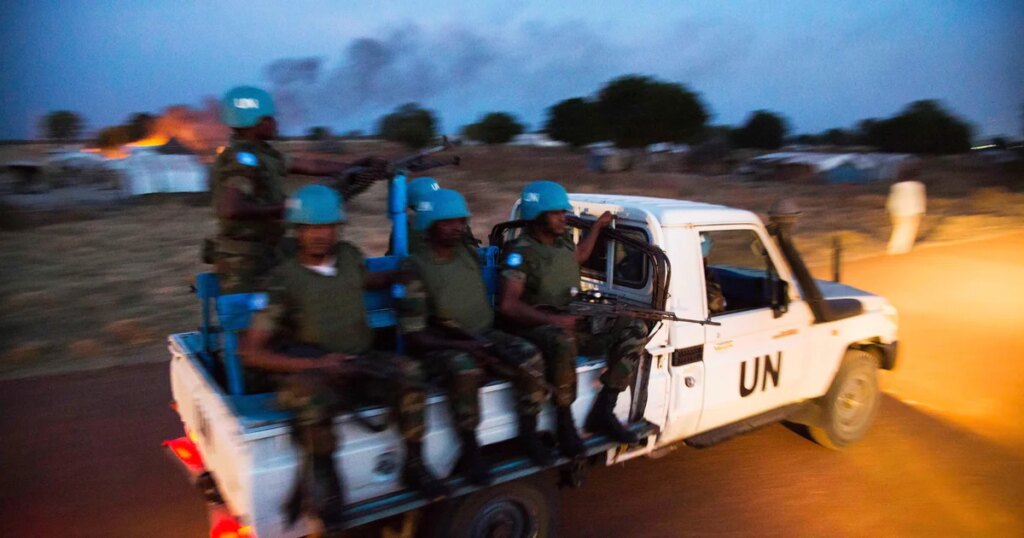
A recent drone strike on a United Nations facility in Sudan has tragically resulted in the deaths of six peacekeepers. The incident took place on Saturday in Kadugli, situated in the central region of Kordofan. U.N. Secretary-General Antonio Guterres reported that eight additional peacekeepers were also wounded in this attack, indicating the ongoing peril surrounding U.N. missions in conflict zones.
| Article Subheadings |
|---|
| 1) Fatal Attack on UN Peacekeepers |
| 2) Blame and Accountability |
| 3) Historical Context of the Conflict |
| 4) Humanitarian Crisis Following the Conflict |
| 5) Call for Ceasefire and Political Resolution |
Fatal Attack on UN Peacekeepers
The drone strike, which targeted the peacekeeping logistics base, killed six Bangladeshi peacekeepers who were part of the United Nations Interim Security Force for Abyei (UNISFA). The attack underscores the increasing dangers faced by U.N. personnel in war-torn regions. Antonio Guterres expressed profound concern over the brutal nature of the strike, stating that attacks on peacekeepers may be considered war crimes under international law.
On the day of the attack, eight soldiers were also wounded, reflecting the escalating violence toward international forces trying to maintain some semblance of order. The incident occurred during ongoing hostilities in Sudan, which have taken a grim toll on both military and civilian populations.
Blame and Accountability
In the aftermath of the drone strike, the Sudanese military publicly blamed the infamous Rapid Support Forces (RSF) for conducting the attack. The RSF, known for its violent tactics, has been embroiled in a brutal power struggle against the military for more than two years. Despite this claim, the RSF has yet to comment on the allegations, showcasing their ongoing evasion of accountability for numerous attacks.
The Sudanese military released a statement highlighting the dangers posed by the militia, characterizing the attack as indicative of the RSF’s subversive tactics. A video circulated online purportedly showed billowing smoke rising from the U.N. facility, painting a stark picture of the consequences of the ongoing conflict.
Historical Context of the Conflict
The conflict in Sudan has deep-seated historical roots, notably intensified following the independence of South Sudan in 2011. The disputed region of Abyei has kept U.N. forces stationed there, aiming to stabilize the area. However, since the outbreak of the recent conflict in April 2023, the situation has rapidly deteriorated, with violence sweeping across various parts of the country, including the capital, Khartoum.
As hostilities have evolved, they have led to devastating human tolls; rights organizations estimate that over 40,000 lives have been lost, with many others left unaccounted for. The brutal clashes have plunged Sudan further into chaos and despair, revealing the dire consequences of prolonged strife.
Humanitarian Crisis Following the Conflict
The ongoing violence has created what is described as the “world’s worst humanitarian crisis.” With urban areas destroyed and essential services disrupted, many citizens find themselves grappling with severe food shortages and an overall lack of basic necessities. The situation has escalated to famine-like conditions in parts of the country.
The United Nations and various humanitarian organizations have called attention to human rights atrocities occurring amidst the turmoil, including mass violence, sexual assaults, and killings driven by ethnic motivations. The unspeakable human suffering highlights the urgent need for a resolution to the ongoing conflict.
Call for Ceasefire and Political Resolution
In response to the deteriorating situation, Antonio Guterres has called for an immediate ceasefire. He advocated for a “comprehensive, inclusive, and Sudanese-owned political process” to help resolve the ongoing discord that has engulfed the country. The push for a ceasefire stems not just from the plight of the civilians caught in the crossfire, but also from the necessity of restoring some semblance of order amid chaos.
Guterres’ request highlights a crucial turning point in the conflict. Without an active and engaged peace process, hopes for reconciliation and lasting peace remain dim amid continued violence.
| No. | Key Points |
|---|---|
| 1 | A drone strike in Sudan killed six UN peacekeepers. |
| 2 | The Sudanese military blamed the RSF for the attack. |
| 3 | The conflict has resulted in over 40,000 deaths and continues to escalate. |
| 4 | A humanitarian crisis has emerged with severe food shortages. |
| 5 | Calls for a ceasefire aim to pave the way for political solutions. |
Summary
The recent drone strike on a U.N. facility in Sudan not only claims the lives of dedicated peacekeepers but also reflects the ongoing strife and turmoil within the nation. As international officials call for accountability and ceasefire, the world watches closely, acknowledging the dire humanitarian crisis unfolding in real time. The situation remains fluid and perilous, demanding immediate attention and action to quench the flames of conflict.
Frequently Asked Questions
Question: What caused the drone strike on the U.N. facility in Sudan?
The drone strike has been attributed to the Rapid Support Forces (RSF), a paramilitary group accused of various violent acts in the ongoing conflict against the Sudanese military.
Question: How has the conflict in Sudan affected the civilian population?
The ongoing conflict has resulted in severe humanitarian crises, with many civilians facing food shortages, displacement, and violence. Rights organizations depict a tragic picture of widespread abuses and suffering.
Question: What measures are being proposed to address the crisis in Sudan?
Calls for an immediate ceasefire and a comprehensive political process have been made by international officials to pave the way for resolution and stability in the region.