
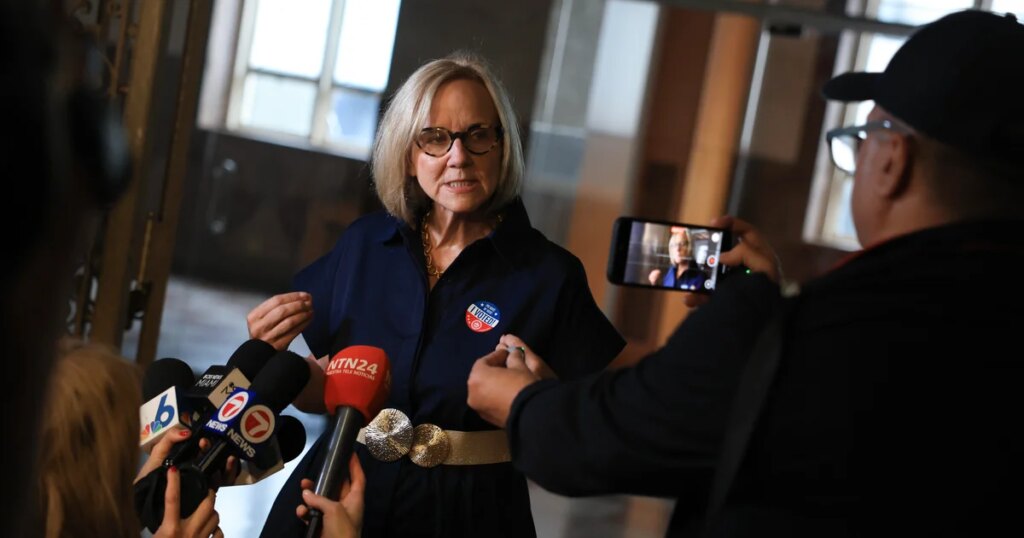
Former Miami-Dade County Commissioner Eileen Higgins has emerged victorious in Miami’s mayoral runoff election, making history as the first Democrat to win this position in over three decades. With 59% of the vote compared to former City Manager Emilio Gonzalez, who garnered close to 41%, Higgins’ election reflects a significant shift in the political landscape of Miami. The competitive race, which began with a crowded 13-person field, has concluded with Higgins promising to address critical issues facing the city, such as housing affordability, climate resilience, and government accountability.
| Article Subheadings |
|---|
| 1) Higgins celebrates historic victory |
| 2) Gonzalez concedes, reflects on lawsuit |
| 3) Higgins’ vision for Miami |
| 4) What’s next? |
| 5) Community reflects on election outcome |
Higgins celebrates historic victory
The atmosphere in the Miami ballroom was electric as Eileen Higgins ascended the stage, greeted by a chorus of cheers from supporters, friends, and family. With heartfelt enthusiasm, she expressed gratitude and declared, “Well, we did it!” The celebratory event not only marked her victory but also aspiration towards more collaborative and effective governance.
During her acceptance speech, Higgins emphasized that the victory symbolizes a pivotal moment for Miami. “This isn’t just a celebration but also a promise because Miami is facing real challenges,” she remarked, setting a tone of urgency and commitment. She acknowledged the pressing issues confronting the city and made pledges to cut unnecessary delays that hinder families and businesses.
Pledging to make improvements in various sectors, Higgins voiced a commitment to confront the city’s affordability crisis decisively. “We will cut red tape, repair what’s broken, and modernize City Hall,” she assured the crowd. With emphatic statements, she highlighted her dedication to making streets safer and reducing bureaucratic hurdles for people needing urgent assistance. “We will protect Biscayne Bay,” she added, framing sustainability as a priority for her administration.
The crowd erupted in applause as Higgins articulated an inclusive vision, emphasizing that she aims to lead a city that welcomes everyone, from seniors wishing to stay in their neighborhoods to young people seeking a viable future. “A city where immigrants feel respected and welcomed,” she proclaimed, reiterating her commitment to diversity.
Gonzalez concedes, reflects on lawsuit
In a display of sportsmanship, Emilio Gonzalez made a direct phone call to Higgins before giving his concession speech. “We respect you, and we will give you all the latitude you need to do great things,” he conveyed in a gracious tone. Despite the loss, Gonzalez’s acknowledgment of the elections’ importance reflected his commitment to democratic principles.
During his remarks, Gonzalez addressed the legal battle that set the stage for the runoff. He highlighted the significance of a lawsuit he filed in July 2025, challenging the City of Miami’s decision to delay the election until 2026. “Absolutely, listen, think of the irony. I filed a lawsuit to have an election that I participated in and lost,” he noted, emphasizing the broader implications for voter rights.
The legal challenge stemmed from a belief that delaying the election disenfranchised voters. A ruling from a judge deemed the city’s decision unconstitutional, allowing the election to proceed and enabling voters to select their next mayor. Gonzalez’s determination to uphold electoral integrity highlights the value placed on democratic participation, even in adverse outcomes.
Higgins’ vision for Miami
With a solid political background, Eileen Higgins brings a wealth of experience to her new role as mayor. Having served for eight years on the Miami-Dade County Commission, her platform focused on restoring public trust and fostering a collaborative atmosphere in City Hall. A core component of her agenda encompasses affordable housing, prompting her to advocate for using city-owned land to build homes for working families.
Criticizing the rapid growth of Miami, Higgins underscored the necessity for improved public services. She also committed to reviewing city budgets fully and proposed updating regulations to enhance city infrastructure, including introducing permeable pavement and expediting park construction to better manage flooding. Her call for expanding the City Commission demonstrates her understanding of the need for broader representation in governmental decisions.
On immigration enforcement, Higgins took a firm stance against recent actions in the city, characterizing them as “inhumane and cruel.” Nevertheless, she also expressed willingness to collaborate with the federal government on issues of mutual interest, unambiguously stating that she would make her opposing views heard when disagreements arise. This indicates her intention to pursue a balanced approach in the highly polarized political environment.
What’s next?
Eileen Higgins takes office with pronounced expectations to address housing affordability, climate resilience, and greater transparency in government operations. Her election signals a potential transformation in Miami’s political landscape, where new policies and initiatives can emerge in response to longstanding community challenges. The shift in leadership styles and priorities may lead to increased citizen engagement and confidence in local governance, fostering a more vibrant democratic process.
As Higgins steps into her new role, her administration’s approach and successful implementation of her proposed solutions will be closely monitored by the public and members of the city council. Addressing concerns about affordable housing and city growth will serve as a litmus test for her leadership and governance philosophy.
Community reflects on election outcome
With the election results still fresh, communities across Miami have begun reflecting on the implications of Higgins’ victory. Residents and local leaders have expressed hope for a shift towards more inclusive policies that prioritize their needs. A sentiment shared among many is that effective governance should prioritize public engagement and responsiveness to the diverse challenges faced by various communities within Miami.
The results have energized various factions within the city, particularly those advocating for social justice and equitable resource distribution. Moreover, the historical nature of this election could inspire increased political participation among marginalized groups, suggesting a lasting impact on the democratic engagement in future elections.
As the city looks forward to new leadership, discussions will likely continue about the best ways to build consensus, foster cooperation among various political factions, and work towards solutions that benefit all residents. As dialogues unfold, the community’s engagement will play a pivotal role in shaping Miami’s future trajectory.
| No. | Key Points |
|---|---|
| 1 | Eileen Higgins won Miami’s mayoral runoff election, marking a historic shift in city leadership. |
| 2 | Higgins plans to prioritize housing affordability and government transparency in her administration. |
| 3 | Emilio Gonzalez conceded gracefully while reflecting on the importance of voter rights. |
| 4 | Higgins’ election could inspire increased political participation among marginalized communities. |
| 5 | The community is hopeful for effective governance under Higgins’ leadership, emphasizing collaboration and inclusivity. |
Summary
The emergence of Eileen Higgins as Miami’s newly elected mayor represents not only a significant milestone in the city’s political history but also a concerted shift towards addressing critical community issues. With a focus on collaboration, transparency, and inclusion, her administration sets the stage for changes in policy and governance that could redefine Miami’s trajectory. As the community looks forward to robust engagement under her leadership, the implications of this election will continue to reverberate throughout the city.
Frequently Asked Questions
Question: What were the main issues during the mayoral campaign?
The main issues included housing affordability, climate resilience, immigration policies, public safety, and community trust in government leadership.
Question: How did the legal lawsuit affect the election?
The lawsuit filed by Emilio Gonzalez challenged the city’s decision to postpone the election, leading to a ruling that allowed the election to proceed in 2025 instead of delaying it to 2026.
Question: What are Higgins’ plans regarding housing in Miami?
Higgins plans to utilize city-owned land for developing affordable housing aimed at working families and has pledged to review city budgets to improve public services.