
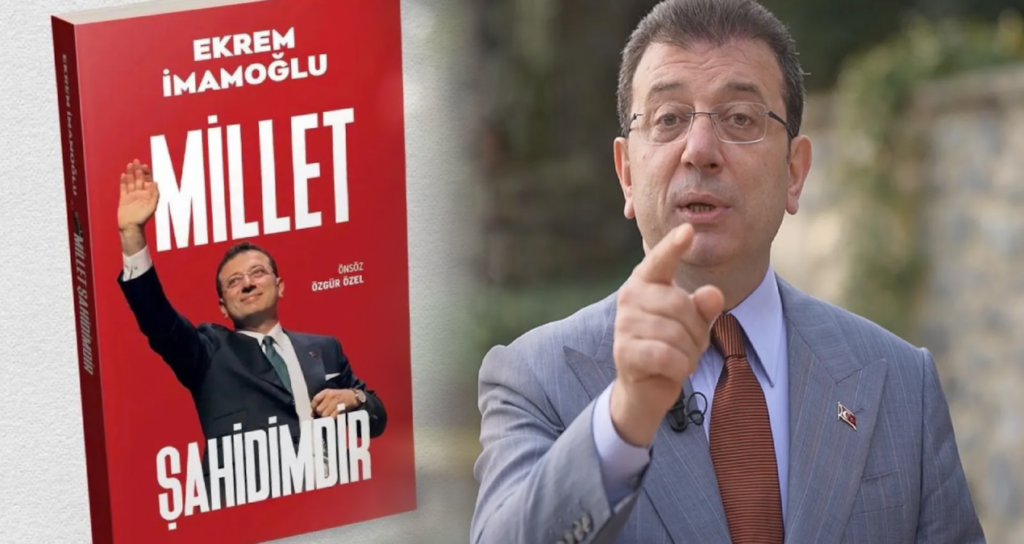
In a recent legal development in Istanbul, a court decision has prohibited the distribution of a new book highlighting the defense of local political leader Ekrem İmamoğlu concerning allegations related to the Istanbul Metropolitan Municipality (IMM). Requested by the Istanbul Chief Public Prosecutor’s Office, this ruling comes while the book was still in the printing phase, igniting debates surrounding censorship and freedom of expression in the region. The move has triggered significant discussion among İmamoğlu’s legal team, who are planning to challenge the ban on grounds of unjust restrictions on freedom of speech.
| Article Subheadings |
|---|
| 1) The Background of the Book and Its Contents |
| 2) Police Intervention During Printing |
| 3) Legal Perspectives on the Ban |
| 4) Implications for Freedom of Expression |
| 5) Next Steps and Legal Challenges |
The Background of the Book and Its Contents
The controversial book in question emerges from the ongoing legal proceedings against Ekrem İmamoğlu, the mayor of Istanbul and a prominent figure within the opposition party. With around 400 pages, the text is segmented into 10 chapters that primarily encompass İmamoğlu’s legal defenses presented during various court hearings linked to accusations against him and his administration. Initial plans set the book’s public release for August 30, coinciding with a national holiday known as Victory Day. However, allegations surfaced that the involved judicial authorities were privy to the publication’s development while it remained under wraps.
Endorsed by the NEW Party leader, Özgür Özel, in its foreword, the book has incited discussions on the implications of its content regarding public discourse as well as transparency in political matters. The title aims to rebut the accusations leveled against İmamoğlu, seeking to provide not merely a defense but a narrative that connects his side of the story to a wider audience. Observers suspect that this situation reflects deeper tensions between political authorities and opposition figures, particularly in a context where freedom of expression can often be sidelined.
Police Intervention During Printing
Reports indicate that during the printing process, police forces intervened by visiting the printing location and halting the operation. This intervention was reportedly based solely on a letter from the prosecutor’s office, lacking an official court order. Subsequently, the Istanbul 4th Criminal Court of Peace issued a ban on the publication. This extensive action raised numerous questions about the legal protocols followed by law enforcement and the judiciary, particularly regarding intellectual property rights and personal freedoms.
Legal professionals and free speech advocates have criticized the method through which the ban was enacted, arguing that such enforcement is an overreach of judicial powers. It showcases a concerning trend where judicial authorities may potentially wield influence over the limits of free speech and the distribution of political literature, which they believe is paramount for citizens’ awareness of political issues.
Legal Perspectives on the Ban
In response to the court’s decision, Tora Beijing, who represents İmamoğlu, articulated that the confiscated text was essentially a direct expression of İmamoğlu’s viewpoint regarding ongoing legal disputes. Beijing comments,
“The book that was decided to be confiscated by Ekrem Bey was actually his interrogation in the IMM case.”
He asserts that such litigative censorship is neither lawful nor justified. Indicating a belief that the decision aims to stifle İmamoğlu’s voice from reaching the populace, he emphasized the importance of the public hearing as a means for leaders to address citizens.
This legal challenge raises broader questions about the gaps in current laws concerning the distribution of political literature and how judicial decisions might limit the ability of public figures to communicate transparently with their constituents. Moreover, it points to the necessity for evolving legal frameworks that can protect individual rights, especially in politically sensitive situations.
Implications for Freedom of Expression
The decision to restrict distribution of the book has been flagged as a severe infringement on the principles of free speech. Observers from various sectors, including civil society organizations and human rights activists, are voicing concerns that such actions set a dangerous precedent in the country’s legal landscape. Beijing strongly remarked that denying publication reflects a stark intervention against freedom of expression, declaring that “the decision to confiscate books is one of the most severe types of interference.”
Such interventions provoke discussions about the boundaries of governmental power in democratic societies and challenge the status quo where individuals should be able to express their viewpoints without the fear of censorship. The implications stretch beyond just this particular case, potentially impacting future generations of political figures and citizens who seek to voice dissent in an evolving political climate.
Next Steps and Legal Challenges
Looking ahead, İmamoğlu’s legal representatives are preparing to formally contest the ban, which they anticipate will unfold alongside ongoing legal battles concerning the mayor’s public image and the integrity of his political narrative. Lawyers highlighted that they have not yet received the original court decision text but are adamant about pursuing legal avenues to challenge the ruling swiftly. They intend to emphasize the book’s importance as a contribution to public discourse and a vehicle for political accountability.
Beijing reassured that, despite the current restrictions, efforts would be made to ensure the text finds its way to the public. He anticipates that the book contains no content outside the scope of lawful expression, suggesting the passage of such literature is not merely an act of defiance but a necessity for maintaining democracy and political awareness among the citizenry.
| No. | Key Points |
|---|---|
| 1 | A court in Istanbul has banned the distribution of a book that contains defenses from Ekrem İmamoğlu related to the IMM case. |
| 2 | The police intervened during the book’s printing phase, halting production based on a letter from the prosecutor’s office. |
| 3 | Legal representatives are preparing to challenge the ban, arguing it infringes on freedom of speech. |
| 4 | The case highlights systemic issues regarding censorship and political discourse in Turkey. |
| 5 | İmamoğlu’s legal team claims their goal is to ensure that he can communicate freely with the public. |
Summary
The recent prohibition imposed on Ekrem İmamoğlu’s book has unveiled deeper concerns regarding freedom of speech and expression within Turkey’s political landscape. As legal representatives prepare to challenge the ban, the event serves as a crucial indicator of the ongoing tension between governmental authority and civil liberties. The implications of this case will likely shape the discourse surrounding political expression in the months ahead, emphasizing the essential nature of transparency and dialogue in democracy.
Frequently Asked Questions
Question: What is the significance of the book authored by Ekrem İmamoğlu?
The book articulates İmamoğlu’s defenses during ongoing court proceedings and aims to reach a broader audience concerning allegations against him.
Question: Why did police interrupt the book printing?
Police intervened to halt the printing based on a letter from the prosecutor’s office, citing a need to enforce a ban on distribution before an official court order was issued.
Question: What actions will İmamoğlu’s legal team pursue following the ban?
İmamoğlu’s legal representatives plan to formally object to the court’s decision to ban the book, arguing that it violates the principles of free speech and expression.