
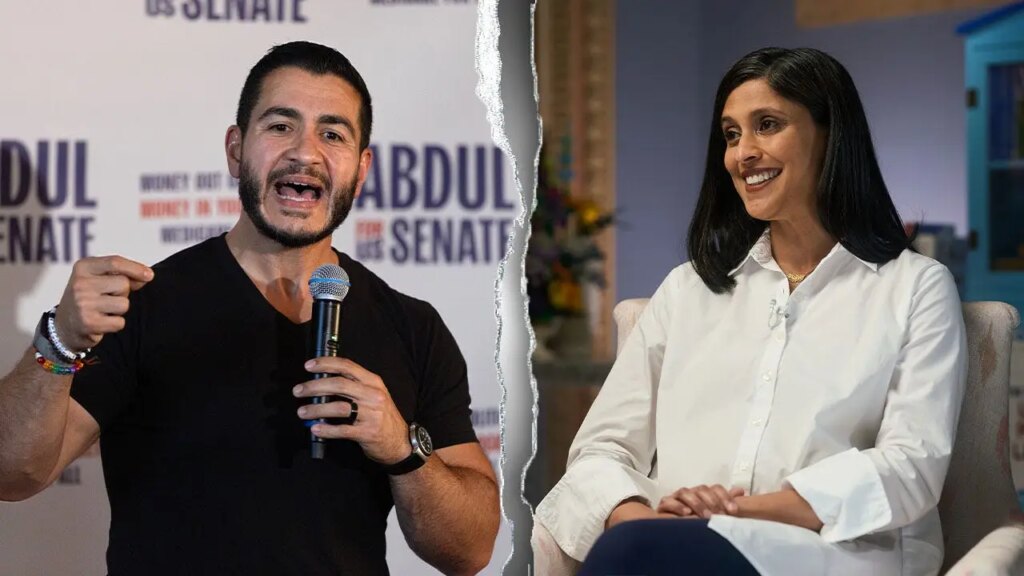
The political landscape in Michigan is heating up as a controversial exchange unfolds between Democratic Senate candidate Abdul El-Sayed and Vice President JD Vance. The situation escalated after El-Sayed made remarks involving Vance’s wife, Usha Vance, which have drawn significant criticism from various political figures. As both candidates prepare for the upcoming election, the implications of such comments could impact their respective campaigns as they address sensitive issues related to race, gender, and political ideology.
| Article Subheadings |
|---|
| 1) Escalating Tensions: The Initial Exchange |
| 2) Criticism from Political Opponents |
| 3) Reactions from the Public and Media |
| 4) Implications for El-Sayed’s Campaign |
| 5) The Stakes in the Upcoming Election |
Escalating Tensions: The Initial Exchange
The political feud began when JD Vance criticized Abdul El-Sayed during a rally in Ohio. Vance targeted El-Sayed’s reported adherence to Sharia law, suggesting it would be wholly alien to his grandfather. In turn, El-Sayed responded with a dig that included a commentary on Usha Vance, stating, “So do we think JD is taking Usha with him back in time to meet Papaw, or no…” The remark, which implied a racial and cultural reference, seemed to mock the Vice President’s family background.
The confrontation captured the attention of their respective supporters, symbolizing deeper ideological divides between the candidates not only on policy but on cultural sensitivity and political decorum. The exchange occurred amidst built-up scrutiny over El-Sayed’s stance on Sharia law, a topic that has sparked significant discussion in contemporary American politics.
Criticism from Political Opponents
Political figures across the spectrum quickly took note of El-Sayed’s comments. Ben Graber, a former state representative in Florida, criticized El-Sayed for ostensibly attacking the wives of US leaders. His statement was representative of a broader sentiment among critics who viewed the comments as distasteful and indicative of a candidate lacking respect for traditional political boundaries.
Furthermore, Rep. Brandon Gill expressed outrage over El-Sayed’s presumption regarding the racial attitudes of “White midwestern grandparents,” asserting that such assumptions were divisive and unnecessary. “Why does Abdulrahman Mohamed El-Sayed just assume that all White midwestern grandparents are racist?” Gill questioned on social media. Commentators quickly seized upon this theme, suggesting that El-Sayed’s comments belied a bias that could alienate voters not just from his party but from rural demographics overall.
Reactions from the Public and Media
Social media has been rife with commentary and backlash. Citizen commentators and political analysts alike shared their views, with some asserting that El-Sayed’s remarks were “disgusting” and others that they painted him as a candidate filled with contempt. Journalist Emily Schrader went as far as to label El-Sayed a “racist creep,” further escalating online tensions surrounding the electoral race.
The media’s response has ranged from urgent critiques of El-Sayed’s rhetorical style to debates about the broader implications of identity politics in contemporary American elections. The incident not only affected perceptions of El-Sayed within his campaign strategy but also led to intense discussions surrounding gender and race in political discourse. Several organizations questioned how such remarks might translate to the treatment of female staff should El-Sayed achieve the Senate seat.
Implications for El-Sayed’s Campaign
As a Democrat vying for the Senate seat, El-Sayed’s comments catalyzed discussions regarding his political viability. Analysts noted that his campaign strategy relies heavily on a progressive platform that may become undermined by accusations of sexism and racism. Already, critics have referenced past advertisements during the primary that highlighted his alleged misogynistic behavior.
The incident also underscores the heightened stakes in a race that involves not just political agility but the navigation of complex social landscapes. Negative media portrayals coupled with social media backlash indicate a potential climb uphill for El-Sayed as he strives to secure votes from all demographic sectors, particularly those in traditionally less liberal rural areas.
The Stakes in the Upcoming Election
Looking ahead to the election, both candidates face critical stakes in how they handle public perception and media narratives. Vance, positioned as a representative voice of traditional values, may leverage incidents like these to solidify support among conservative voters wary of progressive policies. Conversely, El-Sayed’s campaign must pivot effectively from controversy to present a clear, resonant vision for Michigan’s future.
As the race draws closer, the fallout from these exchanges may very well define not only the candidates’ chances but the broader narrative of the 2026 Senate election. Michigan’s characteristically diverse electorate will be keenly watching as both sides attempt to sway sentiment in a climate where cultural and political sensitivities are at the forefront.
| No. | Key Points |
|---|---|
| 1 | The exchange between Abdul El-Sayed and JD Vance has sparked significant backlash and criticism. |
| 2 | El-Sayed’s remarks raised concerns about his views on race and gender in politics. |
| 3 | Political opponents are leveraging El-Sayed’s comments to paint him as a candidate lacking respect. |
| 4 | The incident has ignited discussions about the treatment of women in politics and identity politics. |
| 5 | The outcome of this contentious exchange could significantly influence the upcoming election in Michigan. |
Summary
The friction between Abdul El-Sayed and JD Vance represents more than just a politicking spat; it reflects the intricate dynamics of race, gender, and political allegiance in the current electoral landscape. As accusations of sexism and racism circulate, both candidates find themselves navigating a delicate political environment where every statement can have far-reaching implications. As Michigan voters approach the ballot, the effectiveness of each candidate’s response to the ongoing tension may ultimately dictate the trajectory of their campaigns.
Frequently Asked Questions
Question: What prompted the clash between El-Sayed and Vance?
The clash was prompted by JD Vance criticizing Abdul El-Sayed for his reported adherence to Sharia law during a rally, leading El-Sayed to make controversial remarks about Vance’s wife, Usha Vance.
Question: What are some of the criticisms directed at El-Sayed?
Critics have accused El-Sayed of making sexist and racist remarks, particularly suggesting he views rural White Americans as racist based on his comments during the exchange.
Question: How could this incident affect the upcoming election?
The incident could influence voter perceptions, especially regarding El-Sayed’s capability to appeal to diverse demographics in Michigan. Therefore, this may impact his overall electoral viability.