
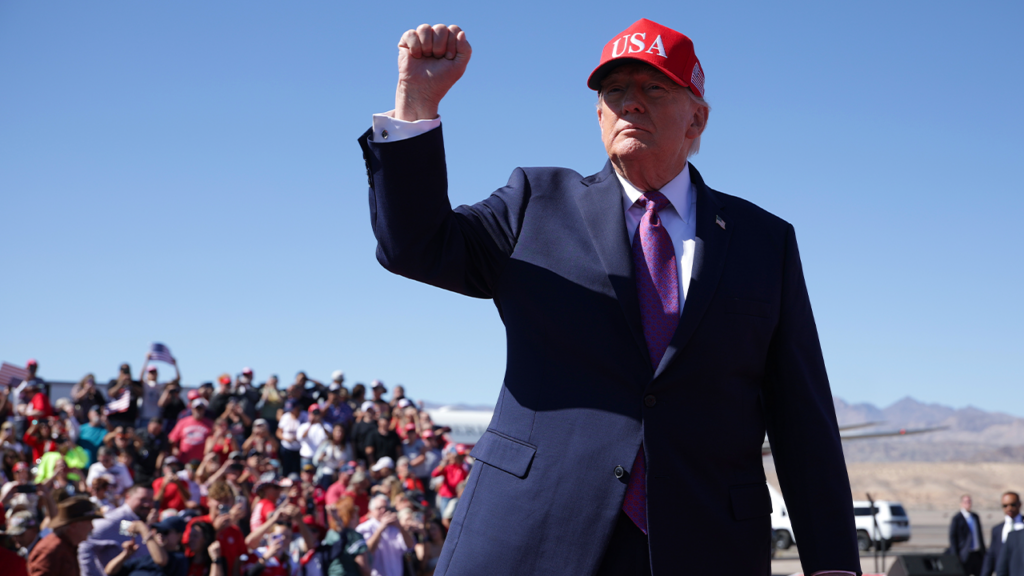
As the countdown to Election Day intensifies, both political parties are gearing up for a final push to secure control of Congress. Major figures from the Republican and Democratic parties, including President Donald Trump and former President Barack Obama, have been active on the campaign trail, drawing attention to key battleground states. With just nine days remaining until voters head to the polls, the focus turns toward the rallies and strategies designed to mobilize voters and sway undecided constituents.
| Article Subheadings |
|---|
| 1) Trump’s Campaign Strategy: A National Approach |
| 2) Key Senate Battlegrounds: The Stakes in Competitive States |
| 3) The Role of High-Profile Endorsements in Mobilizing Voters |
| 4) Democrats’ Counteroffensive: Engaging Key Demographics |
| 5) Analyzing the Importance of Voter Turnout This Election Cycle |
Trump’s Campaign Strategy: A National Approach
In the lead-up to the elections, President Donald Trump is spearheading a robust campaign strategy, which involves a series of rallies across multiple states. His approach has been to cover a broad geographic area, ranging from traditionally Republican strongholds to states with open Senate races. Trump has expressed intentions to conduct five to seven rallies each week, effectively maintaining a relentless campaign schedule that engages party loyalists and energizes the voter base. For instance, during the recent weekend, Trump held events in Florida, Georgia, and Michigan, aiming to consolidate support ahead of Election Day.
The timing of these rallies is crucial, strategically set just days before voters can cast their ballots. By rallying large crowds and emphasizing the stakes of the election, Trump seeks to maximize enthusiasm and turnout among his supporters. The campaign stops are also designed to underscore Trump’s policies and achievements, particularly emphasizing economic indicators that resonate with voters anxious about rising prices and inflation.
Key Senate Battlegrounds: The Stakes in Competitive States
The upcoming midterms represent a pivotal moment for determining control of the Senate, with several states identified as battlegrounds where the outcomes could shape legislative action for years to come. States like Ohio, Texas, and Iowa feature competitive Senate contests, where polling indicates slim margins between Democratic and Republican candidates. In these key races, both parties are fervently campaigning, showcasing candidates who can rally local support and build coalitions of voters.
Ohio has traditionally been a significant swing state, and its Senate race is closely watched as a potential barometer for this electoral cycle. With the current political landscape, incumbents and challengers are striving to make their cases to voters who may be swayed by local issues, national trends, and party loyalty. Analysts, thus, observe these battlegrounds for their potential implications not only for individual candidates but also for the broader political landscape in Washington, D.C.
The Role of High-Profile Endorsements in Mobilizing Voters
In addition to Trump, other prominent figures from both parties are also actively campaigning, indicating the high stakes associated with the current election cycle. The presence of influential party members can significantly sway undecided voters and energize party loyalists. Notably, former President Barack Obama and Vice President Kamala Harris have emerged as key Democratic figures, conducting campaign events in critical states. Their involvement highlights a strategic effort to galvanize the Democratic base and appeal to disenfranchised voters.
Obama’s foray into states like Ohio and Michigan demonstrates a tactical alignment with candidates who may benefit from his recognizable status and political experience. The former president’s appeal to voters underscores the Democratic strategy of highlighting successful governance to counter Republican narratives. Each appearance aims to reinforce Democratic messaging while appealing to key demographics that are vital for electoral success.
Democrats’ Counteroffensive: Engaging Key Demographics
The Democratic campaign, led by figures such as Kamala Harris, emphasizes connecting with key demographic groups, particularly younger voters, women, and minorities who have historically leaned Democratic. By targeting states like Nevada, Mississippi, and New Hampshire, Harris aims to boost turnout among these essential constituencies. Campaign events are tailored to address the specific concerns of these demographic groups, focusing on issues such as reproductive rights, healthcare, and economic inequality.
Moreover, the integration of compelling narratives and real-life stories from constituents serves to enhance the emotional appeal of the Democratic candidates. Recent social issues play a pivotal role in shaping voter sentiment, and by addressing these responsive issues, Democrats are trying to ensure that potential voters view casting a ballot as a direct method to influence their future.
Analyzing the Importance of Voter Turnout This Election Cycle
As November draws closer, both parties understand that successful turnout is crucial for victory. Election experts emphasize that the overall voter turnout will be a defining factor that could tilt the balance of power in Congress. Both parties are channeling significant resources into outreach efforts aimed at mobilizing voters who may otherwise abstain from participating in the electoral process.
Educational initiatives, multiple avenues for voting, and grassroots campaigns are integral to these efforts. Innovative voter engagement strategies use social media and community organizing to communicate effectively with potential voters. By encouraging voters to participate in the electoral process, both parties seek to bolster their chances of prevailing in critical races.
| No. | Key Points |
|---|---|
| 1 | President Trump actively rallies support nationwide leading up to the election. |
| 2 | Key Senate battlegrounds include Ohio, Texas, and Iowa, where races are particularly competitive. |
| 3 | High-profile endorsements from party leaders are crucial in mobilizing voters. |
| 4 | Democrats are focusing on engaging young, diverse, and crucial voter demographics. |
| 5 | Voter turnout is deemed a vital factor that could determine the electoral outcomes. |
Summary
As both parties continue their aggressive campaigns, the significance of voter turnout and strategic outreach is paramount as we approach the November midterms. Political figures on both sides are mobilizing resources, rallying supporters, and focusing on key issues that resonate with potential voters. This election cycle promises to be instrumental in shaping future legislative agendas, and the outcome could mark a pivotal shift in the political landscape of the United States.
Frequently Asked Questions
Question: What key issues are influencing the midterms?
Key issues include economic concerns, healthcare access, reproductive rights, and overall governance performance, which are heavily influencing voters’ decisions as both parties aim to effectively address these topics in their campaigning.
Question: How can voters increase their chances of being heard in this election?
Voters can ensure their voices are heard by participating in early voting, understanding their local voting regulations, and engaging in community events that promote voter awareness and turnout efforts.
Question: Why is turnout so critical for this midterm election?
Turnout is crucial because it has the potential to sway the balance of power in Congress, influencing legislative agendas and the direction of policy priorities for the next election cycle.