
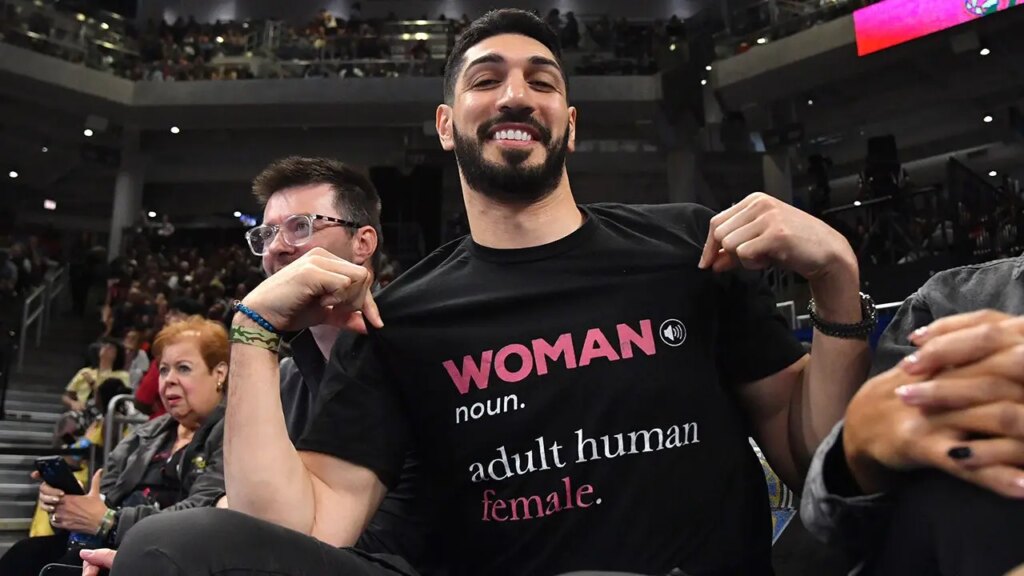
In a heated incident at the Wintrust Arena on August 23, 2026, former NBA player Enes Kanter Freedom was ejected during a WNBA game between the Chicago Sky and the Indiana Fever. The altercation stemmed from a confrontation with Sky guard Natasha Cloud, who allegedly made vulgar remarks towards Freedom after he celebrated a three-point basket made by Fever player Sophie Cunningham. Freedom’s removal from the game has sparked discussions surrounding sportsmanship, free speech, and ongoing tensions related to gender identity in athletics.
| Article Subheadings |
|---|
| 1) Overview of the Incident at Wintrust Arena |
| 2) Enes Kanter Freedom’s Perspective |
| 3) Natasha Cloud’s Response and Side of the Story |
| 4) Security Response and Ejection Procedure |
| 5) Implications for the WNBA and Future of Enes Kanter Freedom |
Overview of the Incident at Wintrust Arena
On the evening of August 23, 2026, the WNBA matchup between the Chicago Sky and Indiana Fever took a dramatic turn when a confrontation erupted between former NBA player Enes Kanter Freedom and Sky guard Natasha Cloud. The incident occurred during the game, specifically late in the third quarter as Freedom celebrated a three-pointer made by Fever guard Sophie Cunningham by raising his arms in jubilation. This gesture apparently incited Cloud, who voiced her discontent loud enough for both fans and nearby players to hear.
Witnesses noted that Cloud shouted a vulgar remark aimed at Freedom, reportedly stating, “She’s not gonna sleep with you.” Freedom recounted feeling shocked and confused by her comment, emphasizing that he was merely there to support women by cheering for Cunningham, who is a friend. As Cloud approached him, her demeanor escalated, ultimately culminating in escalating exchange of words that led to Freedom’s eventual removal from the game.
The situation was captured and shared on various platforms, allowing viewers to witness the moment when Cloud walked towards Freedom while security personnel intervened. Video footage also showed Freedom taking steps onto the court, arm extended, as he attempted to de-escalate the confrontation. Nonetheless, the interplay quickly intensified, illustrating the underlying tensions surrounding maturity in sports enthusiasm and personal space.
Enes Kanter Freedom’s Perspective
Following the incident, Freedom provided a detailed account of his version of events during subsequent interviews. He described feeling uncomfortable with Cloud’s aggressive approach, stating, “I am not trying to sleep with her. I’m just here to protect women and support her.” He reflected on the use of a ‘WOMAN noun. adult human female’ shirt he wore that evening, suspecting it might have played a role in igniting Cloud’s reaction. Freedom’s description of the event indicated that he was genuinely there as a supporter of women’s sports, especially in light of the ongoing discourse regarding gender and athletics.
Freedom voiced concerns about Cloud using profanity around young fans present during the game, claiming, “I was very shocked that there were a lot of kids and that there were a lot of teenagers at that game.” He has stressed that the words exchanged between him and Cloud should not be interpreted as a commentary on the current debates surrounding transgender athletes in the WNBA, asserting that his goal is to advocate for women’s rights and fair play in sports.
After the confrontation, Freedom expressed no remorse about supporting women, maintaining that his intentions were solely to cheer for his friend and highlight the importance of women in sports. Although the incident has drawn attention, he felt it has also reinforced his determination to enter the upcoming WNBA draft, as he plans to challenge existing eligibility criteria within the league.
Natasha Cloud’s Response and Side of the Story
Natasha Cloud has yet to officially comment on the specific incident in-depth. However, after the game, she took to social media, expressing solidarity with the transgender community, stating, “To every trans kid/person, You are a part of MY community & tribe. You belong. You’re loved. You’re seen. You’re perfect as you are. & you will always be protected by me.” Cloud’s statement made it clear that she considers herself a strong supporter of LGBTQ+ rights, which creates a backdrop of conflicting narratives regarding her actions during the altercation with Freedom.
Following the incident, Cloud’s teammates and coaching staff defended her actions by reiterating her commitment to integrating support for marginalized communities within the professional sports framework. Sky coach Tyler Marsh remarked, “We all embrace her as someone who protects our team and protects people who need to be protected.” This defense sought to emphasize her position within the team as a protector and advocate, further illustrating the complex intertwining of sports, social activism, and emotional reactions.
While Cloud has not directly addressed the altercation’s details, her continued dedication to social issues may frame her actions in a different perspective among her supporters. The clash of personalities and ideologies between Cloud and Freedom represents a broader civil discourse on gender identity, representation in sports, and public expression of support, providing learning opportunities for athletes and fans alike.
Security Response and Ejection Procedure
The security response to the incident further amplified the situation surrounding Freedom’s ejection. After Cloud’s outburst escalated, arena security approached Freedom and instructed him to leave the premises, citing no explanation for their decision. Freedom expressed disbelief, stating, “Can you please tell me why I need to leave? They said, ‘Look, you just need to leave.’” This action stirred frustration for Freedom who felt unjustly targeted based on his interaction with Cloud and the statement on his shirt.
Video evidence illustrated the involvement of multiple security personnel as they escorted Freedom out of the arena. His recounting of the events suggests he felt physically intimidated, claiming he told an employee not to touch him during the removal. He stated, “I didn’t do anything wrong. I can get myself out of the game.” The lack of clear communication about the rationale for his ejection only added to the distress of the moment.
Throughout the encounter, Freedom was adamant that he was not acting provocatively nor antagonistically, but instead was simply supporting women’s sports. Despite the unruly nature of the confrontation, he insisted that he was merely expressing enthusiasm for a fellow player. The security protocol followed has raised questions about how stadium authorities handle emotional situations in the arena while upholding fan safety and athlete needs.
Implications for the WNBA and Future of Enes Kanter Freedom
The altercation at Wintrust Arena has broader implications as it intersects with ongoing debates regarding legalization and inclusivity in sports. Freedom’s announcement of his intention to enter the 2027 WNBA Draft indicates a willingness to confront significant issues concerning the league’s eligibility rules, particularly with respect to transgender athletes. By leveraging this incident, he aims to challenge the WNBA’s existing standards while drawing attention to the cultural discourse surrounding gender identity within the sport.
Freedom further amplified his dedication to women’s sports by stating, “I want to make that very clear… I respect anyone’s personal decision.” In his calls for a concrete definition of what constitutes a woman within the context of the league, he is following the current legislative trends that scrutinize gender and athletic eligibility, likely seeking clarification that directly addresses rising societal concerns.
As Freedom prepares for the possibility of entering the WNBA, he has begun to also outline his desired future as a professional athlete. “I think I can play till 40, 45,” he remarked, emphasizing ambition and durability in the field despite the challenges he may face. With support from various communities, Freedom aims to not only fulfill his dreams but to act as an advocate for women’s rights and recognition in a sport that has been raising questions about equity and regulations for its participants.
| No. | Key Points |
|---|---|
| 1 | Enes Kanter Freedom was ejected from a WNBA game following a confrontation with Natasha Cloud. |
| 2 | Freedom felt his support for women’s sports was unjustly misinterpreted by Cloud’s comments. |
| 3 | Cloud has publicly supported the transgender community amid the incident. |
| 4 | The security team did not provide a clear reason for Freedom’s removal from the game. |
| 5 | Freedom aims to challenge WNBA eligibility rules as he enters the 2027 draft. |
Summary
The altercation at the Wintrust Arena not only highlights individual confrontations in sports but also reflects broader societal dialogues around gender identity and women’s rights in athletics. Enes Kanter Freedom’s emphasis on supporting women and pushing for inclusive regulations within the WNBA challenges audiences to consider sports’ evolving landscape. This incident and ensuing discussions could have lasting implications for all stakeholders in the sports community, including athletes, coaches, fans, and governing organizations.
Frequently Asked Questions
Question: What triggered the incident between Enes Kanter Freedom and Natasha Cloud?
The incident originated when Freedom celebrated a three-point shot made by Fever player Sophie Cunningham, prompting remarks from Cloud aimed at Freedom, leading to a confrontation.
Question: What is Freedom’s position regarding women in sports?
Freedom has declared his intent to support women in sports, emphasizing his advocacy for women’s rights while maintaining that he respects all individuals, including those identifying as transgender.
Question: How did security respond to Freedom during the incident?
Security personnel ordered Freedom to leave the arena without providing a clear explanation, resulting in confusion and frustration for him as he felt unjustly treated.