
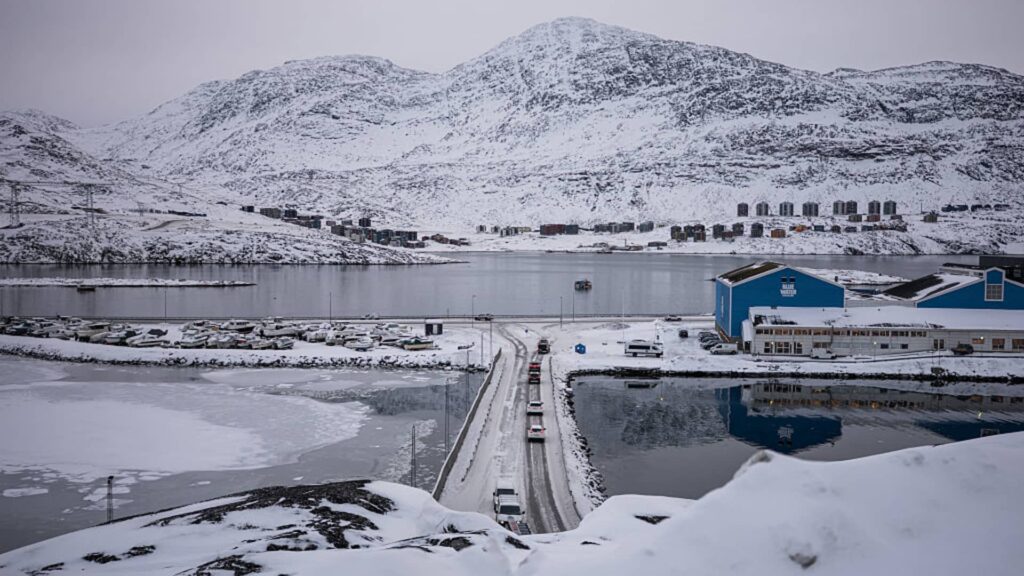
European Commission President Ursula von der Leyen is set to visit Greenland’s capital, Nuuk, on Sunday, in a move aimed at bolstering support for the Arctic territory amid ongoing geopolitical tensions. The visit comes as U.S. President Donald Trump has reignited interest in acquiring Greenland, citing national security concerns. Von der Leyen is expected to announce new financial backing for Greenland, coinciding with Danish Prime Minister Mette Frederiksen‘s attendance. This trip follows Iceland’s recent rejection of EU membership negotiations, showcasing shifting dynamics in the region.
| Article Subheadings |
|---|
| 1) Understanding the Arctic Security Context |
| 2) The Importance of Local Investments |
| 3) Broader Cooperation in the North Atlantic |
| 4) EU’s Geopolitical Strategy |
| 5) The Significance of Greenland in Global Affairs |
Understanding the Arctic Security Context
The geopolitical climate in the Arctic region has shifted dramatically, particularly with increased attention from global powers like the United States, Russia, and China. Kristina Spohr, a professor at the London School of Economics, comments on the urgent nature of these security issues, noting that the situation involves “sabotage activity and hybrid warfare.” As tensions rise, U.S. claims over Greenland have raised concerns about regional stability. Spohr emphasizes the strategic importance of the GIUK gap—a maritime area connecting Greenland, Iceland, and the U.K.—which plays a crucial role in military strategy as it connects the Arctic and the Atlantic.
Trump’s ongoing interest in acquiring Greenland illustrates the precarious nature of Arctic geopolitics. This fixation became particularly pronounced at the start of 2025, when he openly discussed military options to annex the territory. The U.S. administration has since formed a working group with representatives from Denmark and Greenland to explore management strategies for the island’s resources and security matters. Given this context, Von der Leyen’s visit is seen as an effort to reassure both Greenland and Denmark of the EU’s support during this tumultuous period.
The Importance of Local Investments
Von der Leyen’s anticipated announcement of substantial funding for Greenland is part of a broader EU strategy to invest in critical minerals, renewable energy, and infrastructure. The proposed financial package for 2026 and 2027 is estimated to reach up to 200 million euros (approximately $232.4 million). These investments are essential for enhancing Greenland’s economic self-sufficiency and addressing pressing issues such as climate change and resource management.
The establishment of a permanent European Commission office in Nuuk is a strategic move aimed at fostering closer ties between the EU and Greenland. Andreas Raspotnik, a senior fellow at The Arctic Institute, stresses the significance of strengthening the Greenland-Denmark relationship through collaborative investments. He notes that EU’s engagement in Greenland is not new; indeed, previous investments have focused on education, fisheries, and sustainable tourism. Yet, in light of shifting geopolitical dynamics, there is a renewed urgency to enhance EU visibility and influence in the region.
Broader Cooperation in the North Atlantic
Von der Leyen’s trip to Nuuk is a pivotal step in fostering cooperative relationships among Arctic nations, especially in defense and economic resilience. As the EU updates its Arctic policy, the need for collaborative strategies with local leaders has become increasingly evident. The concept of a “northern neighborhood,” which encompasses Greenland, Iceland, Canada, and the U.K., is gaining traction in Brussels. This reflects a strategic shift towards recognizing the interconnectedness of Arctic states and fostering greater collaboration on shared challenges.
During her visit, Von der Leyen is expected to engage with local leaders to address pressing issues ranging from climate change to military security. Jens-Frederik Nielsen, Greenland’s Prime Minister, echoed this sentiment, urging for unified action, stating, “These times commit us to working closely together. Like being three people in the same boat, we must row together.” This underscores the pressing need for coordinated efforts to navigate the complexities of the current geopolitical landscape.
EU’s Geopolitical Strategy
The European Union’s proactive approach to addressing Arctic affairs is shaped by the recognition that its interests extend beyond its northern borders. Analysts have noted an evolution in the EU’s Arctic policy which now incorporates a more strategic perspective on collaboration with non-EU Arctic states. This shift enhances the EU’s capacity to address security challenges and fortify economic relationships, particularly with regions rich in natural resources.
As articulated by Jozef Síkela, the EU’s commissioner for international partnerships, the EU’s longstanding investments in various sectors—from research to tourism—will be critical in forming a comprehensive strategy that aligns with contemporary security dynamics. He emphasizes that this holistic approach is necessary to navigate the intricate geopolitical environment and forge resilient partnerships across the Arctic.
The Significance of Greenland in Global Affairs
Greenland remains a focal point in global geopolitical discussions due to its vast natural resources and strategic location. The debates surrounding its governance and autonomy are representative of larger trends involving self-determination and influence among indigenous populations. International attention on the island raises questions about sovereignty, resource exploitation, and environmental stewardship.
The incoming visit by Von der Leyen marks a significant moment for Greenland as it highlights its strategic relevance in contemporary international affairs. With rising tensions, the role Greenland plays in connecting Arctic ecosystems and facilitating international discussions about climate change cannot be overstated. Essentially, Greenland finds itself at the crossroads of local aspirations and global interests, offering a rich terrain for dialogue and collaboration.
| No. | Key Points |
|---|---|
| 1 | Von der Leyen’s visit is aimed at strengthening EU support for Greenland amid U.S. geopolitical tensions. |
| 2 | The EU’s anticipated funding package for Greenland focuses on sustainable development and infrastructure investment. |
| 3 | Broader cooperation across Arctic regions is essential to address collective challenges and enhance regional stability. |
| 4 | Greenland’s burgeoning significance reflects broader trends in self-determination and natural resource governance. |
| 5 | The evolving Arctic policy of the EU indicates a strategic shift towards greater engagement with non-EU Arctic states. |
Summary
The significance of Ursula von der Leyen‘s upcoming visit to Greenland cannot be overstated. As the geopolitical landscape evolves, Greenland finds itself at the center of critical international discussions surrounding security, investment, and self-determination. The funding that the EU aims to announce has the potential to reshape Greenland’s economic future while reinforcing the importance of unity among Arctic nations in navigating shared challenges. This visit represents a momentous step towards fortifying the EU’s strategic presence in the Arctic and promoting a sustainable partnership with Greenland amid global uncertainty.
Frequently Asked Questions
Question: What is the purpose of Ursula von der Leyen’s visit to Greenland?
The purpose of Von der Leyen’s visit is to reinforce EU support for Greenland while announcing funding aimed at sustainable development and infrastructure investment in the region.
Question: How has Greenland’s geopolitical significance changed?
Greenland’s geopolitical significance has increased due to its vast natural resources, strategic location, and heightened interest from global powers such as the U.S., which affect discussions around sovereignty, governance, and resource management.
Question: What role does local investment play in Greenland’s future?
Local investments are critical for enhancing Greenland’s economic self-sufficiency, particularly in sectors such as renewable energy and infrastructure, which can also help address climate challenges and promote sustainable development.