
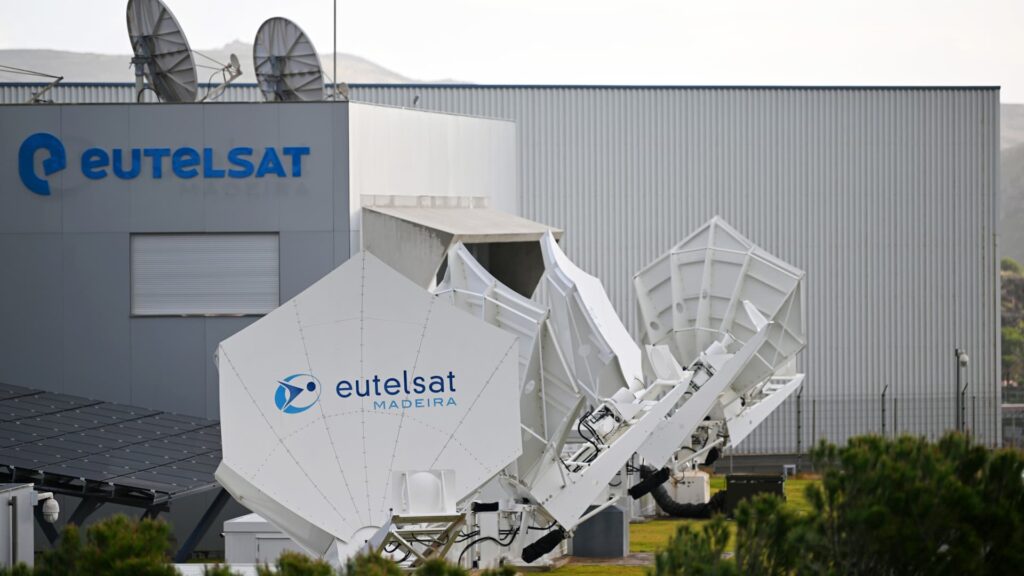
The financial landscape for Eutelsat took a significant downturn as reports indicate that Japanese investor SoftBank has divested a substantial portion of its stake in the satellite company. Eutelsat, often viewed as Europe’s competitor to Elon Musk’s Starlink, saw its shares decline sharply following the news. As the satellite sector undergoes considerable scrutiny and operational challenges, the implications could reverberate through Europe’s aspirations for technological sovereignty, especially amidst rising competition in satellite internet services.
| Article Subheadings |
|---|
| 1) Eutelsat’s Declining Stock Performance |
| 2) SoftBank’s Strategic Shift |
| 3) The Competitive Satellite Landscape |
| 4) Implications for European Tech Sovereignty |
| 5) Future Prospects for Eutelsat |
Eutelsat’s Declining Stock Performance
On a day marked by volatility in its share price, Eutelsat experienced a steep decline of more than 7% at one point, ultimately closing the trading session down by 5.7%. This fallout followed a report detailing that SoftBank has sold subscription rights amounting to approximately 36 million rights, translating to around 26 million shares. Notably, this transaction represents about half of SoftBank’s stake in the satellite operator, heightening concerns over investor confidence in Eutelsat’s future performance.
The substantial selloff highlights a growing apprehension regarding Eutelsat’s ability to compete effectively in the increasingly crowded satellite internet sector, where rapid advancements and strategic investments from rivals could exacerbate its struggles. As one of the key players in Europe, the necessity for Eutelsat to bolster its market presence is becoming more urgent, especially as it grapples with competing technologies and increasing market saturation.
SoftBank’s Strategic Shift
SoftBank’s decision to divest a large portion of its holdings in Eutelsat aligns with its broader strategy to reallocate resources towards emerging technologies, particularly artificial intelligence initiatives. The move is part of a larger trend where SoftBank is restructuring its portfolio to better position itself within high-growth sectors. In November, SoftBank indicated it had liquidated its entire stake in prominent U.S. chipmaker Nvidia, marking a decisive shift towards funding investments in artificial intelligence.
The founder of SoftBank, Masayoshi Son, elucidated that the company would not undertake such actions unless necessary for financial liquidity for future ventures. This reshaping of priorities reflects a significant pivot for SoftBank, underscoring its focus on high-potential tech initiatives while potentially sidelining legacy investments like Eutelsat.
The Competitive Satellite Landscape
Eutelsat’s merger with OneWeb in 2023 aimed to establish a formidable rival to Starlink, which boasts over 6,750 satellites currently in orbit. Eutelsat, with more than 600 satellites, has provided satellite internet services; however, it still struggles to penetrate the market share dominated by its American counterpart. Despite this significant merger, the French company has faced challenges in scaling its operations effectively in comparison to Starlink.
Although Eutelsat remains committed to addressing niches such as government, aviation, and emergency connectivity, it faces stringent pressures to deliver attractive returns in these sectors. Analysts have indicated that Eutelsat’s pivot towards a more business-to-business-centric operational model may allow it to compete more effectively, yet the current capital expenditures and recapitalization phases pose considerable uncertainties.
Implications for European Tech Sovereignty
Eutelsat is regarded as a cornerstone in Europe’s quest for tech sovereignty, a vision solidified during the European Union’s recent initiatives aimed at decreasing reliance on foreign technology and reinforcing resilience within the region. The French government’s substantial investment of 1.35 billion euros, which transformed it into the largest shareholder with about a 30% stake, reflects the national significance placed on Eutelsat’s stability and future growth.
However, the volatility in Eutelsat’s stock and SoftBank’s exit raises alarms about Europe’s strategy. The region’s ambition to enhance its digital autonomy relies significantly on Eutelsat’s performance, and ongoing uncertainties could undermine progress towards that goal. As governments and strategic investors undertake financial commitments, questions linger over whether the broader European tech ecosystem can continue to support Eutelsat as it navigates competitive challenges.
Future Prospects for Eutelsat
As Eutelsat forges ahead, it must confront the daunting task of sustaining its viability without the backing of a major investor like SoftBank. The company’s approach to capitalize on higher-value sectors and government contracts could yield potential rewards, yet this is contingent on ongoing investments from stakeholders willing to support Eutelsat’s strategy for recovery and growth.
While the challenges ahead are manifold, the company may need to scout new partnerships and avenues for innovation to reposition itself advantageously amid rising competition. The effectiveness of this pivot will largely determine whether Eutelsat can remain a crucial player in Europe’s digital landscape or falter in the face of heightened competition and shifting market dynamics.
| No. | Key Points |
|---|---|
| 1 | Eutelsat’s shares fell over 7% following SoftBank’s sale of a significant stake. |
| 2 | SoftBank’s move reflects a strategic shift towards funding emerging technologies like AI. |
| 3 | Eutelsat faces competitive challenges against Starlink, which has a far larger satellite fleet. |
| 4 | The company is crucial to Europe’s ambitions for technological sovereignty amid rising competition. |
| 5 | Future growth for Eutelsat depends on strategic partnerships and innovations to enhance its market position. |
Summary
The recent decline in Eutelsat’s stock price accompanied by SoftBank’s exit highlights a pivotal moment for the satellite operator as it endeavors to maintain its position in a competitive market. This scenario raises critical questions about the future of technological sovereignty in Europe, emphasizing the importance of strategic investments and adaptations for Eutelsat’s sustained relevance. Moving forward, the company must negotiate the complexities of growth amidst challenges posed by dominant competitors like Starlink while fostering regional partnerships essential for its revival.
Frequently Asked Questions
Question: Why did Eutelsat’s shares drop significantly?
Eutelsat’s shares fell sharply after reports surfaced that SoftBank sold a significant stake in the satellite company, leading to concerns about investor confidence and the company’s future performance.
Question: What is SoftBank’s strategic focus after selling its stake in Eutelsat?
SoftBank is focusing on reallocating its resources towards emerging technologies like artificial intelligence, thereby restructuring its investment portfolio for higher-growth opportunities.
Question: How does Eutelsat compare to Starlink in the satellite internet market?
Eutelsat operates with over 600 satellites, while Starlink has more than 6,750 satellites, highlighting Starlink’s substantial advantage in market penetration and service scale.