
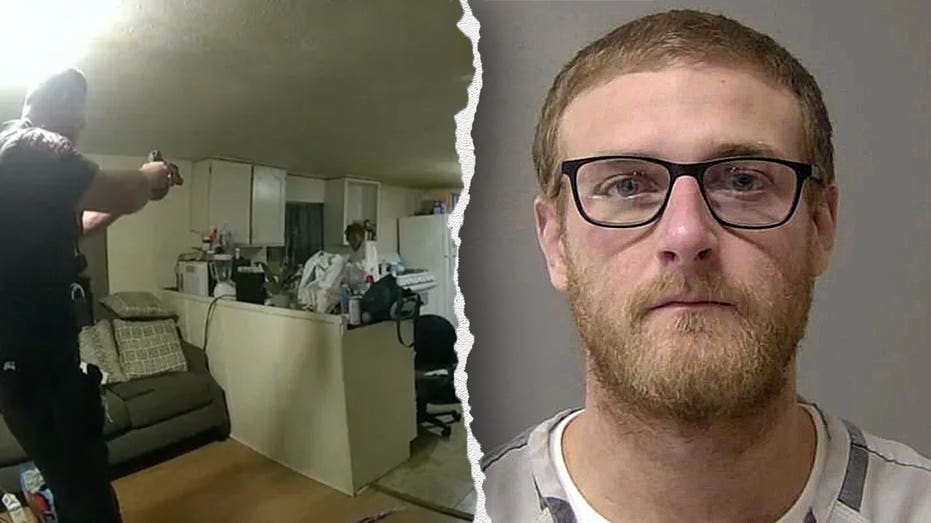
Sean Grayson, the former Illinois sheriff’s deputy convicted in the fatal shooting of Sonya Massey, died Sunday while serving a 20-year prison sentence. His attorney, Daniel Fultz, confirmed the death but did not provide further details. Grayson had been battling colon cancer that had spread to his liver and lungs, and an Illinois board denied his request for medical release last month.
The case followed a July 6, 2024, 911 response at Massey’s home near Springfield, Illinois. Body-camera video showed Grayson firing three shots inside the residence, striking Massey in the head. The killing led to Grayson’s conviction, national protests and changes to Illinois law enforcement hiring and emergency-response practices.
| 1) | Death during a 20-year sentence |
| 2) | Cancer and denied medical release |
| 3) | The shooting at Sonya Massey’s home |
| 4) | Trial, conviction and sentence |
| 5) | Policy changes after the killing |
Death during a 20-year sentence
Sean Grayson died Sunday while incarcerated in Illinois, according to his attorney, Daniel Fultz. Grayson was 32 and had been serving the maximum 20-year prison sentence imposed after his conviction for the 2024 killing of Sonya Massey. His attorney confirmed the death but did not disclose additional information about the circumstances or location.
Grayson had been dismissed from the Sangamon County Sheriff’s Office after the shooting. His death ended his imprisonment while he was serving the sentence connected to the case that had drawn national attention and prompted broader scrutiny of police conduct.
Cancer and denied medical release
Before and during the criminal proceedings, Grayson was battling colon cancer. His lawyers told the court at sentencing that the disease had spread to his liver and lungs, describing a serious medical condition while asking for consideration of his health.
In May, Grayson sought release under an Illinois law that allows incarcerated people with terminal or serious illnesses to request medical release. The Illinois Prisoner Review Board denied the request last month. The denial left Grayson serving his sentence in prison until his death.
The shooting at Sonya Massey’s home
Sonya Massey, a 36-year-old Black woman, called 911 shortly before 1 a.m. on July 6, 2024, to report what she believed was suspicious activity outside her home in the Springfield area, roughly 200 miles southwest of Chicago. Grayson and another deputy walked around the property before speaking with her at the front door.
Body-camera footage released after the shooting showed Massey appearing confused as the deputies asked questions and sought identification for their report. As they prepared to leave, Grayson noticed a pot heating on the stove. Massey told the deputies, Don’t hurt me.
“We don’t need a fire while we’re here,” Grayson said, according to the body-camera footage.
Prosecutors said Grayson ordered Massey to move the pot of hot water, threatened to shoot her and opened fire after she briefly rose from a crouched position. The video showed him firing three shots, one of which struck Massey in the head. His partner, Dawson Farley, later testified that he did not see Massey as a threat and drew his firearm only after Grayson did.
Trial, conviction and sentence
A grand jury initially charged Grayson with first-degree murder, aggravated battery with a firearm and official misconduct. He pleaded not guilty. In October, a jury convicted him of the lesser offense of second-degree murder in Massey’s death.
A judge later imposed the maximum 20-year prison sentence. The conviction followed the release of the body-camera video and extensive public discussion about the actions of the deputies during the welfare check. The case centered on whether Massey posed an immediate threat when Grayson fired inside her home.
Policy changes after the killing
Massey’s killing sparked demonstrations and renewed questions about Grayson’s previous employment with several law enforcement agencies before he was hired by the Sangamon County Sheriff’s Office. Illinois later enacted the Sonya Massey Act, which requires agencies to conduct closer reviews of an applicant’s prior employment history before hiring an officer.
The U.S. Justice Department also opened a civil-rights investigation and later reached an agreement with Sangamon County, the sheriff’s office and other local agencies. The agreement called for changes in policing and emergency response, including expanded training for calls involving people with behavioral-health disabilities and creation of a mobile crisis-response program.
| Number | Key Point |
|---|---|
| 1 | Sean Grayson died while serving a 20-year sentence for second-degree murder. |
| 2 | His medical release request was denied after he sought relief under Illinois law. |
| 3 | Sonya Massey was fatally shot during a 911 response at her home in July 2024. |
| 4 | Illinois passed the Sonya Massey Act after the case drew national attention. |
Summary
The death of Sean Grayson closes the criminal proceedings for the former deputy, but the consequences of Sonya Massey’s killing extend beyond his sentence. The case prompted public protests, federal scrutiny and changes to officer hiring reviews, behavioral-health training and crisis response in Illinois.
Frequently Asked Questions
Who was Sean Grayson?
Sean Grayson was a former Sangamon County sheriff’s deputy who was convicted of second-degree murder in the fatal shooting of Sonya Massey.
Why was Grayson in prison?
He was serving a 20-year sentence imposed after a jury convicted him in connection with Massey’s July 2024 death.
Why was his medical release request denied?
Grayson sought medical release under Illinois law because of colon cancer that had spread to his liver and lungs. The Illinois Prisoner Review Board denied the request last month, but the supplied information does not state the board’s specific reasoning.