
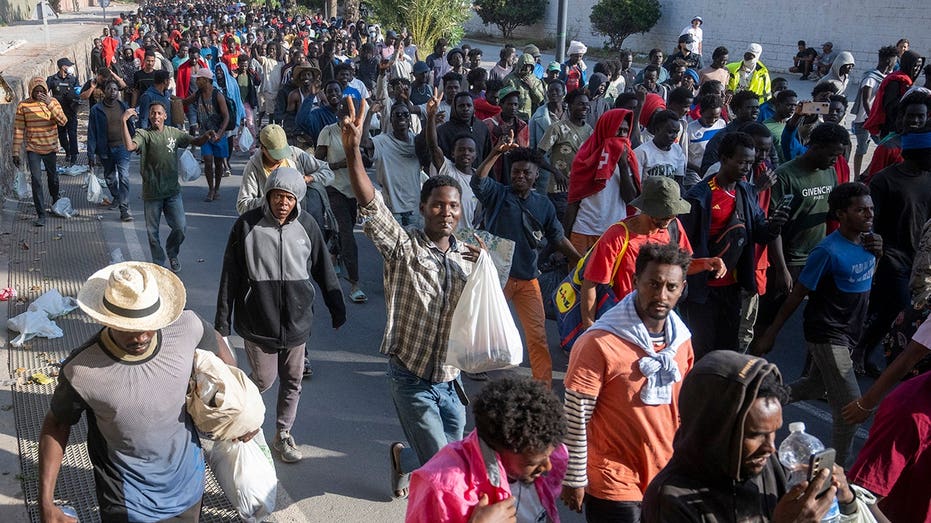
Unchecked mass migration is eroding national sovereignty and placing growing pressure on Western countries, according to Lora Ries, director of the Border Security and Immigration Center at The Heritage Foundation. The warning comes as migrant arrivals continue to fuel political and cultural tensions in Europe and the United States. The debate has intensified after President Donald Trump criticized international migration policies during his September address to the United Nations General Assembly.
Supporters of managed migration, including United Nations agencies, the World Economic Forum and the International Organization for Migration, describe lawful and orderly movement as beneficial to migrants and host societies. Critics argue that weak enforcement, limited assimilation and broad asylum interpretations are leaving national governments unable to determine who enters, how many people arrive and how long they remain.
| 1) | Sovereignty concerns linked to unchecked migration |
|---|---|
| 2) | Pressure on Western communities and public resources |
| 3) | Global migration policies and nationalist opposition |
| 4) | Asylum standards and enforcement disputes |
| 5) | Recent border movements in Europe and North America |
Sovereignty concerns linked to unchecked migration
Ries said the central issue is whether elected governments and their citizens retain authority over border policy. She pointed to similar migration pressures in the United Kingdom, France, Germany, other parts of Western Europe and the United States, arguing that recurring patterns indicate a broader policy trend rather than isolated national events.
“What that does is it erodes the sovereignty of the nation-state. So no longer do people in a nation get to decide who’s coming, how many, for what reason, and for how long, and whether people are complying with our laws.”
The argument has become a prominent part of the nationalist response to international institutions that promote cross-border mobility. President Trump used his United Nations speech last week to emphasize national borders and oppose what he described as policies that weaken the authority of individual states.
Pressure on Western communities and public resources
Critics of current migration levels say host countries are struggling to provide housing, public services and administrative capacity for large numbers of arrivals. They also cite concerns about limited assimilation, the growth of ethnic enclaves and changes in language and local culture.
Ries said political leaders and law enforcement officials may be reluctant to address those concerns because of political pressure and fears of being labeled intolerant. She argued that the resulting tensions affect both newly arrived immigrants, including some who entered illegally, and established populations that believe their interests and cultural identity are being overlooked.
Global migration policies and nationalist opposition
The United Nations, the International Organization for Migration and other international bodies support managed, regular and lawful migration, presenting mobility as a demographic and economic reality. The United Nations 2030 Agenda, adopted by member states in 2015, includes 17 sustainable development goals covering issues such as poverty and climate change.
Ries contended that some advocates view migration as a tool for advancing those goals, while arguing that the effects are not sustainable for countries experiencing large inflows. This position conflicts with the concept of global citizenship promoted by some international organizations and with nationalist movements that prioritize domestic control over migration policy.
“There is no human right to illegal immigration, but there is a right to remain a sovereign nation.”
Asylum standards and enforcement disputes
The asylum system is another major point of disagreement. Critics say broad interpretations and weak screening can allow people without valid protection claims to remain in a country, placing pressure on adjudicators and undermining public confidence in refugee protections.
Ries called for a return to narrower standards centered on persecution by a government actor because of race, religion, nationality or political opinion. She said the meaning of persecution has become too broad and should be clarified so that asylum remains focused on its original purpose.
Recent border movements in Europe and North America
In Spain, more than 70,000 migrants crossed into the North African enclave of Ceuta during a mass influx on July 30 and 31, 2026, according to the article. Migrants were later relocated, while footage showed people crossing from Morocco and overwhelming police at the city’s breakwater.
Separately, a migrant caravan that began in Honduras crossed into Mexico on Monday as hundreds traveled north toward the United States border. The Department of Homeland Security said people considering the journey should not expect the former “catch and release” approach to continue, describing the prior policy as an open-border system that had been ended.
| Number | Key Point |
|---|---|
| 1 | Critics say unchecked migration limits national control over borders and residency. |
| 2 | European governments face pressure from large arrivals and integration challenges. |
| 3 | The asylum process remains contested because of concerns about broad eligibility. |
| 4 | International groups support lawful migration, while nationalist leaders demand stricter controls. |
Summary
The dispute over mass migration centers on the balance between humanitarian protection, economic mobility and national sovereignty. Critics argue that large, poorly controlled inflows can overwhelm institutions and weaken social cohesion, while international organizations maintain that orderly migration can benefit societies. The continuing arrivals in Europe and movement toward the United States ensure that border enforcement and asylum policy will remain central political issues.
Frequently Asked Questions
Why does the expert say mass migration threatens sovereignty?
Lora Ries argues that governments lose practical control when they cannot determine who enters, how many people arrive, why they come or whether they comply with national laws.
Which organizations support managed migration?
The United Nations, the International Organization for Migration and the World Economic Forum are described as supporting regular, lawful and managed migration.
What changes to asylum policy does Ries support?
She supports returning asylum standards to persecution claims involving government actors and based on race, religion, nationality or political opinion.