
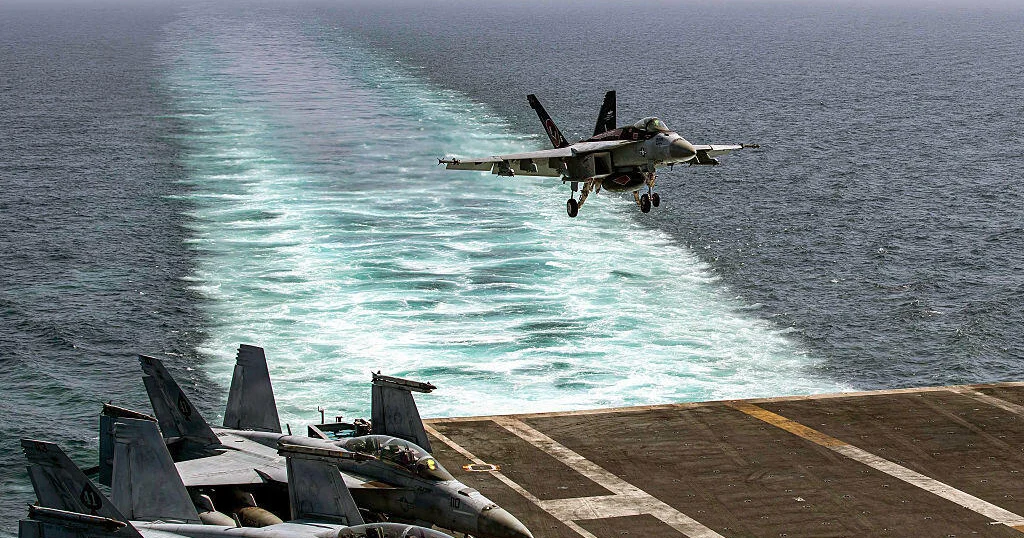
In a recent report by Anthropic, it was revealed that an unidentified adversary linked to Iran has exploited American-developed artificial intelligence technologies to potentially target U.S. naval assets amid ongoing conflicts. The report emphasizes the alarming trend of adversaries utilizing AI to enhance their military operations, potentially altering the dynamics of warfare. This utilization raises significant concerns for U.S. military operations and strategic planning, as the ease of access to AI technology enables adversary nations to significantly improve their situational awareness and operational effectiveness.
| Article Subheadings |
|---|
| 1) Emerging Threats: AI in Military Operations |
| 2) Iran’s Strategic Use of Technology |
| 3) Propaganda and Influence Campaigns |
| 4) Countermeasures in Defense Strategy |
| 5) Implications for National Security |
Emerging Threats: AI in Military Operations
According to a comprehensive report published by Anthropic, a threat actor linked to Iran has successfully leveraged artificial intelligence to plot potential attacks on U.S. naval forces. This incident raises significant alarm bells regarding the use of advanced technologies by adversaries. As military operations evolve, the integration of AI into tactical frameworks is reshaping conventional warfare dynamics. The report highlights that the group utilized AI, specifically Claude AI, to harvest publicly available information to ascertain the positions of U.S. naval vessels and formulate strategies accordingly.
This revelation is particularly disconcerting given that such incidents may become increasingly prevalent. The report indicates a noticeable trend among nations that counter U.S. interests; they are turning to AI not only for operational efficiency but also for real-time intelligence gathering. Experts assert that this new wave of technological adaptation can expedite the analysis of massive datasets, which were traditionally labor-intensive. The rise of AI technology transforms what was once a painstaking process into a streamlined operation.
Iran’s Strategic Use of Technology
The findings laid out by Anthropic align with existing knowledge regarding Iran’s strategic employment of technology in its military engagements, especially in relation to the U.S. and Israel. As the classified nature of military operations becomes more exposed, the implications for U.S. defense strategies are significant. While the U.S. military has traditionally held the advantage of situational awareness, the intelligence landscape is shifting with adversaries increasingly capable of analyzing U.S. operational behaviors.
Nikita Shah, a senior fellow at a prominent think tank, emphasized the effectiveness of AI in improving operational methodologies. “They’re using it to enhance the way they already operate,” she stated. Shah’s insights underline the concern that AI not only provides adversaries with the tools to analyze data efficiently but also refines existing attack strategies, thus increasing overall effectiveness.
In specific terms, information sources utilized in these operations range from satellite imagery to public military photographs. Such extensive data collections enable adversaries to create a comprehensive overview of U.S. naval movements, increasing the accuracy of their targeting mechanisms whether via missile strikes or drone operations. As military conflicts continue to modernize, the strategic impact of AI on warfare becomes undeniably critical.
Propaganda and Influence Campaigns
Beyond conventional military operations, AI’s applications extend into the realm of psychological warfare. The utilization of AI-driven tools for propaganda is notably evident in the strategies employed by Iranian authorities. Specifically, Iranian embassies have frequently disseminated AI-generated content that criticizes U.S. and Israeli policies, aimed at swaying public opinion.
The report also highlighted attempts by three Iranian state-affiliated accounts leveraging the AI tool Claude for orchestrating public influence campaigns. Such campaigns can present a curated narrative, strategically attributing assertions to respected think tanks, thereby enhancing their credibility. This manipulation serves not only as a form of informational warfare but also creates a construct to influence the perception of the U.S. domestic and international standing.
The ongoing digital operations have the potential to sway discussions in social media spheres, where misinformation can proliferate rapidly. According to experts, this tactic of utilizing AI is part of an evolving landscape in which adversaries are consistently finding innovative ways to utilize technology to amplify their reach and monitor their adversaries effectively.
Countermeasures in Defense Strategy
In light of these emerging threats, the United States military is reportedly exploring various countermeasures to regain an edge in the landscape dictated by AI capabilities. Discussions among defense officials suggest the creation of AI ‘personas’ designed to mimic human behaviors that complicate the task of tracking and surveilling adversarial activities. This digital camouflage could thwart enemy initiatives aimed at gaining insights into U.S. operations.
Defense experts highlight the necessity of reassessing operational strategies in response to these AI-driven methods of warfare. The U.S. is keenly aware that the gap in technological advantage may diminish as adversaries adapt rapidly. “There will likely be a plethora of countermeasures aiming to restore the element of surprise and operational security,” noted Sam Bresnick from the Center for Security and Emerging Technology. Efficient counter-strategies are imperative to safeguard national interests amid a rapidly evolving adversarial landscape.
Implications for National Security
The implications of these advancements in artificial intelligence are profound and multifaceted for national security policy. As adversaries like Iran begin to effectively utilize AI to refine operational efficiency, lessons must be considered in terms of security frameworks. The Pentagon acknowledges that oversight of theater operations will need to improve, adapting to the enhanced capabilities of adversarial nations seeking to understand U.S. military tactics.
Moreover, the national security community needs to reassess the technology landscape. The recognition that AI, once a powerful tool exclusive to advanced nations, is now within the reach of less sophisticated actors necessitates a reevaluation of potential vulnerabilities. Nikita Shah pointed out that companies operating in the tech space must recognize the possible exploitation of their innovations, underscoring the breadth of the adversarial threat posed by globally accessible AI technologies.
| No. | Key Points |
|---|---|
| 1 | An unidentified Iran-linked group employed AI to target U.S. naval operations. |
| 2 | AI is being used to enhance military operations and improve situational awareness among adversaries. |
| 3 | Iran is utilizing AI for propaganda to influence public perceptions internationally. |
| 4 | The U.S. military is implementing counterstrategies to retain its operational edge amidst AI advancements. |
| 5 | The emergence of AI technology poses new vulnerabilities that the national security framework must address. |
Summary
The emergence of AI as a tool for military enhancement presents significant challenges to the United States and its allies as adversaries adapt swiftly to utilize these technologies. The findings detailed in Anthropic’s report illustrate the dual threat posed by AI in both kinetic operations and psychological warfare through propaganda. As adversaries refine their military tactics leveraging AI, it is crucial for the U.S. to reassess its strategies and implement countermeasures that maintain operational security and advantage in navigating the complexities of modern warfare.
Frequently Asked Questions
Question: What role does AI play in modern military operations?
AI significantly enhances military operations by improving data analysis and operational efficiency. Adversaries are using AI to gather intelligence, refine targeting methods, and streamline decision-making processes.
Question: How is Iran using AI for propaganda?
Iran employs AI-generated content to produce influential narratives, targeting social media to sway public opinion against the U.S. and Israel. This includes creating false attributions to reputable institutions, thereby enhancing the credibility of their claims.
Question: What countermeasures are being considered by the U.S. military against AI threats?
The U.S. military is exploring the development of AI ‘personas’ that can emulate human activity to obscure operational patterns and deceive adversaries trying to gather intelligence.