
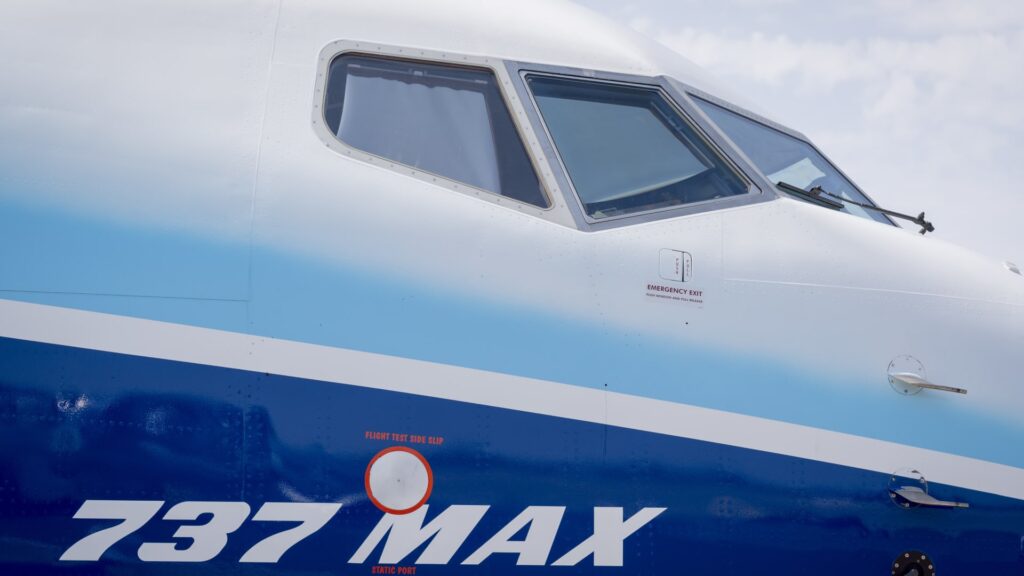
In a recent development impacting the aviation industry, the Federal Aviation Administration (FAA) has announced a delay in the certification of Boeing’s 737 Max 10 due to a software issue. This setback comes as Boeing had anticipated receiving the necessary government approval imminently, following years of delays. The FAA has emphasized its commitment to safety in the certification process, particularly in light of the recent discovery related to the aircraft’s landing procedures.
| Article Subheadings |
|---|
| 1) FAA Confirms Software Glitch |
| 2) Boeing’s Response to the Delay |
| 3) Implications for Airlines and Aviation |
| 4) Historical Context of the 737 Max Family |
| 5) The Importance of Safety in Aircraft Certification |
FAA Confirms Software Glitch
The FAA has confirmed that a software problem has been identified in the Boeing 737 Max 10, one of the latest models in the company’s Max family. FAA Administrator Brian Bedford addressed the media during a press conference, stating that the investigation into the software glitch is ongoing. The FAA is particularly cautious as the issue could potentially influence landing procedures, prompting the agency to ensure that all safety checks are thoroughly addressed before granting final certification. Bedford noted, “We haven’t concluded whether this is a safety-of-flight issue or not, but we will be delaying the 10 until we’re satisfied that we don’t have an issue here.”
Boeing’s Response to the Delay
In light of the FAA’s recent findings, Boeing has expressed its commitment to collaborating with the agency throughout the certification process. CEO Kelly Ortberg had initially projected that approval would come “very soon,” but the newly discovered glitch has forced the company to reassess its timeline. Boeing reassured investors and stakeholders that it is actively addressing the software issue. “We continue to follow the lead of the FAA as we work through the certification process,” the company stated. This proactive communication aims to maintain investor confidence amidst the stock losses the company faced after the FAA’s announcements, with Boeing shares reportedly shedding nearly 7% following the news.
Implications for Airlines and Aviation
The delay in the certification of the 737 Max 10 could have significant repercussions for airlines, particularly those that were anticipating delivery of the aircraft. Notably, U.S. airlines have indicated that none of their current Max aircraft are affected by the software issue, mainly because they are operating older software versions that do not present similar concerns. As a result, airlines like Southwest Airlines could face disruptions in their fleet planning and service schedules as they wait for the resolution of this issue. The FAA has made it clear that safety dictates the certification timeline, emphasizing the importance of resolving this glitch thoroughly before allowing further deliveries.
Historical Context of the 737 Max Family
The 737 Max family has faced its fair share of scrutiny, primarily due to two catastrophic crashes involving the 737 Max 8 in 2018 and 2019 that resulted in a temporary grounding of the fleet. The crashes were linked to a flawed flight control system that compromised pilot control. In contrast, Bedford noted that the current software glitch does not take control away from the pilots, which may provide some levity in the overall assessment of flight safety in this situation. The company had initially earmarked 2020 as the year for the Max 10’s debut, but ongoing safety evaluations have delayed progress for several years, making the need for rigorous testing and certification processes even more critical.
The Importance of Safety in Aircraft Certification
The FAA’s persistent commitment to safety highlights the regulatory body’s approach to ensuring that all aircraft meet stringent standards before entering commercial service. As aviation technology continues to evolve, the necessity for regulatory agencies to adapt to new challenges becomes paramount. The recent software glitch serves as a reminder of the complexities involved in modern aircraft design and the importance of thorough testing and assessment protocols to maintain public confidence in air travel safety. Both Boeing and the FAA are grappling with the balance between technological advancement and safety, a challenge that requires ongoing dialogue and collaboration within the aviation ecosystem.
| No. | Key Points |
|---|---|
| 1 | The FAA has delayed the certification of the Boeing 737 Max 10 due to a software glitch affecting landing procedures. |
| 2 | Boeing had aimed for quick certification but must now address the identified issue before proceeding. |
| 3 | U.S. airlines report no current 737 Max aircraft are affected, as older software versions are in use. |
| 4 | Bedford emphasized that safety is the primary focus in the certification process. |
| 5 | The aviation industry faces ongoing scrutiny as past incidents continue to impact Boeing’s reputation. |
Summary
The delay in the certification of the Boeing 737 Max 10 underscores the FAA’s stringent safety protocols amid ongoing technological advancements in aviation. The software glitch raises questions about the complexity of modern aircraft systems, with implications for airlines and stakeholders at large. As Boeing navigates this setback, the importance of safety in aviation remains paramount, ensuring public confidence in air travel can be maintained as the company works towards resolution.
Frequently Asked Questions
Question: Why is the FAA delaying the certification of the 737 Max 10?
The FAA is delaying the certification due to a software glitch that may affect landing procedures, necessitating a thorough safety review.
Question: What impact does this delay have on airlines?
The delay could affect airlines’ schedules and fleet planning as they awaited delivery of the aircraft, although current Max aircraft operated by U.S. airlines are not affected.
Question: How does this situation compare to previous issues with Boeing aircraft?
This situation differs from previous safety crises, like the Max 8 crashes, as the current issue does not take control away from pilots, demonstrating the FAA’s focus on maintaining pilot authority during operations.