
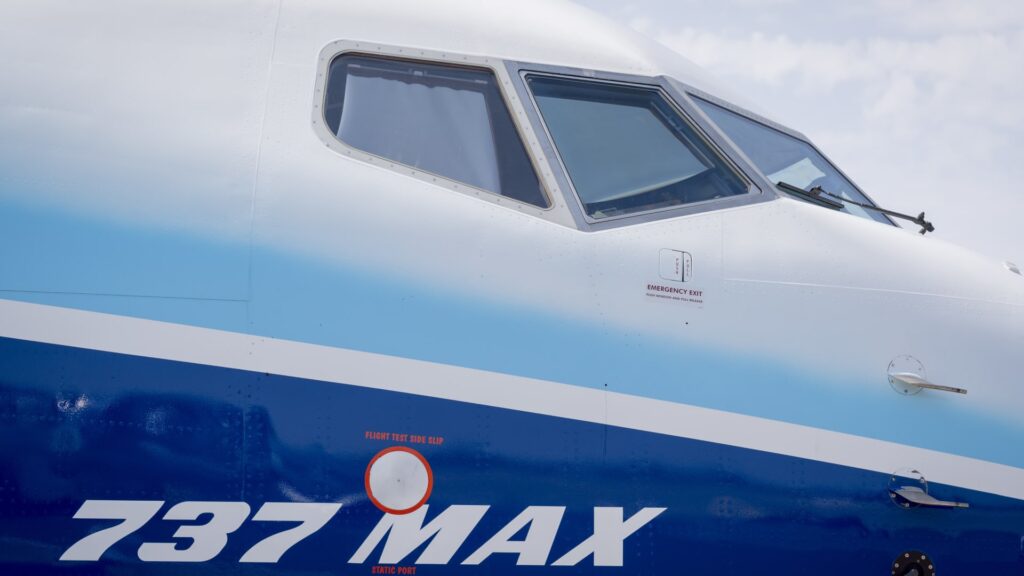
The Federal Aviation Administration (FAA) has confirmed that a software glitch identified in specific Boeing 737 Max aircraft does not pose a flight safety issue. This determination paves the way for the certification of the Boeing 737 Max 10, an aircraft crucial for Boeing as it aims to recover from past safety and manufacturing crises. While the FAA concluded that the problem does not compromise safety, it is still issuing guidelines to airlines on how to manage the issue, which arose during landing procedures.
| Article Subheadings |
|---|
| 1) FAA’s Assessment of the Software Glitch |
| 2) Implications for Boeing’s 737 Max 10 Certification |
| 3) Industry Reactions and Airline Responses |
| 4) Background on the Boeing 737 Max Series |
| 5) Future Steps for Boeing and the FAA |
FAA’s Assessment of the Software Glitch
The Federal Aviation Administration (FAA) announced on Friday that after a comprehensive review, a panel of safety experts concluded that a newly identified software glitch in certain Boeing 737 Max aircraft poses no danger to flight safety. The FAA’s Corrective Action Review Board evaluated the situation, which includes various experts from fields such as airframes, flight controls, propulsion, and flight testing, to ensure a thorough assessment. The FAA stated, “Following a thorough review… a software issue in certain Boeing 737 MAX flight computers is not a safety concern.” This statement affirms that pilots retain full control of the aircraft even in the event of a problematic landing sequence, with clear signals provided to the crew regarding the aircraft’s status.
Implications for Boeing’s 737 Max 10 Certification
The resolution of the software issue is crucial for Boeing because it clears a significant hurdle in the certification process for the 737 Max 10, the largest model in the Max family. Previously, there were concerns that the glitch could delay certification of this much-anticipated aircraft. Boeing had highlighted that the glitch could present challenges during specific landing scenarios, particularly after a missed approach when pilots must adjust a pre-set flight path. As part of the FAA’s strategy, it was announced that a special bulletin would be issued to airlines to instruct pilots on how to recognize and respond should the issue be encountered during operations. With certification expected shortly, the Max 10’s introduction into service could bolster Boeing’s struggling sales and reputation.
Industry Reactions and Airline Responses
In light of the glitch, U.S. airlines expressed relief as they reported no immediate impact from the issue, citing the ability to revert to earlier software versions. Although some airline executives, including those from Alaska Airlines and Ryanair, have downplayed the certification delays, the situation raises broader questions about the manufacturing and regulatory oversight of the 737 Max line. As Boeing aims to rebuild its market presence following a series of setbacks, the swift resolution of issues like this is critical. The FAA will continue to monitor the situation, demonstrating a commitment to public safety and transparency in its regulatory processes.
Background on the Boeing 737 Max Series
The Boeing 737 Max series has been at the center of significant scrutiny following two catastrophic crashes involving the 737 Max 8 model in 2018 and 2019 that killed 346 people. These incidents led to a worldwide grounding of the entire Max fleet which lasted for approximately 20 months. During this time, Boeing made substantial changes to the aircraft’s software and safety features. In August, the FAA cleared the 737 Max 7 for takeoff, marking the first approval of the Max family since the crisis. The return to service for the Max series represents a crucial turning point for Boeing, once the world’s largest commercial airplane manufacturer, as it seeks to regain trust and market share.
Future Steps for Boeing and the FAA
Moving forward, both Boeing and the FAA are committed to ensuring safety and addressing any potential issues as they arise. The FAA has indicated that it will take appropriate action if new information about the software glitch surfaces, maintaining a proactive stance in aviation safety. As Boeing prepares to deliver the 737 Max 10 to awaiting airlines, the focus will remain on rigorous training and monitoring to ensure that pilots are well-equipped to manage any complexities associated with the aircraft’s technology. This continued vigilance aims to restore confidence among consumers and airline operators in Boeing’s aircraft.
| No. | Key Points |
|---|---|
| 1 | The FAA determined that a new software glitch in the Boeing 737 Max series does not compromise flight safety. |
| 2 | The software issue affects landing procedures; however, pilots retain control of the aircraft. |
| 3 | Boeing is working towards the certification of the 737 Max 10, the last aircraft in the Max family to receive approval. |
| 4 | U.S. airlines report no immediate impacts due to their ability to revert to older software versions. |
| 5 | The FAA will issue guidelines to airlines on how to manage the software issue, ensuring ongoing oversight. |
Summary
The FAA’s recent determination regarding the Boeing 737 Max software glitch exemplifies the agency’s commitment to safety while simultaneously supporting Boeing in its recovery efforts. With the path cleared for the certification process of the 737 Max 10, the discussion around the future of the Boeing 737 Max series continues, highlighting both challenges and opportunities. This case underscores the importance of rigorous safety evaluations and transparent communication among regulatory officials, manufacturers, and airlines as they aim to ensure the integrity of air travel.
Frequently Asked Questions
Question: What is the significance of the FAA’s determination regarding the software glitch?
The FAA’s determination signifies that the software glitch does not pose a threat to flight safety, allowing for the continued certification process of the Boeing 737 Max aircraft, particularly the Max 10.
Question: How will Boeing address the newly identified software issue?
Boeing plans to provide guidelines and instructions to airlines on how to recognize and respond to the software issue if it appears during flight operations.
Question: What impact did the software glitch have on U.S. airlines?
U.S. airlines reported that they could revert to older software versions, thus mitigating any immediate impact from the software glitch.