
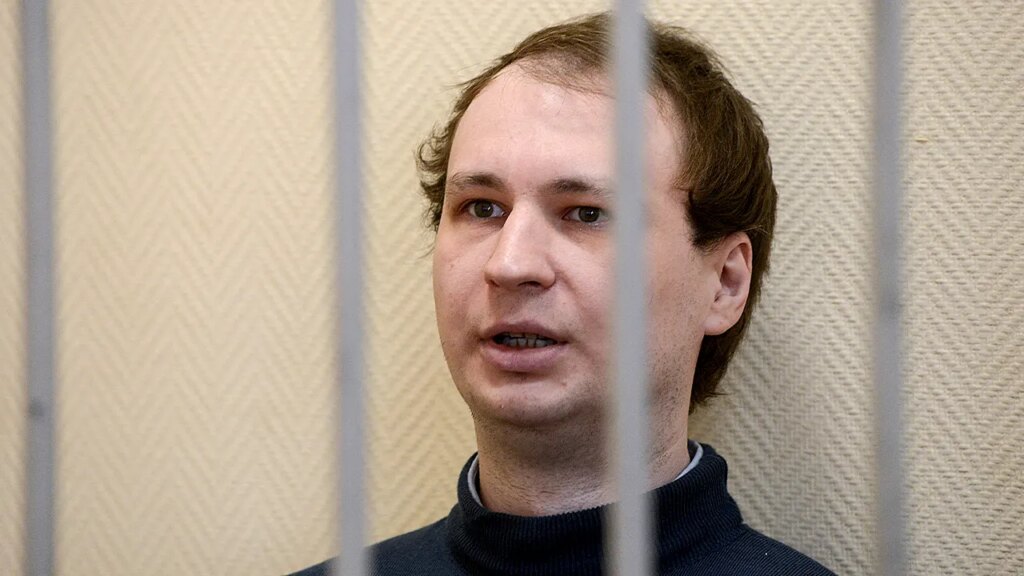
The ongoing plight of former U.S. Marine Robert Gilman, currently imprisoned in Russia, has escalated, as advocacy groups raise alarms about his deteriorating health. Since his arrest in 2022 for a train disturbance, Gilman has faced a series of legal and medical challenges, culminating in a recent report that he is being fed through a tube after falling into a catatonic-like state. His family and advocacy organizations are calling for immediate action to ensure his safety and wellbeing, highlighting the urgent need for U.S. intervention.
| Article Subheadings |
|---|
| 1) Timeline of Events Leading to Gilman’s Deterioration |
| 2) Commentary from Advocacy Groups and Family Members |
| 3) Legal Challenges and Recent Developments |
| 4) U.S. Government Reaction and International Concerns |
| 5) Implications for Other Americans in Russian Custody |
Timeline of Events Leading to Gilman’s Deterioration
The saga began in January 2022 when Robert Gilman was arrested during a journey from Sochi to Moscow. Fellow passengers reported him for being intoxicated and causing disturbances while he attempted to replace a damaged passport. Following his arrest, Gilman was convicted and sentenced to 3.5 years in prison for assaulting a police officer, a conviction he later claimed resulted from a spiked drink. Over time, his legal troubles exacerbated, culminating in additional charges primarily stemming from altercations with prison staff.
By June 2023, reports indicated Gilman’s condition had severely deteriorated. Advocacy groups began noting that he had been moved from a prison hospital to a psychiatric ward in Voronezh after exhibiting signs of a “dissociative stupor.” His inability to feed himself for more than six weeks has raised significant concerns regarding his health and wellbeing. Consequently, the events leading to his current condition have been characterized by a troubling lack of transparency regarding his treatment, with Russian authorities providing limited updates on his situation.
Commentary from Advocacy Groups and Family Members
Gilman’s case has become a focal point for various advocacy groups, including Global Reach, which represents his family. Eric Lebson, the group’s chief strategy officer, expressed deep concerns over Gilman’s state, describing the treatment as inappropriate and potentially life-threatening. “For the past 46 days, he has been fed through a tube,”
Lebson stated.
. He further emphasized the lack of communication from Russian officials, stating, “The Russians have not been responsive,” which has exacerbated fears for Gilman’s life.
Family members, particularly Gilman’s sister, Lexie Hudson, have also voiced their anxiety about his condition. “I am more afraid for my brother than I have been since this horrible nightmare started,” she said. Hudson’s fears are rooted not only in his physical state but also in the uncertainty surrounding when or if he will ever be released, stating, “I’m worried that I may never see him again if the Russians don’t release him. I’m worried that he could die.”
Legal Challenges and Recent Developments
Gilman’s legal troubles intensified following his original conviction. In December 2022, a regional court extended his sentence, which now totals ten years, after additional charges were filed against him for alleged assaults on guards. This development has caused additional distress not only for his family but also for the broader community advocating for justice for wrongfully detained Americans.
Moreover, attempts by his family to gain access to him have been thwarted. Despite a judicial order allowing his mother to visit, Russian authorities have denied her access. This situation reflects the ongoing complexities of navigating the Russian legal system, which has become increasingly arduous for Gilman and those advocating on his behalf. This denial reinforces concerns that Gilman is not receiving the proper medical care he desperately needs.
U.S. Government Reaction and International Concerns
The response from the U.S. government has been one of urgent concern. The White House and the State Department have both reportedly engaged in continuous dialogue with Russian officials regarding Gilman’s release. “The State Department and the National Security Council have been very actively engaged in communication about the need for Robert to be released on an emergency basis,”
Lebson noted.
Secretary of State Marco Rubio even raised Gilman’s case directly with Russian Foreign Minister Sergey Lavrov, showcasing the severity of Gilbert’s situation on the diplomatic front.
Additionally, other advocacy organizations, including the Foley Foundation, have expressed acute concern over Gilman’s health and safety. Elizabeth Richards, director of hostage advocacy and research at the Foley Foundation, commented that “it doesn’t seem like he’s getting the care he needs, and we are very concerned for his life and safety.” This collective concern highlights the risks faced by not only Gilman but also other American citizens currently detained in Russia.
Implications for Other Americans in Russian Custody
Gilman’s situation is not an isolated incident. He is one of at least ten Americans known to be imprisoned in Russia, each facing their own set of legal hurdles and challenges. The complexities surrounding international law, human rights, and U.S. diplomatic relations with Russia contribute to a precarious environment for these individuals.
The implications of Gilman’s ongoing plight extend beyond his individual case. It raises questions about the U.S. government’s broader strategy for dealing with American citizens detained abroad, particularly in adversarial nations like Russia. The dual objective of securing the safety of its citizens while maintaining diplomatic relationships underscores the delicate balance the U.S. must navigate.
| No. | Key Points |
|---|---|
| 1 | Former U.S. Marine Robert Gilman is in critical health conditions after being imprisoned in Russia. |
| 2 | Advocacy groups are calling for immediate U.S. government intervention. |
| 3 | Gilman’s family expresses grave concerns about his deteriorating health. |
| 4 | U.S. officials have been actively communicating with Russia regarding Gilman’s case. |
| 5 | Gilman’s case highlights the vulnerabilities faced by other Americans in Russia. |
Summary
The situation surrounding Robert Gilman underscores the urgent humanitarian concerns linked with American citizens detained abroad, particularly in contentious circumstances such as those surrounding U.S.-Russia relations. As his health continues to decline, the urgency for a solution grows more palpable, not only for Gilman’s family but also for advocates pushing for comprehensive policy changes that protect American citizens worldwide. The case serves as a reminder of the complexities involved in international diplomacy and the moral obligations to protect the wellbeing of individuals in distress.
Frequently Asked Questions
Question: Who is Robert Gilman?
Robert Gilman is a former U.S. Marine who has been imprisoned in Russia since January 2022 due to a series of legal issues stemming from disturbances while traveling.
Question: Why has Gilman’s health deteriorated?
Gilmans’s health has deteriorated due to alleged inadequate medical care, leading to him being fed through a tube after falling into a catatonic-like state.
Question: What is being done to secure his release?
The U.S. State Department and the White House are actively communicating with Russian officials to advocate for Gilman’s release due to his urgent medical needs.