
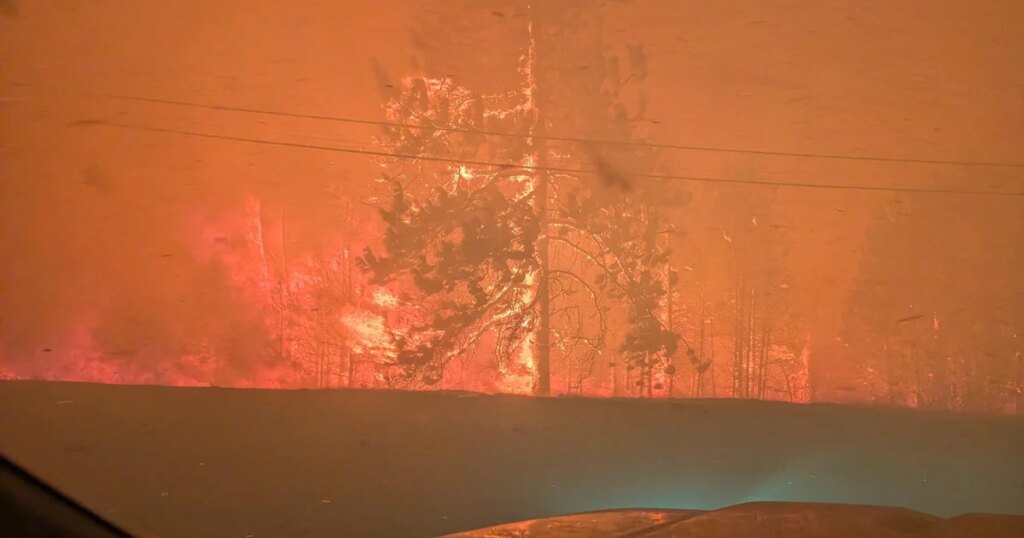
A fierce wildfire in British Columbia has tragically claimed one life, led to the destruction of numerous homes, and displaced over 20,000 residents from communities along Okanagan Lake. The rapid spread of the fire prompted Premier David Eby to declare a state of emergency as conditions remained dire, with over 100 wildfires igniting across the province. Many residents found themselves caught in the chaos, leading to significant evacuations and rescue operations.
| Article Subheadings |
|---|
| 1) The Eruption of the Bald Range Wildfire |
| 2) Emergency Response and Evacuations |
| 3) The Human Toll of the Fire |
| 4) Government Actions and Federal Assistance |
| 5) The Broader Implications of Wildfire Seasons |
The Eruption of the Bald Range Wildfire
The Bald Range wildfire erupted Friday evening, quickly gaining momentum and racing approximately nine miles towards Okanagan Lake in a matter of hours. This rapid spread intensified the crisis, leading observers to document a dramatic scene as flames engulfed vast areas in a short amount of time. By Sunday, it was reported that the fire had scorched more than 53 square miles of land, raising alarms about the devastating impact on both the environment and local communities.
Hot and windy weather conditions, coupled with prolonged drought, contributed to the fire’s aggressive behavior. The wildfire is emblematic of an increasingly worrisome trend, as British Columbia typically sees around 1,600 wildfires each year. Given the extraordinary growth rate of this fire, local officials emphasized the need for caution, noting that the situation continuously evolved.
Emergency Response and Evacuations
In response to the wildfire, Premier David Eby declared a state of emergency on Saturday. This measure allows the provincial government to allocate resources more effectively and engage in coordinated efforts with emergency response teams. Roads became jammed as thousands attempted to evacuate under increasingly dangerous conditions, with many residents forced to leave against a backdrop of smoke and flames.
Emergency officials were seen rapidly deploying evacuation orders throughout affected areas. In Summerland, home to about 12,000 people, residents received evacuation notifications overnight. Approximately 8,000 people in nearby Peachland were also forced to evacuate. Highways turned into thoroughfares of apprehension, as families fled their homes, uncertain whether they would return.
The provincial government facilitated rescue operations with the help of 18 firefighting aircraft, which successfully rescued more than 50 individuals trapped by the advancing flames. These aerial efforts were critical as the fires intensified and spread, making ground access increasingly perilous.
The Human Toll of the Fire
Tragedy struck when an 80-year-old woman lost her life while attempting to escape the wildfire. Eleanor Olszewski, Canada’s Minister of Emergency Management and Community Resilience, confirmed the unfortunate loss, highlighting the emotional toll such disasters take on families and communities. Statements from officials reflected a deep concern for the lives and well-being of those impacted, as they face the fear and uncertainty surrounding their homes.
Residents like Anette Boulet, who evacuated with her family and pets, described harrowing scenes of fleeing amid thick smoke and a looming fire front. The psychological impact on those affected cannot be understated; many expressed feelings of helplessness and fear for their safety as the fire encroached rapidly from the hillsides.
Emergency officials also reported that conditions were perilous for search-and-rescue teams, which operated under high stress and urgency. The situation on the ground demanded immediate action, making it crucial for all parties to remain vigilant as they navigated the complexities of the disaster response.
Government Actions and Federal Assistance
With the state of emergency declared, the provincial government is empowered to implement measures aimed at restricting travel, securing necessary accommodations, and coordinating shelter efforts for evacuees. Kelly Greene, British Columbia’s Emergency Management Minister, noted the particular urgency of these actions as the fire’s erratic behavior posed ongoing risks to even more communities in the vicinity.
On a national level, Minister Olszewski approved a request for federal assistance. This decision emphasizes the collaborative approach necessary in the face of such disasters, as the government seeks to provide shelter and accommodations for those who have been forced to flee their homes.
As the wildfire situation continues to unfold, local authorities maintain a focus on securing resources and support to mitigate further damage. The coordinated efforts of local and federal agencies aim to ensure the safety and stability of communities grappling with the fallout of this wildfire crisis.
The Broader Implications of Wildfire Seasons
In recent years, Canada has grappled with increasingly destructive wildfire seasons, prompting discussions about climate change and environmental management. The current crisis has reignited conversations about the necessity for proactive and strategic responses to natural disasters, particularly as the frequency and intensity of such events appear to be on the rise.
The smoke generated by these wildfires has not only impacted local air quality but has resulted in hazy skies extending well beyond the Canadian border, affecting air quality in several major U.S. cities. This geographical scope underscores the far-reaching implications of wildfires, prompting officials across North America to consider cross-border collaborations for emergency response.
As residents begin sorting through the aftermath of recent events, leaders from various sectors are compelled to confront pressing issues related to land management, fire prevention, and community resilience. Understanding the broader context of this wildfire is essential to shaping future policy and planning initiatives that promote safety and preparedness.
| No. | Key Points |
|---|---|
| 1 | The Bald Range wildfire has severely impacted communities along Okanagan Lake, resulting in one confirmed fatality. |
| 2 | Premier David Eby declared a state of emergency as over 100 wildfires burned across British Columbia. |
| 3 | Authorities ordered evacuations in Summerland and Peachland, displacing over 20,000 residents. |
| 4 | Federal assistance has been requested to provide shelter for those affected by the ongoing evacuations. |
| 5 | Recent wildfires highlight the growing need for effective climate and environmental management strategies. |
Summary
The current wildfire crisis in British Columbia serves as a stark reminder of the potential devastation wrought by natural disasters. As a community grapples with loss and uncertainty, coordinated efforts from government and emergency services are vital in addressing immediate threats and ensuring safety for all. The broader context of environmental management and proactive strategies must also be regarded as essential steps toward fostering resilience against future crises.
Frequently Asked Questions
Question: What triggered the Bald Range wildfire?
The Bald Range wildfire was ignited under hot and windy conditions, compounded by prolonged drought, which fueled its rapid spread.
Question: How many people were evacuated due to the wildfire?
Over 20,000 residents were forced to evacuate from various communities along Okanagan Lake, with emergency officials issuing many evacuation orders.
Question: What assistance is being provided to those affected?
Federal assistance has been requested to provide shelter and accommodations for evacuees, while the provincial government has declared a state of emergency to coordinate the response.