
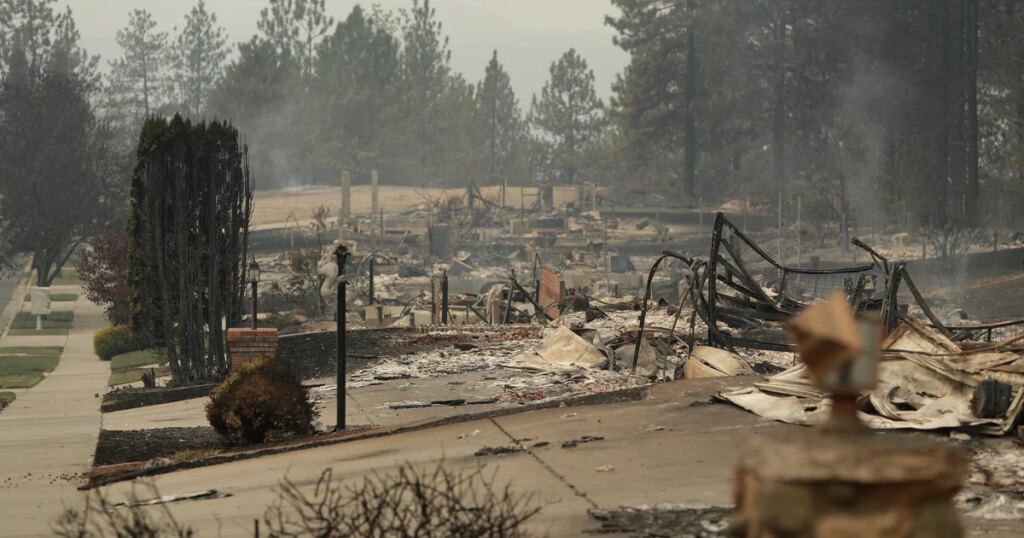
Wildfires fueled by fierce winds and soaring temperatures have led to the evacuation of thousands in eastern Washington state. Spokane Mayor Lisa Brown referred to the situation as the “worst natural disaster our region has faced,” with over 600 properties destroyed. As the blaze spreads, air quality warnings have been issued, and emergency responses are ongoing as multiple fires rage across the state.
| Article Subheadings |
|---|
| 1) Overview of the Wildfires |
| 2) Emergency Response and Evacuations |
| 3) Community Impact and Damage Assessment |
| 4) Government Action and Support |
| 5) Future Challenges and Ongoing Concerns |
Overview of the Wildfires
The wildfires currently engulfing eastern Washington have quickly escalated, with three major blazes, namely the Old Trails Fire, Fairview Fire, and Autumn Lane Fire, marking a severe onset of a dangerous fire season. The Old Trails Fire started on Saturday and has since grown rapidly, threatening nearby communities. The vast smoke plume visible in the sky reflects the severity of the situation, with about 8.2 square miles already scorched in and around Spokane, the state’s second-largest city. By Sunday, officials reported a total of 15 active fires in Washington, which combined have consumed over 250,000 acres.
Washington Public Lands Commissioner Dave Upthegrove expressed concern during a recent news briefing, stating, “This is an extraordinary fire season in the Pacific Northwest.” His remarks underscore the alarming trend toward more frequent and severe wildfires in the region.
Emergency Response and Evacuations
As the wildfires wreak havoc, thousands of residents in Spokane have received evacuation orders from local officials. The fire response team, including personnel from the California Interagency Incident Management Team 7, is working diligently on multiple fronts. Spokesperson Benjamin Cossel emphasized that the Autumn Lane Fire possesses the greatest threat among the current blazes due to its potential for rapid expansion. Rescues and evacuations are a high priority to ensure community safety.
Many residents have reported witnessing orange and red flames consuming properties from highway vantage points as they flee. Evacuation routes are becoming congested, and warnings have been issued for residents to remain vigilant. Courtney James, spokesperson for the Washington State Department of Natural Resources, has urged residents to heed evacuation orders and to be alert to rapidly changing conditions.
Community Impact and Damage Assessment
Although no fatalities have yet been reported due to the fires, officials and community leaders continue assessing the damage. Mayor Lisa Brown indicated that hundreds of structures, primarily homes, have likely been destroyed. The extent of devastation is still unfolding, as firefighters gain access to previously unreachable areas.
“What we’re hearing…is this is at the same level of an Altadena Eaton Fire or a Palisades sort of event,”
stated Cossel, referencing other catastrophic fire incidents.
As firefighters confront the ongoing blazes, the damage assessment remains a crucial component of recovery efforts. Information on the number of destroyed homes may take time to finalize, but early estimates suggest comprehensive losses within entire neighborhoods.
Government Action and Support
In light of the devastation, Governor Bob Ferguson declared a state of emergency on Saturday, seeking resources and support for affected communities. During a media briefing, Ferguson conveyed solidarity with residents facing loss, stating, “Just in a matter of hours, their lives changed in deeply dramatic and fundamental ways.” This response underscores the government’s commitment to assisting those impacted by the wildfires.
Furthermore, federal support is being mobilized, with the Federal Emergency Management Agency (FEMA) authorizing funds to combat several of the fires, including the Fairview and Autumn Lane Fires. Ferguson relayed optimism regarding future federal assistance while citing ongoing communication with President Trump and officials from the Department of Homeland Security.
Future Challenges and Ongoing Concerns
With more unfavorable weather conditions anticipated in the upcoming days, concerns remain about the challenges posed by these wildfires. Weather forecasts predict high winds and elevated temperatures that could aggravate the situation and lead to even more extreme fire behavior. Rep. Michael Baumgartner, representing Washington’s 5th Congressional District, urged residents to stay alert as fire conditions could deteriorate further.
Power company Avista has been proactive, implementing public safety shutoffs due to the heightened fire risk. Although services have been restored for some, over 10,000 customers remain without power as a result of the wildfires. Heather Rosentrater, Avista’s CEO, indicated that access to many affected areas is still obstructed by ongoing fire activity and evacuation orders.
| No. | Key Points |
|---|---|
| 1 | Thousands have been evacuated due to destructive wildfires in eastern Washington. |
| 2 | Over 600 structures, including homes, have been reported destroyed. |
| 3 | State and federal officials are mobilizing resources to combat the fires and assist affected residents. |
| 4 | Weather conditions are expected to worsen, complicating firefighting efforts. |
| 5 | Public safety power shutoffs have been executed to mitigate fire risks. |
Summary
The wildfires ravaging eastern Washington represent a significant crisis, requiring urgent evacuation efforts and coordination for firefighting resources. The destruction has impacted countless communities, prompting government officials to mobilize state and federal assistance for recovery. As conditions remain volatile, the long-term repercussions of these devastating fires will likely be felt for years to come.
Frequently Asked Questions
Question: What are the main fires affecting eastern Washington?
The main fires currently affecting eastern Washington include the Old Trails Fire, Fairview Fire, and Autumn Lane Fire, each threatening local communities and leading to extensive evacuations.
Question: How many structures have been reported destroyed by the fires?
Over 600 structures, including homes and businesses, have been reported destroyed as a result of the wildfires that have swept through the region.
Question: What actions are officials taking in response to the fires?
Officials have declared a state of emergency, initiated evacuations, and requested federal aid while mobilizing firefighting resources to combat the ongoing wildfires and assist affected residents.