
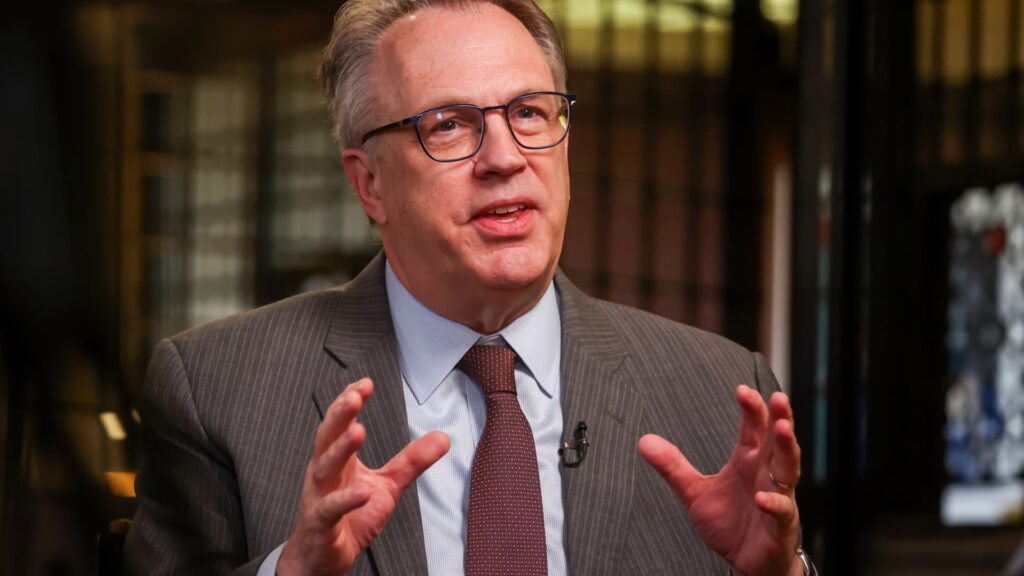
In a recent interview, John Williams, President of the New York Federal Reserve, discussed the significant rise in Treasury yields, attributing it to a robust economy rather than any dysfunction within the market. Despite this surge, Williams has yet to make a firm decision regarding potential interest rate hikes, emphasizing the importance of continuously monitoring economic data. He acknowledged the encouraging inflation data but also stressed the necessity of a comprehensive evaluation of various economic factors before considering further actions.
| Article Subheadings |
|---|
| 1) The Strong Economy Behind Rising Treasury Yields |
| 2) Interest Rates: To Raise or Not to Raise? |
| 3) Market Reactions and Economic Indicators |
| 4) Inflation Expectations and Economic Outlook |
| 5) The Role of Technology Investments |
The Strong Economy Behind Rising Treasury Yields
In the latest statements made by John Williams, he emphasized that the recent increase in Treasury yields reflects the strength of the U.S. economy, contrary to what some analysts have suggested about market dysfunction. The spike in yields, particularly at the long end, is interpreted as a positive sign that investors are confident about future economic growth, integrating their expectations of increased inflation alongside developing economic indicators.
Williams pointed out that a solid economic outlook, coupled with substantial investments, particularly in advanced sectors such as artificial intelligence (AI) and data centers, are primary drivers of this upward trend in yields. The core argument presented is that a thriving economy influences financial conditions rather than the other way around. This assertion is seen as hopeful for policymakers who seek to balance inflation control with economic growth.
Interest Rates: To Raise or Not to Raise?
Despite the strong economic indicators, John Williams has refrained from committing to an immediate interest rate hike. During his CNBC interview, he noted, “I think that we have to wait and see,” reflecting a cautious approach to the Federal Reserve’s monetary policy strategy. He made it clear that the decision hinges on observing a broad spectrum of economic data rather than rushing into potentially hasty decisions that could disrupt the economic balance.
The Federal Reserve’s next scheduled meeting on September 15-16 has fueled speculation regarding a potential rate increase, especially as market traders have raised the odds of such a move to approximately 66%. Williams, serving as a permanent voter on the Federal Open Market Committee, understands the delicate nature of financial conditions and their implications for the economy. He is inclined to adopt a “wait-and-see” approach as he processes the upcoming economic reports that could influence the Fed’s future decisions.
Market Reactions and Economic Indicators
Market reactions to the comments made by Williams and the rise in Treasury yields have been significant. Investors are closely watching the yield curve as it can indicate future economic growth and inflation trajectories. The notable rise in yields signals heightened confidence among investors regarding the economy, as they anticipate changes in monetary policy based on incoming data.
However, this dynamic brings both opportunities and risks. As Treasury yields climb, borrowing costs typically rise, which could cool down some segments of the economy, including housing and consumer spending. Williams’ remarks allude to the necessity of balancing these impacts as the Federal Reserve considers its next moves regarding interest rates, especially amidst an already evolving economic landscape.
Inflation Expectations and Economic Outlook
Inflation has been a hot topic in economic discussions, especially in the context of rising prices linked to tariffs and global events such as the situation in Iran. Yet, John Williams remains optimistic about the short-term economic outlook, arguing that inflation expectations are currently “well anchored.” He highlights that while current inflation data might be concerning, it is crucial to consider longer-term trends and not react precipitously to month-over-month fluctuations in pricing.
Moreover, Williams noted that while inflation concerns exist, the broader economic framework remains robust. This outlook is significant for consumers and businesses alike, as stable inflation expectations can foster confidence and spending, ultimately spurring growth. A measured approach to inflation not only assists in guiding monetary policy but also provides reassurance to the market that economic fundamentals remain strong.
The Role of Technology Investments
One notable driver of economic strength, according to John Williams, is the substantial investment in technology sectors, particularly in AI and data-centric businesses. These investments are reshaping economic dynamics and are pivotal in manifesting sustained growth. They not only contribute to immediate economic metrics but also lay the groundwork for long-term advancements and productivity improvements across a myriad of sectors.
By emphasizing technology’s role in the economy, Williams underscores a broader narrative that seeks to explain why current economic indicators, including rising Treasury yields, should not be viewed solely through a lens of inflation concerns. Instead, the focus should also encompass the potential for technological evolution and its impact on job creation, innovation, and overall economic resilience. This narrative is vital as policymakers navigate the complex interplay between inflation, interest rates, and economic growth.
| No. | Key Points |
|---|---|
| 1 | The recent surge in Treasury yields is attributed to a strong U.S. economy, not market dysfunction. |
| 2 | John Williams is cautious about interest rate hikes, emphasizing the need for comprehensive economic data. |
| 3 | Investors are responding to rising Treasury yields, reflecting confidence in economic growth. |
| 4 | Inflation expectations are currently deemed “well anchored,” despite some short-term concerns. |
| 5 | Investments in technology sectors, especially AI, are crucial for sustaining economic growth. |
Summary
In summary, the insights shared by John Williams regarding the current economic landscape underscore the complexity of balancing growth and inflation. With rising Treasury yields providing a positive outlook on economic growth, the Federal Reserve is called to act judiciously in its monetary policy decisions. As technology investments play a crucial role in shaping economic dynamics, stakeholders will need to stay vigilant and responsive to ongoing data and trends that impact financial conditions.
Frequently Asked Questions
Question: What are the implications of rising Treasury yields?
Rising Treasury yields often signal increased investor confidence in economic growth, but they can also lead to higher borrowing costs, which may impact consumer spending and investment.
Question: Why is John Williams hesitant to commit to an interest rate hike?
Williams emphasizes the importance of evaluating a wide range of economic data to determine the necessity of an interest rate hike, advocating for a cautious approach in monetary policy.
Question: How do technology investments influence the economy?
Investments in technology, particularly in sectors like AI, drive innovation and productivity, contributing to long-term economic growth and resilience in the market.