
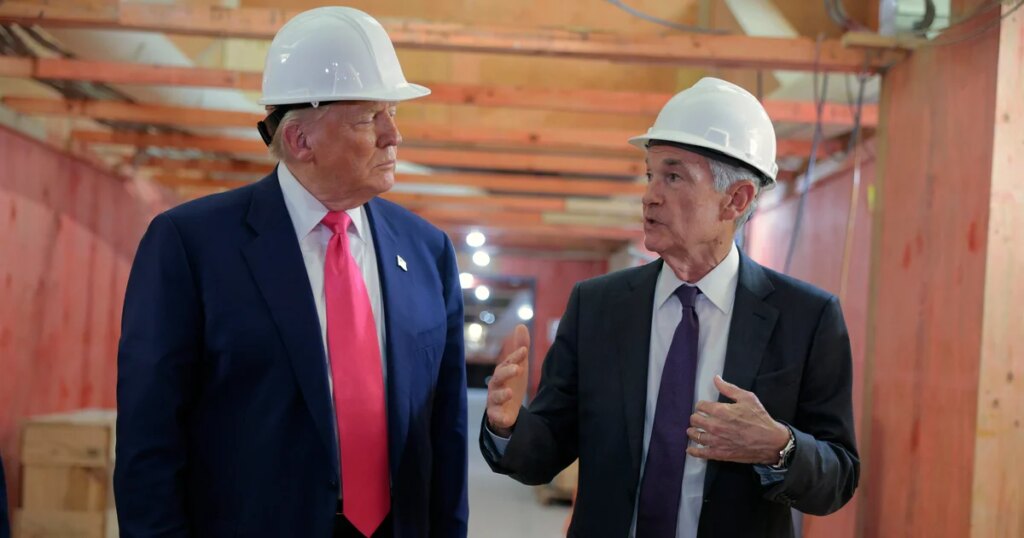
In a recently released report, the Federal Reserve’s inspector general assessed the controversial renovations of the Fed’s headquarters and concluded that while the project management was severely lacking, it did not violate federal laws. The extensive renovations, which have attracted criticism from various quarters, were initially dubbed “disgraceful” by former President Trump due to their escalating costs. The report, spanning 121 pages, highlights various management deficiencies, recommendations for improvement, and notable insights from the Federal Reserve’s internal audit concerning the renovation project.
| Article Subheadings |
|---|
| 1) Federal Workplace Renovations Under Scrutiny |
| 2) Findings from the Inspector General’s Report |
| 3) Reaction from Political Figures |
| 4) Project Management Issues and Cost Analysis |
| 5) Future Implications for Federal Renovations |
Federal Workplace Renovations Under Scrutiny
The ongoing renovations at the Federal Reserve’s Washington headquarters, amounting to billions of dollars, have been the subject of intense scrutiny. Initiated in 2017, the renovations aimed to modernize the facilities built over three decades ago. However, escalating costs and delays have positioned the project at the center of political debates. Critics argue that the financial oversight was inadequate, leading to unnecessary expenditures. At the core of this controversy is the Office of Inspector General’s inquiry into the management of the project, which came to a head when officials, including former President Trump, raised concerns about the government’s spending priorities.
Findings from the Inspector General’s Report
The Inspector General’s comprehensive report revealed deficiencies in project management that resulted in cost overruns without breaching federal laws. According to the findings, the report, which lasted over a year, concluded that there wasn’t sufficient evidence to warrant criminal charges or misconduct, but highlighted significant gaps in project oversight. Inflation was cited as a factor influencing the renovations’ soaring costs, even as the report indicated that some of the cost increases dramatically outpaced the inflation rate. The inspector general, Michael Horowitz, noted that the lack of coordination and forward planning contributed significantly to the inflation of project costs.
Reaction from Political Figures
The reaction to the report sparked a flurry of comments from various political figures. Donald Trump, reflecting on the report, called for further investigations into the findings, urging the Attorney General to take appropriate actions based on the findings. House Republicans and influential figures within the Congress have expressed deep concerns about the potential misuse of taxpayer money, stressing a need for greater accountability in federal spending. On social media and public forums, Trump described the renovations as a “very luxurious situation,” emphasizing the perceived extravagance against the backdrop of governmental financial responsibility.
Project Management Issues and Cost Analysis
An analysis of the renovation project revealed key areas of concern regarding project management practices. The Inspector General identified that the Federal Reserve failed to establish a guaranteed maximum price prior to the construction beginning, a practice common in significant public works projects. Furthermore, interviews with officials indicated that none had formulated a comprehensive budget or conducted adequate cost analysis with contractors, raising alarms about the propriety of the spending. While inflation undeniably contributed to the overall cost increases, such oversights render the project vulnerable to criticism that it did not adequately prepare for economic fluctuations impacting the costs of materials, labor, and equipment.
Future Implications for Federal Renovations
The findings from the Inspector General’s report are poised to have far-reaching implications for future federal construction projects. As Kevin Warsh, the newly nominated chair of the Federal Reserve, recognized, enhanced governance structures will be necessary to manage large-scale renovations effectively. This includes instituting stricter guidelines on budgeting and executing formal evaluations of project management methodologies. Warsh indicated intentions to collaborate with external entities like the General Services Administration to ensure that these renovations remain within budget and are completed efficiently. Moreover, the report serves as a cautionary tale for other governmental agencies, urging them to adopt comprehensive planning measures and responsive budget management to avert similar pitfalls.
| No. | Key Points |
|---|---|
| 1 | The Inspector General’s report concluded that the Fed’s renovation project did not violate federal laws. |
| 2 | The project management suffered from significant deficiencies, leading to increased costs. |
| 3 | Critics, including former President Trump, have called for further investigations into the report’s findings. |
| 4 | Federal Reserve officials failed to establish a construction cost estimate or a maximum price upfront. |
| 5 | The renovations, which began in 2017, are anticipated to be completed by 2027 with rising costs impacting budgeting and planning. |
Summary
The findings of the Inspector General’s report shed light on the extensive mismanagement surrounding the Federal Reserve’s renovation project, illustrating the need for stricter fiscal discipline in governmental expenditures. Moving forward, the recommendations provided by the inspector general may serve as a framework for enhancing oversight and accountability, potentially preventing similar situations in future federal projects. With rising costs and political scrutiny, it is now crucial for the Federal Reserve to realign its approach towards ensuring efficiency and transparency in its operations.
Frequently Asked Questions
Question: What triggered the Inspector General’s report on the renovation project?
The report was initiated at the request of then-Federal Reserve Chairman Jerome Powell to investigate rising costs and project management issues regarding the renovations.
Question: How did political figures respond to the report’s findings?
Political figures, particularly former President Trump, expressed concerns about the management of funds and called for further investigations, stating the renovations were excessive and inappropriate given their costs.
Question: What future measures are being considered for ongoing and future renovations?
Moving forward, the Federal Reserve plans to implement enhanced governance and oversight practices, including working with the General Services Administration to ensure more effective budgeting and project management.