
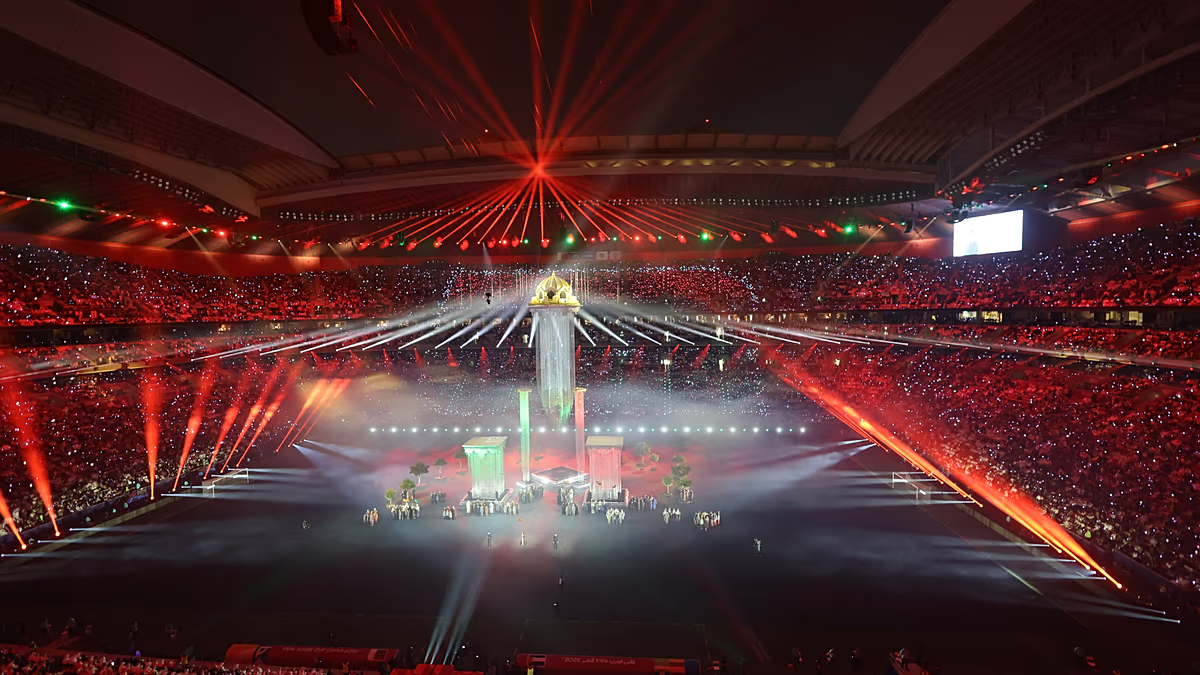
The FIFA Arab Cup Qatar 2025 kicked off with a grand ceremony at Al Bayt Stadium, melding culture and performance with politics. Palestine stunned the hosts, Qatar, by securing a surprising 1–0 victory in their opening match of Group A. The event, featuring 16 teams competing from December 1 to 18, has generated significant excitement, indicated by high ticket sales and wide media attention.
| Article Subheadings |
|---|
| 1) Opening Ceremony Highlights |
| 2) Historic Victory for Palestine |
| 3) Next Matches in Group A |
| 4) Tournament Details and Attendance |
| 5) Implications of FIFA Recognition |
Opening Ceremony Highlights
The opening ceremony for the FIFA Arab Cup was a vibrant affair that took place at Al Bayt Stadium in Al Khor. Hosted on December 1, 2025, the event attracted an audience of over 60,000 fans, underscoring the significance of the tournament in uniting different cultures. Produced by Katara Studios, the ceremony unfolded over 15 minutes, presenting a three-part narrative that depicted the rise, fracture, and potential rebirth of Arab unity through a rich blend of music, dance, and visual storytelling.
The show commenced with powerful imagery depicting Jerusalem and featured two doves symbolizing peace. Narration was provided by renowned Syrian actor Rashid Assaf, adding a poignant touch. A notable highlight was the surprise appearance of British actor Jeremy Irons, who took on the role of “The Stranger.” His symbolic character questioned the state of affairs, marking a narrative pivot where the magnificent monument representing unity crumbled—illustrating the divisions currently faced by the Arab world.
To amplify the sense of hope, a children’s choir performed the Arab National Anthem, reinforcing the message that the future lies with the next generation. The event also showcased various renowned singers from the region and featured the tournament’s official songs, “Makani” and “Zamani”, both of which were released as part of the event’s official soundtrack.
Historic Victory for Palestine
After the inauguration festivities, attention turned to the much-anticipated match between Palestine and Qatar. In a turn of events that many considered a historical upset, Palestine secured a vital 1-0 victory against the host nation. Taking place as part of the Group A fixtures, the game ended dramatically in the dying moments. In the 95th minute, Qatar’s defender Sultan Al Brake accidentally scored an own goal, marking Palestine’s first Arab Cup win in 59 years.
Palestine’s last victory in this esteemed competition dated back to 1966 when they defeated North Yemen. Throughout the match, Qatar dominated possession but struggled to penetrate the solid defense put forth by the Palestinian side, which facilitated a mix of resilience and strategy. As the time dwindled, Palestine grew more confident, seizing the opportunity that would soon lead to jubilation on their bench. This win is not merely an isolated incident; it significantly raises the stakes for Qatar in their upcoming games.
Next Matches in Group A
Following the results of this historic first match, the dynamics in Group A shifted considerably. Earlier that same day, Syria had managed to claim a surprising victory over Tunisia, winning 1-0 in Al Rayyan. As of now, both Palestine and Syria find themselves leading the group, with their next fixtures set against Qatar and Tunisia respectively. On December 4, Qatar will face Syria, while Tunisia will challenge the fourth team in the group.
The following match on December 7 will see Palestine pitted against Tunisia, and both teams aim to leverage the momentum from their initial performances. A total of 16 teams are participating in this year’s tournament, which is structured into four groups. The top two teams from each group will advance to the quarter-finals, ensuring that competition remains fierce and unpredictable.
Tournament Details and Attendance
This year’s tournament is a significant event in the football calendar, particularly as it marks Qatar’s return as the host nation for the second consecutive edition. Running from December 1 to December 18, interest has surged, with more than 700,000 tickets sold to date. Among these, over 210,000 tickets have been purchased by international fans who have traveled from various countries to witness the games live, showcasing the tournament’s draw on a global scale.
In conjunction with ticket sales, the tournament has garnered attention from the media, with nearly 4,000 journalists applying for accreditation to cover the events. For fans who purchased match-day tickets, the convenience of free travel on the Doha Metro adds an appealing dimension to their experience. All six of the tournament’s venues, including Lusail, Ahmad Bin Ali, Education City, Khalifa International, and Stadium 974, are interconnected via Qatar’s robust rail network, making logistics easier for attendees.
Implications of FIFA Recognition
A noteworthy evolution in this year’s Arab Cup is the tournament’s official recognition by FIFA. After the successful 2021 tournament, the competition has gained new implications, with match points now counted in global rankings. This elevation not only enhances the tournament’s competitive stature but also aligns the Arab Cup more closely with established international competitions.
Prize money has also soared to a record $36.5 million (€33.5 million) this year, reflecting the increasing importance of the tournament in the region and beyond. Such financial incentives will likely attract even greater talent and teams in future editions, solidifying the Arab Cup’s position as a crucial fixture in the global football landscape.
| No. | Key Points |
|---|---|
| 1 | The opening ceremony featured a celebration of Arab culture, showcasing performances by regional artists. |
| 2 | Palestine achieved their first Arab Cup victory in 59 years, defeating Qatar 1-0. |
| 3 | Syria also won against Tunisia, complicating Group A standings. |
| 4 | The tournament boasts significant international attendance and media coverage, reflecting its growing appeal. |
| 5 | Additional prize money and official FIFA recognition bolster the tournament’s profile in the global football community. |
Summary
The FIFA Arab Cup Qatar 2025 has commenced with a striking blend of culture and sportsmanship, encapsulated in an opening ceremony that emphasized themes of unity. Palestine’s historic victory against Qatar has stirred emotions and set an unpredictable tone for the group stages. With significant international interest and FIFA recognition, this tournament promises to elevate the profile of football in the Arab world significantly.
Frequently Asked Questions
Question: What teams are participating in the FIFA Arab Cup Qatar 2025?
A total of 16 teams are competing in the tournament across four groups.
Question: When is the tournament scheduled to take place?
The FIFA Arab Cup is scheduled to run from December 1 to December 18, 2025.
Question: What are the implications of FIFA recognition for the Arab Cup?
FIFA recognition means that match points will be counted in global rankings and provides a significant boost in terms of prestige and financial rewards.