
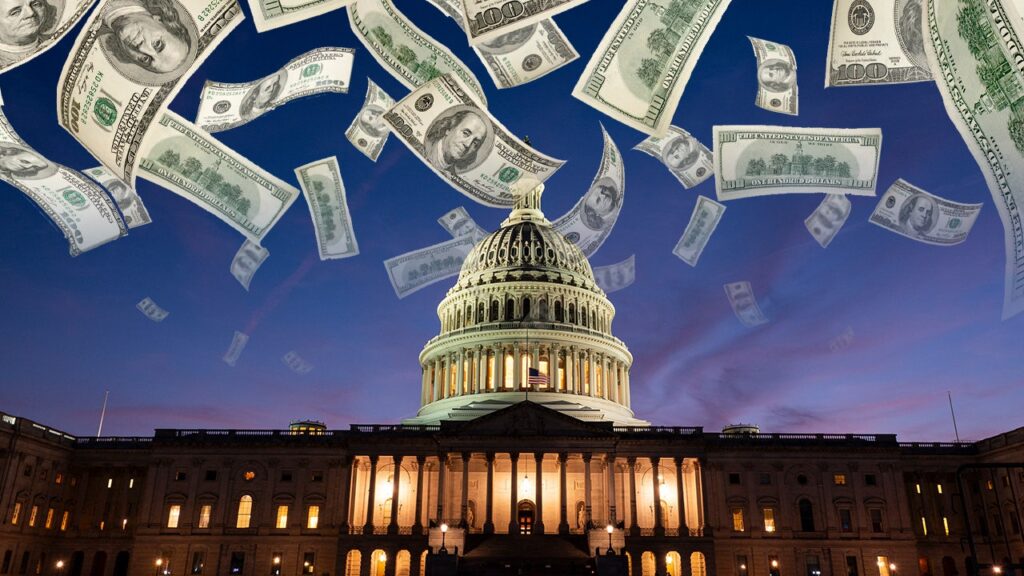
Despite soaring federal spending, many Americans are feeling the financial pinch more than ever. A recent report by the conservative fiscal watchdog group Open The Books reveals that per capita government spending in the U.S. has dramatically increased by 9,800% since 1916. As of now, this equates to over $20,474 per person, raising questions about the efficiency and impact of such government expenditures on everyday life, especially amidst rising affordability concerns.
| Article Subheadings |
|---|
| 1) Historical Context of Federal Spending |
| 2) Current Financial Burdens on American Households |
| 3) Insights from Open The Books |
| 4) The Impact of Government Spending on Quality of Life |
| 5) Call for Transparency and Accountability |
Historical Context of Federal Spending
The history of federal spending in the United States is particularly illuminating, tracing back to 1916 when the government spent an average of merely $208.36 per individual, adjusted for inflation. Interestingly, as revealed in the Open The Books report, this figure has skyrocketed to $20,474.19 per person in recent years, illustrating an almost uninterrupted trajectory of increasing government expenditures. The rise has transformed not only federal budgeting but the fiscal landscape, contributing to growing scrutiny from various sectors of society.
The origins of such a dramatic increase remain varied and complex, spanning wars, economic turmoil, and social programs aimed at improving citizens’ welfare. Historical milestones such as the New Deal, Great Society programs, and later economic stimulus packages highlight how each chose to respond to crises by significantly increasing public spending. These changes have paved the way for a federal budget that many critics argue has expanded beyond effective limits.
Current Financial Burdens on American Households
In stark comparison to historical averages, today’s federal spending levels are perceived by many as staggering, especially in light of the current financial landscape. The median household income in 2024 is reported at $83,730, which is alarmingly close to the estimated per capita government spending of approximately $82,000 for a family of four. This scenario raises crucial concerns regarding affordability and living standards.
Additionally, Open The Books indicates that average spending on essential items such as groceries and mortgages has remained far below federal per capita spending. For a family of four, the Department of Agriculture recommends annual grocery expenditures ranging from $12,000 to $20,000, while the typical mortgage payment is around $28,000 in 2025. These figures make it increasingly challenging to understand how government spending translates into tangible benefits for the citizenry.
Insights from Open The Books
Open The Books offers an in-depth analysis of governmental spending, revealing that the federal government’s size and financial activities have grown at a faster rate than the necessities of its personnel needs. For example, while staffing levels at the Department of Education have declined since 2000, expenditures swelled by an astonishing 749%. This disparity raises questions about efficiency and resource allocation within such governmental agencies.
“While American families and businesses find a way to do more with less, government does less with more,” states Open The Books CEO John Hart. “The best affordability and stimulus program imaginable is to reduce the waste, fraud, and central planning in government.”
Hart’s observations paint a vivid picture of governmental inefficiency against the backdrop of a struggling populace, suggesting potential pathways to financial improvement by focusing on cutting wasteful practices.
The Impact of Government Spending on Quality of Life
Despite the dramatic increases in federal spending, many Americans feel that their quality of life has not improved correspondingly. This perception prompts important inquiries about the effectiveness of public spending against the metrics traditionally used to measure societal advancement. Specifically, citizens question whether increased expenditure correlates with enhanced living conditions, job growth, or economic innovation.
As government allocates substantial funds to mandatory programs such as Medicare and Social Security, it becomes increasingly vital to dissect whether these allocations contribute to genuine enhancements in citizen welfare or merely serve to rectify issues created by financial policies. Open The Books has highlighted that while certain programs appear to be prioritized, there is a persistently growing national debt that Americans are forced to reckon with, prompting calls for a comprehensive review of the nation’s spending strategy.
Call for Transparency and Accountability
The necessity for greater transparency and accountability in government spending has become a rallying point for many organizations, including Open The Books. With the increasing concern that public funds are not yielding adequate returns for taxpayers, there is a concerted push for real-time tracking of federal expenditures. This initiative aims to ensure that citizens are not only informed of where their taxes are directed but also accountable for their proper use.
“Taxpayers should scrutinize all aspects of federal spending,” Open The Books claims. They emphasize, “Has quality of life, affordability, or innovation improved along with per capita spending?”
The call for awareness and transparency sheds light on the critical need for active citizen engagement in governance, fostering dialogue and oversight to ensure that federal spending practices align with taxpayers’ expectations and needs.
| No. | Key Points |
|---|---|
| 1 | Per capita government spending has increased by 9,800% since 1916. |
| 2 | Current spending per person in the U.S. is over $20,000, closely matching median household income. |
| 3 | Government efficiency and allocation of resources are called into question due to rising spending amid declining staffing in certain agencies. |
| 4 | A large segment of the population feel that increased federal spending has not translated into improved quality of life or affordability. |
| 5 | There is a growing demand for transparency and accountability in how government funds are allocated and spent. |
Summary
In conclusion, the ongoing discussions around federal spending touch upon a vital intersection of financial policy and everyday American life. As expenditures reach unprecedented levels, questions arise about their efficacy in fostering better living conditions and economic growth. The findings presented by Open The Books emphasize a significant divergence between federal spending and the resulting quality of life experienced by citizens. Such discrepancies underscore the urgent need for increased transparency and accountability in government financial practices.
Frequently Asked Questions
Question: What does per capita government spending indicate?
Per capita government spending reflects the average amount of money the government spends on each citizen, which helps in assessing the scale and impact of government fiscal policies.
Question: How has federal spending changed over the years?
Federal spending has seen a considerable increase since 1916, with current per capita spending levels showing a drastic rise that is being scrutinized for its effectiveness in addressing citizens’ needs.
Question: What is the role of Open The Books?
Open The Books is a fiscal watchdog group dedicated to tracking government spending, promoting transparency, and advocating for fiscal responsibility to ensure taxpayer funds are used efficiently.