
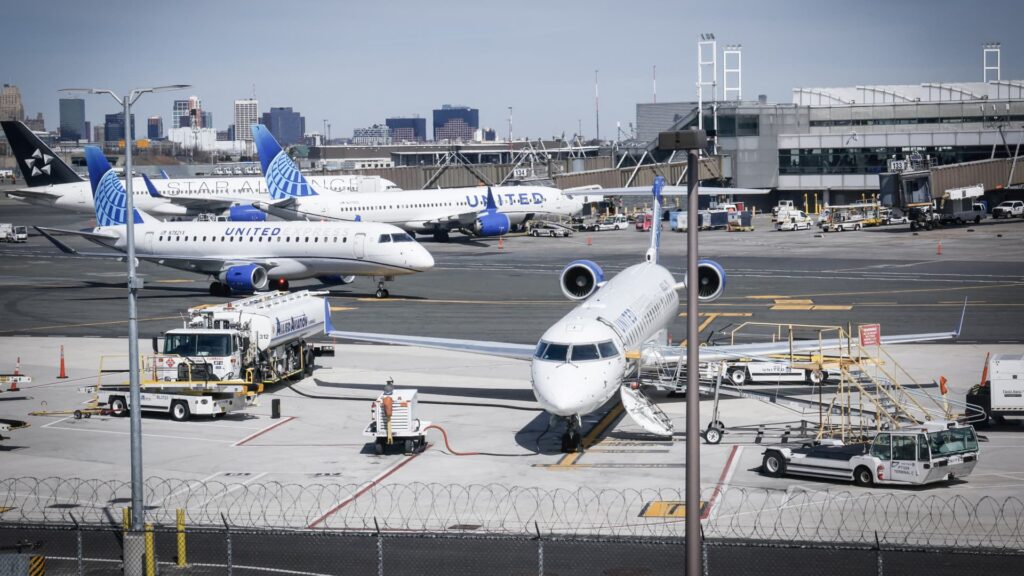
On Monday, widespread cancellations, delays, and diversions of flights occurred in the New York area and Philadelphia following an accidental fiber cable cut by a construction crew in New Jersey. This incident hampered crucial data connections for air traffic control, leading the Federal Aviation Administration (FAA) to halt flights bound for Newark and Philadelphia. Although repair efforts progressed quickly by the evening, the impact on air travel was significant, affecting hundreds of flights throughout the day.
| Article Subheadings |
|---|
| 1) Overview of the Incident |
| 2) Impact on Flight Operations |
| 3) Response from Air Traffic Authorities |
| 4) Airlines’ Adjustments and Support for Travelers |
| 5) Implications and Future Considerations |
Overview of the Incident
The disruption occurred when a construction crew, engaged in rail project work in New Jersey, accidentally severed a Verizon fiber-optic cable. This cable was instrumental in providing a backup feed for critical air traffic data communications. According to reports from officials, the incident unfolded on Monday morning, resulting in immediate repercussions for air travel in the Northeast region.
The FAA swiftly reacted by grounding flights headed to Newark Liberty International Airport and Philadelphia International Airport. Notably, as the day progressed, the incident’s effects cascaded to major airports in New York City—including LaGuardia and John F. Kennedy International Airport—further complicating the situation. By late afternoon, officials confirmed that repairs were underway, and the air traffic control systems were being restored.
Impact on Flight Operations
The air travel impact was severe, with around 600 flights canceled at Newark alone, accounting for more than half of the airport’s daily flight schedule. Philadelphia also saw significant disruptions, with more than 200 flights canceled and hundreds more delayed. As travelers stood stranded and anxious, many flights originating from international locations—including Europe—found themselves diverted to alternative domestic airports.
Among the flights that experienced diversions were United Airlines flights from major European cities such as Berlin and Stockholm, which were rerouted to Detroit and Washington D.C., respectively. The depth of disruption highlighted the interconnectedness of global air travel, with repercussions felt widely across various routes due to the unexpected severance of the fiber-optic line.
Response from Air Traffic Authorities
Comments from FAA Administrator Bryan Bedford revealed that an initial circuit failure led to the reliance on the backup system, which itself failed due to the cut. This failure affected the Terminal Radar Approach Control (TRACON) facility, a key location that manages aircraft traffic around northeastern airports. As information regarding the incident circulated, Transportation Secretary Sean Duffy was actively providing updates, assuring that teams were working diligently to rectify the situation.
The Federal Aviation Administration imposed a temporary ban on flights bound for affected airports, underscoring the urgency of restoring normal operations. Federal officials reported that once repairs were initiated, flights began to slowly resume by Monday evening, but residual delays persisted as airlines scrambled to adjust their flight schedules and accommodations.
Airlines’ Adjustments and Support for Travelers
Airlines were quick to respond to the turmoil with policy adjustments. United Airlines, one of the primary carriers affected, waived change fees for passengers impacted by the disruptions. In an effort to mitigate staffing challenges, United also opted to provide extra compensation to pilots and crew members willing to pick up extra shifts in the New Jersey area to handle the surge of cancellations efficiently.
Similarly, American Airlines stated that it would allow customers the flexibility to change their flight plans without incurring additional fees. Passengers were encouraged to explore alternative airports as they navigated the fallout from the incident. While these immediate responses were vital in assisting stuck travelers, the larger issue of how such critical infrastructure hiccups could lead to widespread disruptions remained a concern for airline executives and the FAA alike.
Implications and Future Considerations
Beyond the immediate chaos, this incident raises significant questions about aviation infrastructure and air traffic control technological reliability. Transportation Secretary Duffy emphasized the critical need for investment in modernizing outdated air traffic control systems to minimize the risk of similar disruptions in the future. Recent discussions led to the announcement of a multibillion-dollar overhaul initiated by the prior administration which aims to address aging infrastructure.
As preparations for large-scale events, such as the United Nations General Assembly in New York, loom on the horizon, this incident serves as a stark reminder of the vulnerabilities within the air travel system. The risk of ancillary disruptions, especially during major global gatherings, poses questions about how best to ensure safe and reliable air traffic management while advancing existing technologies.
| No. | Key Points |
|---|---|
| 1 | Accidental cutting of a Verizon fiber-optic cable led to severe flight disruptions in the New York and Philadelphia regions. |
| 2 | Over 600 flights were canceled at Newark airport, affecting more than half of its daily schedule. |
| 3 | The FAA implemented a temporary grounding of flights, which expanded to other major New York airports. |
| 4 | Airlines waived change fees and offered support to travelers during the disruption. |
| 5 | Calls for modernization of the air traffic control system were reiterated by government officials in the wake of the incident. |
Summary
In summary, Monday’s incident exemplified the vulnerability of air travel infrastructure and the cascading effects that operational disruptions can have on a global scale. With hundreds of flights disrupted due to an accidental fiber cable cut, both airlines and regulators face newfound urgency to reevaluate and strengthen the existing systems. As discussions about funding for future enhancements continue, it is clear that ensuring safety and reliability in air traffic management must be a priority to prevent similar occurrences in the future.
Frequently Asked Questions
Question: What caused the flight disruptions in the New York area?
The flight disruptions were caused by a construction crew accidentally cutting a Verizon fiber-optic cable, which impacted the communication data for air traffic controllers.
Question: How many flights were affected by the incident on Monday?
Over 600 flights were canceled at Newark Liberty International Airport, with significant cancellations also occurring at Philadelphia and other major airports in the area.
Question: What measures did airlines take to assist affected passengers?
Airlines offered to waive change fees and provided additional support to passengers, including options to fly from alternative airports without incurring extra costs.