
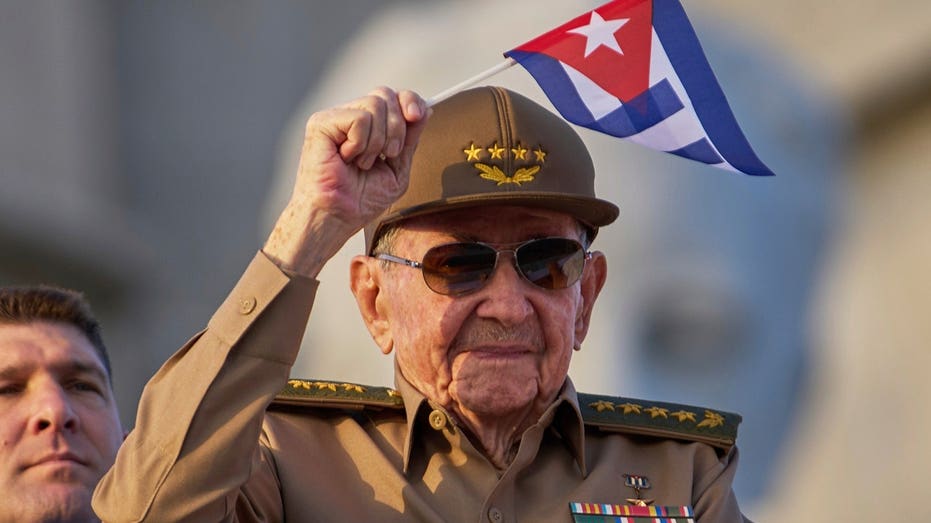
Florida has obtained a no-bond arrest warrant for former Cuban leader Raúl Castro over the 1996 shootdown of two civilian aircraft that killed four Americans. The Miami-Dade County warrant alleges conspiracy to commit first-degree murder and directs law enforcement to arrest Castro immediately. Attorney General James Uthmeier and Gov. Ron DeSantis were expected to discuss the warrant at a news conference on Monday, October 19, 2026. The action adds a state case to a separate federal prosecution tied to the incident.
The warrant follows the reopening of Florida’s investigation after Uthmeier took office. It assigns the case to the attorney general’s Office of Statewide Prosecution, which will handle the multi-circuit criminal conspiracy matter. Florida authorities also indicated that they would seek Castro’s extradition if he were arrested outside the state.
| 1) | State warrant alleges murder conspiracy |
| 2) | 1996 shootdown killed four Americans |
| 3) | Warrant cites chain of command evidence |
| 4) | Florida seeks extradition and prosecution |
| 5) | Political and legal context surrounding case |
State warrant alleges murder conspiracy
The warrant was issued in Miami-Dade County and carries no bond. It states that a judge found probable cause to believe Raúl Castro conspired to commit first-degree murder in connection with the deaths of four men aboard unarmed civilian aircraft. The document directs law enforcement to take Castro into custody and identifies the alleged conspiracy as a state felony offense.
The investigation was reopened by the Florida attorney general’s office after James Uthmeier assumed office. The state says investigators examined the circumstances surrounding the attack and developed evidence supporting the conspiracy allegation. Castro has not been reported arrested in connection with the Florida warrant.
1996 shootdown killed four Americans
The case concerns the February 24, 1996, downing of two Brothers to the Rescue aircraft. The civilian planes were unarmed, and the attack killed Carlos Costa, Pablo Morales, Mario de la Peña, and Armando Alejandre Jr. The incident has remained a significant issue in South Florida’s Cuban-American community.
Brothers to the Rescue was based in Miami and initially conducted flights to search for Cuban migrants who were lost or stranded at sea. By the mid-1990s, the organization had also engaged in anti-Castro political activity, including dropping pro-democracy leaflets over Cuba. Cuban authorities said the aircraft repeatedly violated Cuban airspace and defended the government’s response as an exercise of national sovereignty.
Warrant cites chain of command evidence
Florida investigators allege that a plan involving Cuba’s foreign intelligence service moved through the government’s chain of command before the aircraft were attacked. The warrant identifies Raúl Castro and his brother, former Cuban leader Fidel Castro, as the alleged final decision-makers.
The warrant also cites a recorded statement attributed to Raúl Castro several months after the incident. In that statement, he described giving senior military leaders authority to act against the aircraft and discussed orders concerning where a shootdown should occur.
“Try to shoot them down over our territory. But they would come into Havana and leave,” Raúl Castro said in the recorded statement, according to the warrant.
The document says Castro later directed that the aircraft be shot down at sea when they appeared and that officers with authority should not consult anyone. Florida prosecutors cite the statement as part of the evidence underlying the probable-cause finding.
Florida seeks extradition and prosecution
The warrant authorizes Florida authorities to seek Castro’s return if he is arrested in another U.S. jurisdiction. The extradition provision is intended to allow the state to pursue custody beyond Florida and bring him to the state to face the conspiracy charge.
The attorney general’s Office of Statewide Prosecution will assume jurisdiction because the alleged conspiracy involves multiple judicial circuits. The office is responsible for coordinating the state criminal case and pursuing proceedings under Florida law. The warrant does not establish guilt, and any prosecution would require the state to prove its allegations in court.
Political and legal context surrounding case
The state warrant represents a new legal effort to address the shootdown nearly three decades after it occurred. James Uthmeier and Ron DeSantis were expected to announce the development together, reflecting the case’s continuing importance to Florida officials and the Cuban-American community.
Castro also faces a separate federal prosecution related to the shootdown. Cuban authorities have rejected U.S. efforts to prosecute him, arguing that the Brothers to the Rescue flights violated Cuban airspace and that Cuba acted to defend its sovereignty. The competing positions are likely to remain central as Florida seeks to advance its state case.
| Number | Key Point |
|---|---|
| 1 | Miami-Dade County issued a no-bond warrant for Raúl Castro. |
| 2 | The allegation involves conspiracy to commit first-degree murder. |
| 3 | The 1996 attack killed four men aboard civilian aircraft. |
| 4 | Florida will seek Castro’s return if he is arrested elsewhere in the United States. |
| 5 | Castro faces a separate federal prosecution tied to the same shootdown. |
Summary
Florida’s warrant places Raúl Castro at the center of a renewed state effort to prosecute the alleged conspiracy behind the 1996 Brothers to the Rescue shootdown. The no-bond order is based on a probable-cause finding and gives state authorities a mechanism to seek his arrest and extradition. The case remains contested, with Cuban authorities rejecting the prosecution and Castro also facing a separate federal case.
Frequently Asked Questions
What charge does the Florida warrant allege?
The warrant alleges conspiracy to commit first-degree murder in connection with the 1996 shootdown of two civilian aircraft.
When did the shootdown occur?
The attack occurred on February 24, 1996, and killed four men aboard the aircraft.
What will happen if Raúl Castro is arrested outside Florida?
The warrant authorizes Florida authorities to seek his extradition and return him to the state to face the felony charge.
Is this the only prosecution facing Raúl Castro?
No. The article states that Castro also faces a separate federal prosecution related to the shootdown.