
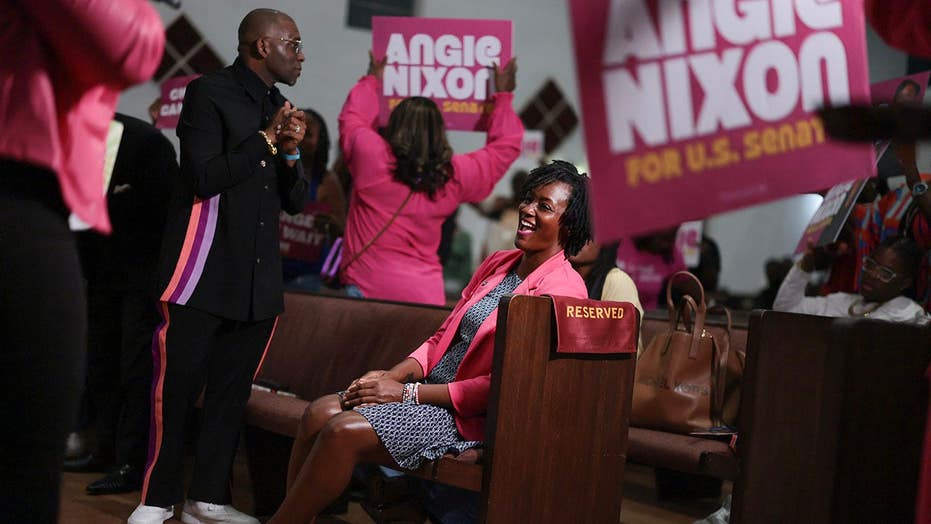
Angie Nixon’s victory in Florida’s Democratic U.S. Senate primary was among the leading political developments highlighted after Tuesday’s elections. The Florida state representative defeated retired Lt. Col. Alex Vindman and is expected to face Republican Sen. Ashley Moody in November. The briefing also examined Republican prospects in open statewide races, a polling firm’s admission that its election surveys were fabricated, and major national policy disputes.
| 1) | Florida Senate primary produces major Democratic upset |
| 2) | Open statewide offices set for Republican gains |
| 3) | Election polling controversy raises fresh questions |
| 4) | National politics and policy headlines dominate |
| 5) | Culture, courts and public interest stories round out briefing |
Florida Senate primary produces major Democratic upset
Florida state Rep. Angie Nixon was presented as the major upset winner in the Democratic primary for the U.S. Senate. The contest took place Tuesday, Aug. 18, with Nixon facing retired Lt. Col. Alex Vindman. Nixon had previously drawn attention after using a bullhorn during a protest on the floor of the Florida House over Republican-redrawn district lines. Her campaign now moves toward a likely November general election matchup with incumbent Republican Sen. Ashley Moody. The race is significant because the primary result reshapes the Democratic challenge in a state where Republicans hold the Senate seat.
Open statewide offices set for Republican gains
Another leading political item focused on unusual turnover in statewide offices and the possibility that Republicans could win nearly every open position. The report did not identify each office or provide final vote totals, but it described the overall environment as favorable to Republican candidates. The contests are part of the broader 2026 election cycle and could influence state-level leadership after November. Open offices tend to attract extensive primary competition because no incumbent is defending the position, making candidate selection and party alignment especially important.
Election polling controversy raises fresh questions
A polling firm was reported to have closed after acknowledging that its election surveys were a hoax. The development adds to concerns about the reliability of political polling, particularly when surveys are used to characterize races before voters cast ballots. No firm name, methodology or list of affected contests was provided in the briefing. The episode underscores the need to distinguish verified election results from unsupported polling claims and highlights how misleading survey data can shape expectations among campaigns, journalists and voters.
National politics and policy headlines dominate
The political section covered several disputes involving the Trump administration and Congress. One headline said Donald Trump announced a deal with Canada shortly before planned 50% tariffs were due to take effect. Other items addressed tensions affecting the U.S. alliance with South Korea, a lawsuit challenging visa time restrictions for foreign students and journalists, and a crowded gubernatorial primary in Alaska. The briefing also reported that Vice President Kamala Harris backed Mary Peltola in a race Republicans had considered secure, while a proposed federal $25 minimum wage was described in a study as potentially threatening nearly 5 million jobs.
Culture, courts and public interest stories round out briefing
The remaining headlines covered crime, media, entertainment, history, health and social issues. A report examined the murder trial of rapper Tupac Shakur and the possible importance of testimony from the defendant’s ghostwriter. The briefing also described a planned museum in former President Ronald Reagan’s hometown, cancer research involving a particular type of occupation, and a dispute between a Portland parent and an elementary school over a trans-inclusive flag. Other items concerned Rosie O’Donnell guest-hosting for Jimmy Kimmel, a lawsuit involving ABC and the Federal Communications Commission, and questions surrounding a federal case against Luigi Mangione after an unexpected guilty plea.
| Number | Key Point |
|---|---|
| 1 | Angie Nixon won the Florida Democratic Senate primary after competing against Alex Vindman. |
| 2 | Republicans were described as positioned to capture nearly every open statewide office. |
| 3 | A polling firm reportedly shut down after admitting its election surveys were fabricated. |
| 4 | Trade, alliances, immigration rules and wage policy featured among the national headlines. |
| 5 | Additional stories covered courts, media, entertainment, health and public disputes. |
Summary
The Florida Senate primary result was the central political development, placing Angie Nixon at the front of the Democratic contest for a seat likely to be decided against Ashley Moody in November. The broader briefing pointed to Republican strength in open statewide races and renewed scrutiny of election polling after a firm admitted its surveys were not genuine. National stories ranged from tariffs and foreign alliances to immigration and wage policy, while separate reports addressed crime, media, culture and health.
Frequently Asked Questions
Who won the Florida Democratic Senate primary?
Florida state Rep. Angie Nixon was identified as the upset winner over retired Lt. Col. Alex Vindman.
Who is Nixon expected to face in November?
The briefing said Nixon is likely to face incumbent Republican U.S. Sen. Ashley Moody in the general election.
What polling development was reported?
A polling firm reportedly closed after admitting that its election surveys were a hoax. The briefing did not identify the firm or the affected surveys.