
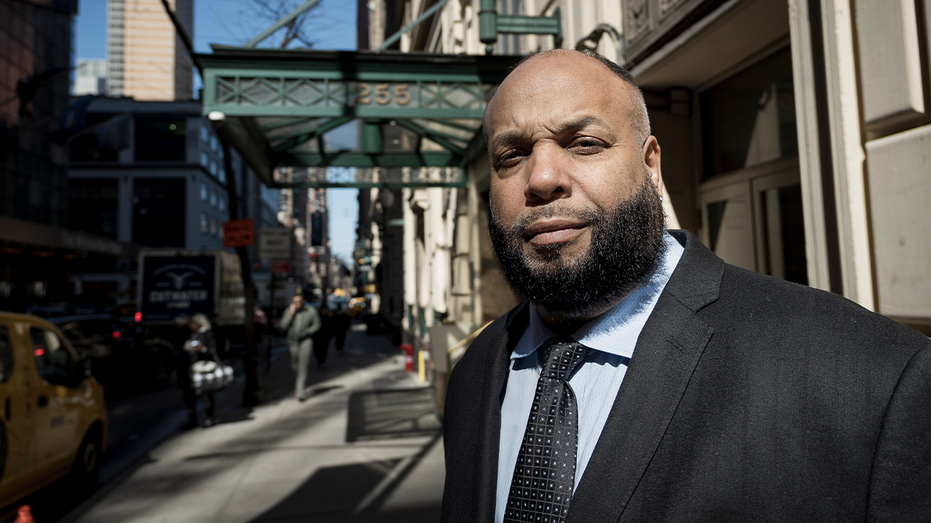
Derrick Parker, the former NYPD detective known as the “Hip-Hop Cop,” has died at 65. Parker died unexpectedly on July 24 at a hospital in Nassau County, New York, according to his brother, Ralph Parker, who did not provide a cause of death. His funeral is scheduled for Thursday at J Foster Phillips Funeral Home in Jamaica, New York.
Parker led the department’s rap intelligence unit during the rapid expansion of hip-hop in the 1990s. His work included monitoring prominent artists and their entourages, helping prevent conflicts, and contributing to investigations involving several of the genre’s most notorious killings.
His career also included homicide and cold case investigations, as well as cooperation with federal agencies. After retiring from the NYPD in 2002, he worked in event security, executive protection, and media commentary on major criminal cases.
Parker documented his experiences in a book and remained engaged with cases connected to his earlier investigations until shortly before his death.
| 1) | Parker’s death and funeral arrangements |
| 2) | A pioneering role in rap intelligence |
| 3) | Investigations involving hip-hop’s biggest killings |
| 4) | A policing strategy built around prevention |
| 5) | Life and work after the NYPD |
Parker’s death and funeral arrangements
Parker died unexpectedly on July 24 at a hospital in New York’s Nassau County, his brother said Monday. No cause of death was disclosed. Parker was 65 and had remained active as a commentator and security professional after leaving law enforcement.
A funeral is scheduled for Thursday at J Foster Phillips Funeral Home in Jamaica, New York. The service will follow a career that connected Parker to the NYPD, major music figures, homicide investigations, and public discussions of high-profile criminal cases.
A pioneering role in rap intelligence
During the 1990s, Parker headed the NYPD’s rap intelligence unit as hip-hop became increasingly prominent in New York and across the country. The unit focused on artists, entourages, venues, and movements that could create security concerns or bring rival groups into contact.
Parker said his work involved monitoring who was entering the city, where people were going, and which groups might be present at the same location. He also said he shared strategies for reducing violence with law enforcement and other officials in cities including Miami and Atlanta.
“You have to watch and see who’s coming to your city. Who’s there and who’s what. We can’t track everybody, but when certain people come to the city, you should know who, especially certain people that are on your radar.”
Investigations involving hip-hop’s biggest killings
Parker’s law enforcement career included homicide and cold case work. He contributed to investigations involving the deaths of Tupac Shakur, Christopher Wallace, known as the Notorious B.I.G., and Jason Mizell, the Run-DMC DJ known as Jam Master Jay.
He also played a role in the 1999 investigation into a shooting at Club New York. Sean Combs was charged in that case and later acquitted, while Jennifer Lopez was briefly detained and released. Parker later appeared as a witness in the long-running Jam Master Jay case, whose alleged killers went to trial decades after the killing.
Parker described these experiences in his book, “Notorious C.O.P.: The Inside Story of the Tupac, Biggie and Jam Master Jay Investigations from the NYPD’s First ‘Hip-Hop Cop.’”
A policing strategy built around prevention
Parker said his approach was not simply to punish prominent artists. Instead, he focused on identifying who would be present at clubs and events and alerting law enforcement and venue managers when rival groups might cross paths.
He said this approach helped officials and nightclub operators plan for potential confrontations before they occurred. Parker also described maintaining a professional relationship with artists and their associates while recognizing the risks connected to their disputes and public profiles.
“I was the law, so he was always friendly. I’m never hard on these guys. They know what they get into. They know what trouble they have.”
Life and work after the NYPD
Parker retired from the NYPD in 2002 after more than 20 years in law enforcement. He later worked in security for large events and provided executive protection, applying the same advance-planning philosophy he had used with music venues.
He also became a media commentator on cases involving people and locations connected to his police career. His appearances included discussions of Combs’ sex-trafficking trial and other high-profile matters. Days before his death, Parker was following the Las Vegas case against Duane “Keffe D” Davis, who is charged with playing a role in Shakur’s 1996 killing.
Parker had said he hoped to write a follow-up book. His brother recalled that the two had planned to go out for dinner for Ralph’s birthday, a plan that will now not take place.
| Number | Key Point |
|---|---|
| 1 | Derrick Parker died unexpectedly on July 24 at age 65. |
| 2 | He led an NYPD unit focused on rap artists and their entourages in the 1990s. |
| 3 | His work included homicide and cold case investigations tied to major hip-hop killings. |
| 4 | After retiring, he worked in security, executive protection, and media commentary. |
Summary
Derrick Parker’s career reflected the close relationship between law enforcement, nightlife security, and the rapidly expanding hip-hop industry of the 1990s. As the NYPD’s rap intelligence unit leader, he monitored potential conflicts and contributed to investigations that remained significant for decades. His later work and writing preserved his perspective on some of the most closely watched cases in rap history.
Frequently Asked Questions
Who was Derrick Parker?
Derrick Parker was a former NYPD detective who led the department’s rap intelligence unit in the 1990s and also worked in homicide and cold case investigations.
When and where did Parker die?
Parker died unexpectedly on July 24 at a hospital in Nassau County, New York. He was 65.
What investigations was Parker associated with?
His work included investigations connected to the deaths of Tupac Shakur, Christopher Wallace, and Jason Mizell, as well as the 1999 Club New York shooting investigation.
What did Parker do after retiring?
After retiring from the NYPD in 2002, he worked in event security and executive protection, wrote a book, and commented publicly on high-profile criminal cases.