
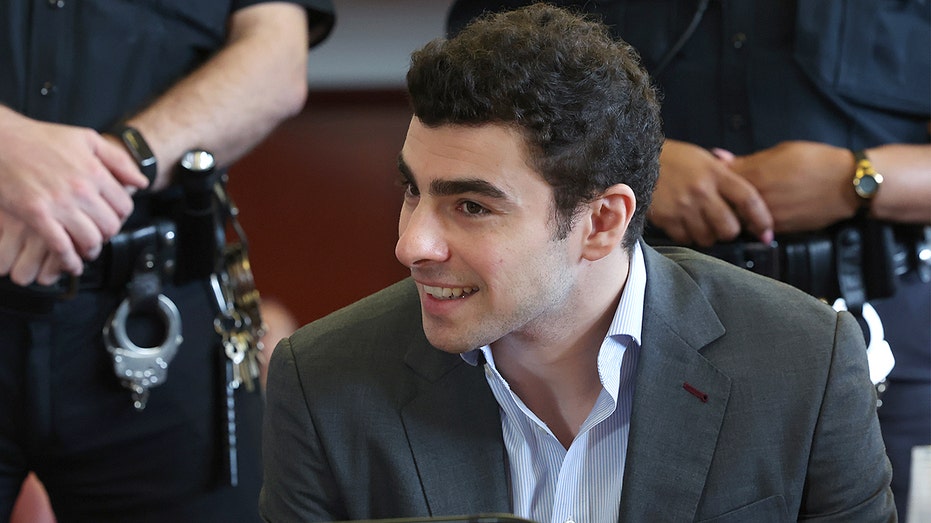
Luigi Mangione‘s request to livestream his upcoming murder trial has been criticized by a former federal prosecutor as a strategy to increase public pressure around the case. Neama Rahmani said widespread online coverage could allow influencers and supporters to shape public opinion and potentially affect jurors. Mangione’s defense argues that New York’s media access rules are unconstitutional and that the proceedings should be livestreamed. The trial is scheduled to begin in September in New York.
The dispute centers on whether greater access would promote transparency or create risks for a fair trial. Rahmani said the unusual request for more publicity may reflect the defense’s belief that online support could help produce jury nullification or an acquittal.
| 1) | Defense seeks livestream access for September trial |
| 2) | Former prosecutor sees a pressure strategy |
| 3) | Influencers could amplify the case online |
| 4) | Supporters and juror exposure raise concerns |
| 5) | New York law remains a major obstacle |
Defense seeks livestream access for September trial
Mangione’s lawyers argued in a filing that the media access rules for his state trial are unconstitutional. Attorney Karen Friedman Agnifilo said the defense was not consulted about the planned access rules and learned of a document titled “Media Access: PSNY v. Mangione” through an independent journalist on X.
The defense wants the proceedings livestreamed, saying broader access would support transparency. The trial is expected to take place in New York in September. Mangione is accused of killing UnitedHealthcare CEO Brian Thompson, who was fatally shot outside a Manhattan hotel on December 4, 2024, while traveling to a shareholder conference.
Former prosecutor sees a pressure strategy
Rahmani, a former federal prosecutor and president of a trial law firm, said defendants in high-profile cases typically do not seek additional broadcasting because publicity can place implicit pressure on jurors. He said Mangione’s case is different because the accused has attracted a substantial online following.
“The conventional wisdom is that the defense usually doesn’t want high-profile cases broadcast. It can put implicit pressure on jurors to return a guilty verdict,” Rahmani said.
Rahmani argued that the defense may believe increased attention could create support for jury nullification, in which jurors decline to convict despite evidence that may satisfy the legal elements of an offense. He also said the publicity could contribute to an acquittal, although the ultimate decision would remain with the jury based on the evidence and instructions provided by the court.
Influencers could amplify the case online
Rahmani said livestreamed footage would be more likely than traditional courtroom sketches to generate short clips for TikTok, Instagram Reels and other platforms. In his view, those clips could keep the case continuously visible and allow influencers to discuss the proceedings for large audiences.
“The defense knows this and they want to take advantage of that influencer content and those viral videos,” Rahmani said.
The proposed strategy, as described by Rahmani, would work through repeated online discussion rather than a single courtroom event. Influencers could highlight arguments, testimony or developments in ways that reach people who do not follow ordinary trial coverage. The defense has not publicly confirmed that influencing jurors is its purpose.
Supporters and juror exposure raise concerns
Mangione supporters have gathered outside federal and state courthouses in New York. One supporter, identified as Ashley and associated with a group calling itself “The Mangionistas,” told a newspaper that she had camped outside the court in December. Another supporter described bringing a heater and tent after previously waiting outside in freezing conditions.
Rahmani said jurors are instructed to decide a case only on courtroom evidence and not on information found through social media, online searches or artificial intelligence. He nevertheless said jurors are ordinary people who may encounter outside commentary. He also raised the possibility that some people could seek jury service with an undisclosed intention to support Mangione.
New York law remains a major obstacle
Rahmani said New York state law generally prohibits livestreaming criminal trials, meaning the defense is unlikely to obtain its request unless the law changes or the judge takes an extraordinary step. He said the absence of a livestream could also prompt some members of the public to question whether the proceedings are sufficiently transparent, particularly because other high-profile trials have been broadcast.
The Manhattan district attorney’s office has separately disputed claims about the trial’s media plan. The defense’s filing and the court’s eventual ruling will determine what forms of media access are permitted. Any decision must balance public access with the accused’s right to an impartial jury and a fair trial.
| Number | Key Point |
|---|---|
| 1 | Mangione’s defense says New York media access rules are unconstitutional. |
| 2 | A former prosecutor believes livestreaming could intensify pressure surrounding jurors. |
| 3 | Online influencers could turn courtroom developments into viral content. |
| 4 | New York law is expected to make a livestream difficult without legislative or judicial action. |
Summary
The livestream dispute reflects a broader conflict between transparency and trial integrity. Mangione’s defense is seeking wider media access, while Rahmani believes the resulting online attention could affect jurors or encourage attempts to influence the panel. The court’s ruling will determine whether the September proceedings can be broadcast and how media coverage is managed.
Frequently Asked Questions
Why does Mangione’s defense want the trial livestreamed?
The defense argues that New York’s media access rules are unconstitutional and says the proceedings should be livestreamed to improve transparency.
What concern did Neama Rahmani raise?
Rahmani said livestreaming could provide influencers with clips to share online, potentially increasing pressure on jurors or affecting public attitudes toward the case.
What is the legal obstacle to livestreaming?
Rahmani said New York state law prohibits livestreaming criminal trials, so the request would likely require a change in the law or an extraordinary judicial decision.