
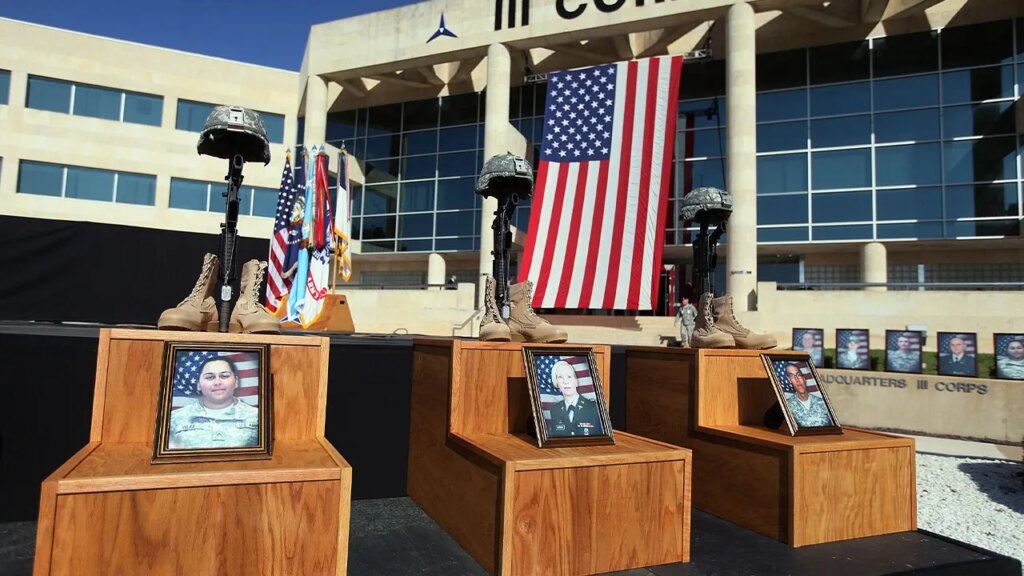
Survivors of the 2009 Fort Hood massacre have expressed their support for President Donald Trump’s recent decision regarding the execution of Nidal Hasan, the perpetrator of the attack. Trump announced that while Hasan will be executed by firing squad on December 3, 2026, the event will not be livestreamed, a move survivors believe prevents the execution from becoming a spectacle. This decision comes in response to concerns that broadcasting Hasan’s execution could serve as a propaganda tool for terrorist groups and negatively impact the mental well-being of victims and their families.
| Article Subheadings |
|---|
| 1) Survivors’ Reactions to the Decision |
| 2) The Rationale Behind the No-Livestream Rule |
| 3) The Impact on Mental Health |
| 4) The Broader Implications of the Execution |
| 5) A Reflection on Long-lasting Effects |
Survivors’ Reactions to the Decision
In light of Trump’s announcement, several survivors of the Fort Hood shooting have voiced their support for the decision to not publicize Hasan’s execution. Among these individuals is Alonzo Lunsford, who was shot multiple times during the 2009 attack. Lunsford described the no-livestream ruling as a “positive move,” emphasizing that it reflects a moral stance against glorifying violence. He believes the execution should not be treated as a form of entertainment nor a spectacle, which can desensitize society to violence.
Lunsford’s sentiments were echoed by other survivors, such as Julia Wilson, who was pregnant during the attack. Wilson articulated her concern over the potential emotional triggers the live broadcast could pose, sparking distress among both victims and the broader public. The survivors’ reactions speak to the larger narrative of trauma and healing that surrounds the Fort Hood incident, highlighting their desire for dignity in justice over sensationalism.
The Rationale Behind the No-Livestream Rule
The decision to halt the livestreaming of Hasan’s execution stems from fears that doing so could inadvertently aid terrorist organizations in propaganda efforts. Trump remarked on social media that while he believed such broadcasts might deter terrorism, the concerns raised by victims and their families were ultimately more significant. He stated, “Many very good and well-meaning people would rather not watch him die.” This statement underlines a growing awareness about the psychological impacts that public executions can carry, especially for those linked to the original crime.
The choice also reflects a balancing act between the demands for justice from victims’ families and the interests of public perception. Many officials, in agreeing with the victims’ stance, assert that the act of witnessing an execution should not become an available commodity to be consumed by the masses. The complexities of such matters extend beyond individual cases and delve into ethical considerations surrounding capital punishment in contemporary society.
The Impact on Mental Health
Experts have underscored the psychological ramifications of broadcasting executions, particularly for those directly affected by such violent acts. For survivors like Wilson, the potential for re-traumatization through media exposure poses a serious concern. “Seeing someone murdered in front of you… affects your mental health, whether they deserve it or not,” Wilson remarked, indicating the lasting effects of the traumatic event on her psyche. Her reflection highlights the need for careful consideration of the mental health consequences that can surface in public narratives surrounding capital punishment.
Furthermore, fears exist concerning the internet’s permanence. Wilson articulated her worries about how footage of the execution could resurface in the future, possibly reaching impressionable individuals, including children. “Once it’s out there, it’s out there,” she warned, stressing the ethical duty to protect vulnerable populations from potentially disturbing content. The conversation around mental health continues to evolve, highlighting the necessity for ensuring that measures are taken to mitigate harm in such sensitive situations.
The Broader Implications of the Execution
The execution of Nidal Hasan, originally part of the military’s response to terrorism, presents critical implications that extend far beyond the immediate scope of justice. By declining to broadcast the execution, officials may aim to set a precedent, acknowledging that executions should uphold an element of respect and solemnity, rather than becoming spectacles. Survivors and advocates argue that this approach not only honors the memories of the victims but may also serve as a more profound testimony to civilization’s handling of violence and justice.
Throughout this discourse, sentiments surrounding accountability emerge. Lunsford highlighted systemic failures in addressing Hasan’s concerning behavior prior to the attack, reflecting broader questions about military oversight and responsibility. “We knew this guy had issues,” he expressed, calling attention to the need for genuine reform and preventive measures to avoid similar tragedies in the future.
A Reflection on Long-lasting Effects
As discussions surrounding Hasan’s execution proliferate, many victims continue to grapple with the long-lasting consequences of the attack. Lunsford poignantly pointed out that trauma does not vanish with the conclusion of judicial proceedings. “Every day we get up, we come to the VA hospital or we have to take our meds in the morning,” he shared. This observation highlights the continuous journey survivors must navigate in reclaiming normalcy in their lives after experiencing profound loss and injury.
The decision to witness Hasan’s execution represents a critical moment for families seeking closure. Lunsford recognized the weight of this event as a way to symbolically close a painful chapter of their lives. “They’ll be able to close the chapter and hopefully close the book,” he stated, reflecting a common desire for healing. This dual narrative of seeking justice while also yearning for personal peace underscores the complexities faced by the individuals directly affected by the tragedy.
| No. | Key Points |
|---|---|
| 1 | Survivors of the Fort Hood shooting support the no-livestream decision for Nidal Hasan’s execution. |
| 2 | The decision aims to prevent broadcasting the execution as a spectacle and limit potential propaganda for terrorist groups. |
| 3 | Mental health concerns arise regarding the potential trauma associated with witnessing such an execution. |
| 4 | The decision reflects an ethical stance on capital punishment in modern society and has broader implications for justice. |
| 5 | Survivors continue to live with the long-lasting effects of the attack, seeking closure through the execution. |
Summary
The decision by President Trump to prohibit the livestreaming of Nidal Hasan’s execution marks a crucial turning point for survivors of the Fort Hood shooting. By recognizing the potential emotional ramifications and ethical implications of public execution broadcasts, this choice reflects a commitment to dignity over sensationalism in the quest for justice. As survivors seek avenues for healing, their perspectives remain pivotal in defining the course of narratives surrounding trauma, justice, and memory.
Frequently Asked Questions
Question: What were the main concerns about livestreaming Hasan’s execution?
The primary concerns about livestreaming were that it could glorify violence, serve as a propaganda tool for terrorist organizations, and cause emotional distress for survivors and victims’ families.
Question: How did survivors of the Fort Hood attack react to the decision?
Survivors expressed strong support for the decision not to livestream, emphasizing the importance of treating such events with dignity and caution concerning the audience’s mental health.
Question: What long-term effects do survivors face following the Fort Hood attack?
Survivors continue to deal with physical and psychological scars, which manifest in their daily lives through recurring trauma and reminders of the attack, influencing their pursuit of healing and closure.