
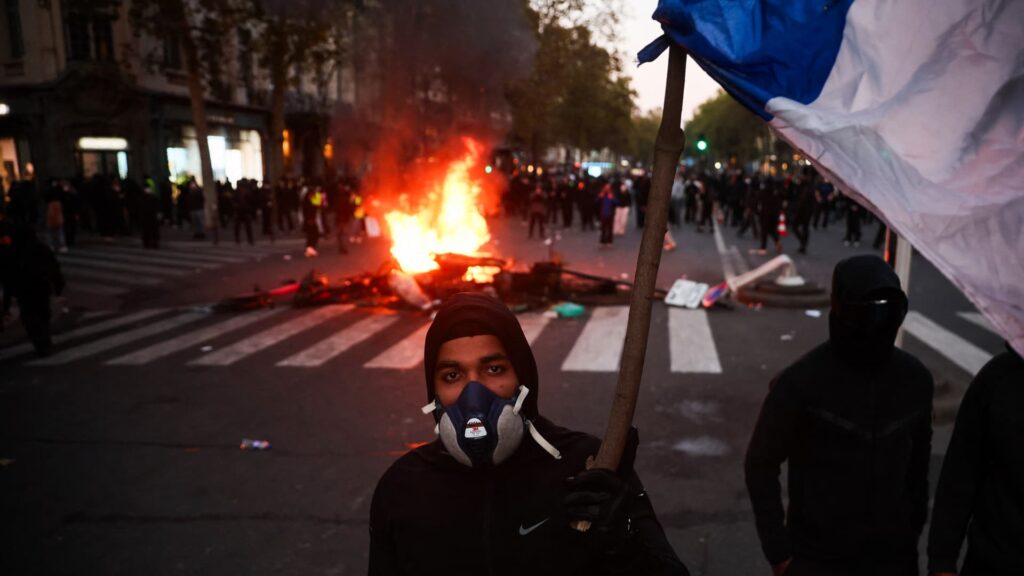
France is grappling with increasing unrest as nationwide protests spiral into violence, primarily triggered by dissatisfaction over rising living costs and dwindling public services. The unrest erupted over the weekend, culminating in nearly 2,400 arrests and significant property damage, including looting and vandalism in cities across the country. This turmoil comes as the French government prepares for a crucial vote on its budget, amid growing public discontent against President Emmanuel Macron and his administration.
| Article Subheadings |
|---|
| 1) Nationwide Protests and Unrest |
| 2) Government’s Response and Initiatives |
| 3) Impact on Local Communities and Businesses |
| 4) Political Reactions and Future Implications |
| 5) The Way Forward for France |
Nationwide Protests and Unrest
The wave of protests that swept across France emerged from a mix of frustrations regarding the cost of living and broader public service deficiencies. Starting on October 17, 2026, thousands took to the streets in various cities, with significant gatherings reported in Paris where around 110,000 participants marched. The unrest escalated as some fringe groups began clashing violently with law enforcement, resulting in extensive damage and chaos. The French Interior Ministry reported that almost 2,400 people were arrested, while police and protesters ended up in confrontations leading to injuries on both sides.
According to reports, nearly 1,000 police officers sustained injuries during these confrontations. The situation was marked by vandalism, looting of stores, and destruction of public property, which included the historic town hall in Limoges that was set ablaze. Prime Minister Sébastien Lecornu’s government is currently facing mounting pressure as these protests highlight significant public dissatisfaction with ongoing austerity measures proposed in the upcoming budget, aimed at saving €54 billion.
Government’s Response and Initiatives
In the wake of widespread unrest, President Emmanuel Macron initiated discussions across various sectors, calling together students, teachers, lawmakers, unions, and business leaders to forge actionable solutions to the escalating crisis. The President expressed concern over the violence erupting amid the protests and demanded a thorough review of the intelligence and police response leading up to the clashes. Macron remarked that the French government must take an uncompromising stance against “agitators from ultra-left fringe groups” that stoked violence amid an otherwise legitimate movement for economic justice.
While a state of emergency was not declared, Macron permitted local officials to impose restrictions on gatherings to safeguard local businesses and public buildings. This response highlights the government’s balancing act between addressing genuine grievances and preventing further violence.
Impact on Local Communities and Businesses
The fallout from the protests has been severe, particularly for local businesses affected by the violence. Interior Minister Laurent Nuñez estimated that hundreds of shops sustained heavy damages, with looting incidents reported in cities including Bordeaux, where community leaders noted up to 100 stores were hit. The chaos has led businesses to call for government intervention and financial support to revive the local economy.
For many residents, the unrest symbolizes a larger crisis of trust in the government’s ability to manage economic and social issues effectively. The economic hardship felt across France has led to an escalating frustration towards government policies perceived as neglectful, particularly in the wake of rising living costs. A tragic dimension was added to this ongoing turmoil with the reported death of a protester in Paris due to cardiac arrest during demonstrations, indicating the high-stakes environment surrounding these events.
Political Reactions and Future Implications
Political leaders across the spectrum have weighed in on the recent protests, reflecting a divided opinion on France’s future direction. Far-right political figure Marine Le Pen criticized Macron’s government as “exhausted and disoriented,” suggesting that the protests underline a deeper systemic failure within the administration. Conversely, far-left leader Jean-Luc Mélenchon urged the government to engage more earnestly with the issues raised by young protesters, hinting that ignoring these demands could lead to uncontrollable events.
Macron’s approach to managing the protests and resolving public discontent will likely define his administration’s legacy as it moves towards the next presidential election. Should the government fail to address the escalating unrest effectively, analysts suggest it may lead to increased support for opposition parties who capitalize on the growing discontent.
The Way Forward for France
As France navigates through this period of unprecedented unrest, moving forward will require a concerted effort to bridge the gap between government officials and the citizens they serve. The discussions called by Macron are essential not just for immediate crisis management but also for fostering long-term solutions to the structural issues plaguing the French economy.
Restoring public trust will necessitate more transparent governance and an authentically engaged political dialogue with various components of French society. Implementing effective measures to ease living costs, improve public services, and provide support for negatively impacted communities will be crucial for stabilizing the current situation and preventing further violent expressions of discontent.
| No. | Key Points |
|---|---|
| 1 | Nationwide protests have erupted in response to rising living costs and public service challenges. |
| 2 | The French government is facing significant pressure to address widespread public discontent amid increasing austerity measures. |
| 3 | Several hundred shops sustained damage from violent confrontations during the protests, affecting local economies. |
| 4 | Political leaders are divided on the government’s response, with calls for greater accountability and coordination. |
| 5 | Future stability in France will depend on effective governmental engagement with public grievances and economic pressures. |
Summary
The recent protests across France underscore a critical moment in the nation’s social and political landscape, marked by escalating frustrations towards government austerity measures and diminishing public services. With significant unrest witnessed in many cities, the government faces the urgent task of establishing effective communication and solutions to address the growing turmoil while also safeguarding public safety. As public sentiment shifts, the future of the Macron administration may hinge on its ability to respond decisively and constructively to these pressing issues.
Frequently Asked Questions
Question: What prompted the recent protests in France?
The protests were primarily motivated by rising living costs, declining public services, and broader social discontent with government austerity measures.
Question: How is the French government responding to the unrest?
President Macron has called for discussions with various stakeholders including students, teachers, and lawmakers, to develop actionable plans addressing the crisis while reviewing intelligence and police response during the protests.
Question: What impact have the protests had on local businesses?
Local businesses have suffered considerable losses due to damage and looting, prompting calls for government support to help affected shop owners recover from the riots.