
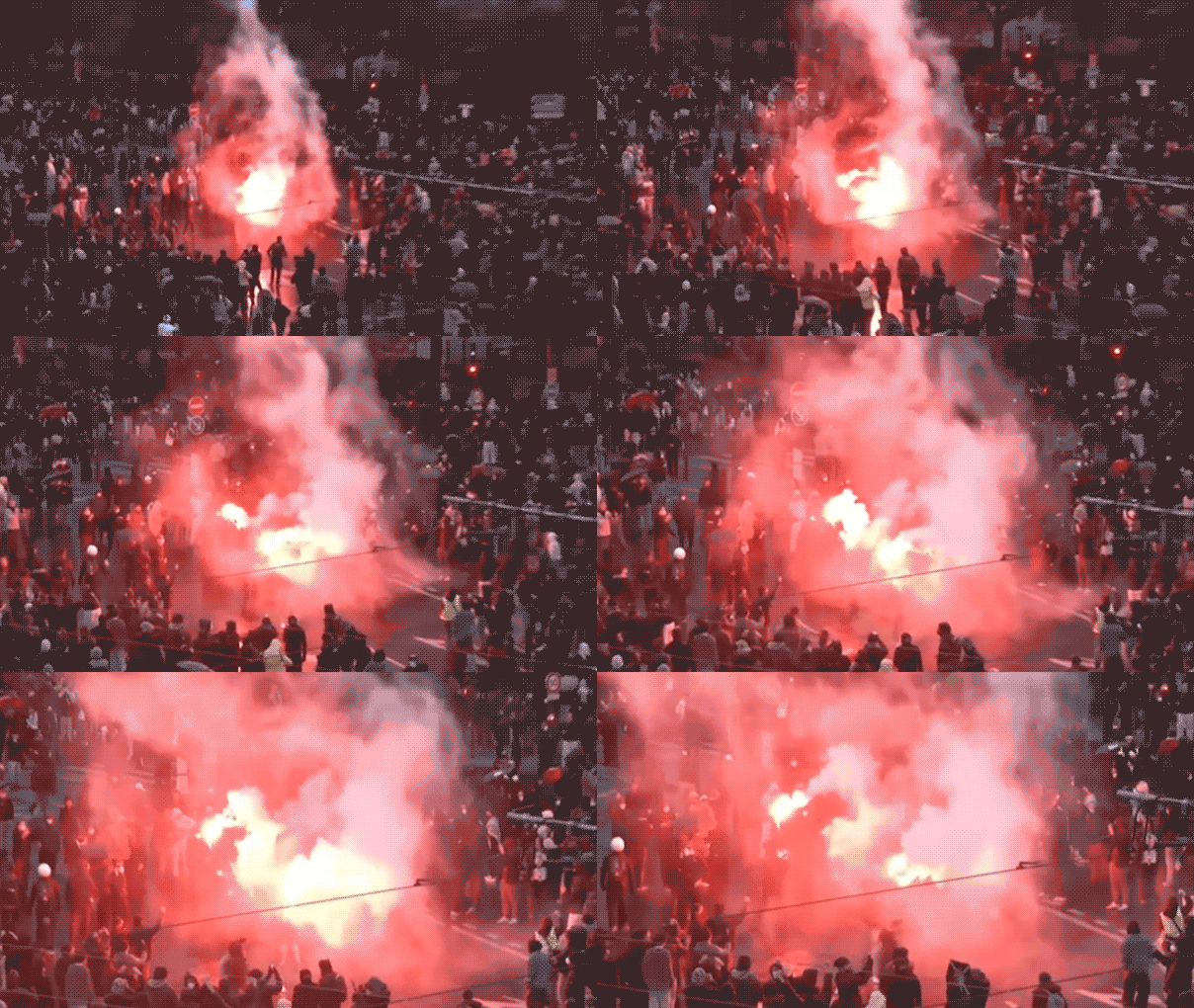
On a day marked by widespread unrest across France, nearly 1,000 individuals were arrested during protests on Saturday. These demonstrations, primarily fueled by frustration over climbing living costs and poor educational conditions, have evolved into a national outcry against the government’s austerity measures. The situation escalated, prompting international responses and drawing comparisons to potential unrest in the United States, as voiced by officials.
| Article Subheadings |
|---|
| 1) Nationwide Protests and Arrests |
| 2) The Spread of Unrest Beyond France |
| 3) Government Responses to Demonstrators |
| 4) Protesters’ Motivations and Demands |
| 5) International Reactions to the Unrest |
Nationwide Protests and Arrests
On Saturday, the streets of France witnessed significant turmoil as nationwide protests against living conditions escalated. According to French Interior Minister Laurent Nuñez, approximately 1,000 people were arrested while demonstrations unfolded. Reports indicated intense police actions across multiple cities, with officers conducting proactive searches on protesters and detaining those suspected of carrying weapons. Specifically, around 65 arrests took place in Paris alone, where police estimated that 110,000 individuals took to the streets, a number much lower than the 250,000 claimed by labor union organizers.
In addition to the arrests, disturbances surpassed mere protests, leading to concerns about violence. The French Interior Ministry claimed that upwards of 410,000 individuals joined the protests across the nation, indicating the widespread dissatisfaction with governmental policies affecting everyday life.
The Spread of Unrest Beyond France
The unrest in France has not only remained within its borders but has also ignited protests in other parts of Europe. Clashes broke out in cities like Rome and Tirana, Albania, where demonstrators set government buildings ablaze and participated in violent confrontations with law enforcement. Italian police employed water cannons to dismiss protesters in Rome who were demonstrating against rising living costs and conflicts abroad. In Tirana, students demanded lower tuition and an end to governmental corruption in education, and faced severe police resistance.
These aggressive responses by police were indicative of a larger trend seen throughout the region, as riots and demonstrations brought forth similar challenges in several cities. Concerns over administration responses to economic strains are reshaping how governments approach public dissent.
Government Responses to Demonstrators
As protests continued, the French government activated around 70,000 police officers nationwide to manage the crowds and prevent potential violence. The police highlighted their mission to ensure safety and mitigate disruptions. In a social media statement, the Paris Police Department asserted, “Violent individuals have no place in the marches,” aiming to protect peaceful demonstrators from troublemakers infiltrating the gatherings. This approach reflects a strategy rooted in maintaining public order while addressing grievances expressed by the population.
Internationally, officials such as President Donald Trump commented on the situation, suggesting that the unrest in France serves as a cautionary tale for potential outcomes in the United States under “left-wing leadership.” His remarks not only underscore the global context of these protests but also exhibit the cross-national implications that resonate with political narratives surrounding governance and public discontent.
Protesters’ Motivations and Demands
The catalyst for these demonstrations lies deeply rooted in ongoing public grievances. High school and university students have been at the forefront of protests, citing frustrations about deteriorating educational conditions, including insufficient teacher resources and inadequate schooling facilities. The unrest quickly expanded as labor unions joined forces, voicing broader concerns about austerity measures that have triggered significant hardships regarding wages, pensions, and the overall cost of living.
Protesters seek real change, combining their demands with a broader dissatisfaction aimed at reshaping national policies. Such calls for reform signal an ongoing struggle against governmental direction, possibly influencing future policy decisions and administrative actions as authorities evaluate the escalating situations both in France and abroad.
International Reactions to the Unrest
As the protests developed, reactions poured in from various quarters globally. In Italy, the unrest sparked heightened security efforts as the government responded to protests with a show of force. Concurrently, Albanian Prime Minister Edi Rama acknowledged ongoing dialogues with student protesters but warned that violent actions would not be tolerated. His stance sought to create an image of responsiveness amidst growing chaos.
Trump’s comments regarding the potential spill-over of civil unrest from France to the United States serves to amplify concerns in other nations, presenting a viewpoint that stresses the fragility of social order in times of discontent. This perspective encourages governments worldwide to reflect on their policies concerning public demonstrations in light of evolving socio-political climates.
| No. | Key Points |
|---|---|
| 1 | Nationwide protests in France resulted in nearly 1,000 arrests and large-scale demonstrations. |
| 2 | Clashes have spread to Italy and Albania, escalating tensions across Europe. |
| 3 | Government responses include deploying thousands of police to maintain public order. |
| 4 | Protesters express frustrations over living costs, educational conditions, and austerity policies. |
| 5 | International reactions highlight the potential for unrest to resonate in other nations. |
Summary
The protests in France serve as a mirror reflecting the growing discontent with government policies both domestically and internationally. As reported, the unrest has a complex nature encompassing various issues, from economic hardship to educational inadequacies. The local and international responses highlight a pivotal moment where public sentiment is challenging existing governance structures, potentially setting a precedent for future civil movements globally.
Frequently Asked Questions
Question: What sparked the recent protests in France?
The protests in France were primarily fueled by dissatisfaction over rising living costs, educational conditions, and government austerity measures.
Question: How did the government respond to the protests?
The French government deployed approximately 70,000 police officers nationwide to maintain order and prevent violence during the protests.
Question: Has the unrest in France influenced other countries?
Yes, the unrest in France has sparked demonstrations in other nations, such as Italy and Albania, reflecting shared grievances regarding governance and economic conditions.