
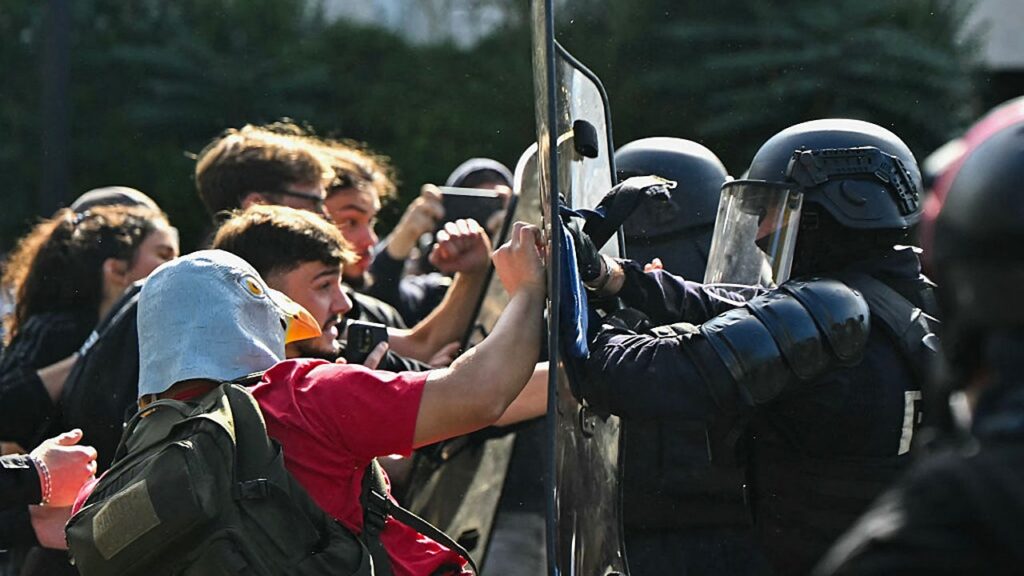
In recent weeks, France has witnessed widespread protests driven by discontent among students regarding the state of the education system. The unrest, which began with demands for better resources and conditions, has escalated into violent confrontations between demonstrators and law enforcement across several cities. As the situation unfolds, commentators are drawing parallels to concerns regarding immigration policies and their societal impacts, highlighting what some see as a cautionary tale for countries grappling with similar issues.
| Article Subheadings |
|---|
| 1) The Causes of the Protests |
| 2) Escalation of Violence |
| 3) Government Response and Budget Cuts |
| 4) Implications for Immigration Policies |
| 5) Impact on the Future of Education in France |
The Causes of the Protests
The recent protests in France were initially sparked by students who voiced their frustrations over overcrowded classrooms, shortages of teachers, and poor educational conditions. The demonstrations began late last month in Paris’s less affluent suburbs as students rallied against what they deemed inadequate governmental support for their educational needs. As the protests spread, they attracted participants from across the nation, highlighting a broader concern about the quality of education in France.
Students targeted the government, accusing it of neglecting the education sector. The protestors articulated a vision for a system that would provide adequate resources and a supportive environment conducive to learning. Many students expressed feelings of disillusionment and anger, stating that their future prospects were being compromised by systemic failings in the educational infrastructure. Young demonstrators from various schools began organizing marches, utilizing social media to mobilize support and share their grievances with a wider audience.
Escalation of Violence
As protests evolved, they quickly transformed from peaceful gatherings into scenes of violence and chaos. Initially localized in Paris’s suburbs, instances of unrest spread rapidly to major cities like Marseille, Strasbourg, and Toulouse, leading to clashes with police. Incidents of arson, destruction of property, and the use of projectiles against law enforcement became commonplace as tensions heightened. According to reports, more than 5,000 arrests had been made in a span of just a few days, marking a significant deterioration in public order。
The actions of some protestors included violent confrontations with law enforcement, leading to the deployment of riot police, tear gas, and rubber bullets to quell the unrest. The escalation of these protests has raised concerns among officials about the potential for widespread civil disorder. Eye-witness accounts from participants indicate a mix of underlying frustrations directed both at the government and the conditions surrounding the protests, with some individuals reportedly motivated by a sense of injustice regarding their grievances.
Government Response and Budget Cuts
In response to the protests, the French government unveiled its budget for 2027, which revealed a modest increase in education spending of only 1.7%. This figure, notably below the rate of inflation, ignited further outrage among students and educators alike, leading many to perceive the government’s efforts as insufficient amidst rising costs and deteriorating conditions in schools. The lack of action regarding teacher shortages and inadequate facilities was particularly highlighted during these demonstrations.
The government indicated awareness of the protests’ origins, with officials attributing some blame to politically motivated agitators. Reports surfaced alleging that figures from the hard-left France Unbowed Party (LFI) had played a role in fueling the unrest. Despite these claims, LFI representatives have denied involvement, asserting that teachers’ concerns about education conditions merely reflect genuine public sentiment. These events have presented the government with a complex situation, balancing the immediate need for public safety against the significant challenges of managing public discontent.
Implications for Immigration Policies
The unrest in France has prompted some observers to draw connections between the protests and broader immigration policies. Commentators have suggested that the rising tension in France serves as a cautionary tale for the United States and other nations facing similar debates about border policies. The sentiments expressed by various individuals, particularly in discussions around the protests, have sparked dialogue on whether open-border policies exacerbate social tensions and contribute to civil unrest.
Critics of immigration policies argue that an influx of newcomers without adequate support leads to societal strains. They assert that the native population often bears the brunt of economic and social burdens, causing resentment and a sense of disillusionment. Figures like political commentators have argued that the discontent seen in France emphasizes the need for policymakers to carefully evaluate the implications of immigration frameworks on domestic stability and social cohesion.
Impact on the Future of Education in France
As protests continue to unfold, the long-term effects on France’s education system remain uncertain. The breadth and intensity of these protests may compel government actors to reassess educational policies and funding mechanisms. There is potential for a re-evaluation of how resources are allocated to schools, with a greater focus on addressing the pressing infrastructure and administrative issues highlighted by protestors.
Educators, parents, and students alike hope that this unrest serves as a watershed moment to galvanize necessary reforms in the education sector. The existing tensions suggest that without immediate action to remedy these systemic issues, discontent may persist and even grow in the face of ongoing challenges. Monitoring how the French government navigates these issues will be critical in determining the future path of education and public policy in France.
| No. | Key Points |
|---|---|
| 1 | Student protests in France have escalated due to frustrations regarding education conditions. |
| 2 | The unrest highlights systemic issues within the French education system, including overcrowding and teacher shortages. |
| 3 | Violence has erupted during protests, leading to significant unrest across multiple cities in France. |
| 4 | The government’s proposed budget increase has been criticized as inadequate, fueling further discontent. |
| 5 | The situation poses broader implications for immigration and domestic policy discussions in France and beyond. |
Summary
The recent student protests in France serve as a stark reminder of the potential for civil unrest when systemic issues within essential services like education are left unaddressed. As the demonstrations grow in scale and intensity, they reflect not only immediate grievances but also broader societal tensions regarding immigration and government accountability. The unfolding events may call for a critical reassessment of policies affecting educational resources and community support systems, highlighting the interconnected nature of public dissatisfaction and policy effectiveness.
Frequently Asked Questions
Question: What issues prompted the student protests in France?
The protests were sparked by frustrations over overcrowded classrooms, teacher shortages, and deteriorating educational conditions.
Question: How did the French government respond to the unrest?
The government revealed a budget plan that included a modest increase in education spending, which many criticized as insufficient given the rising costs and inflation.
Question: What are the broader implications of the protests for other countries?
Commentators are drawing parallels to issues surrounding immigration policies, suggesting that the unrest in France serves as a cautionary tale for nations grappling with similar challenges.