
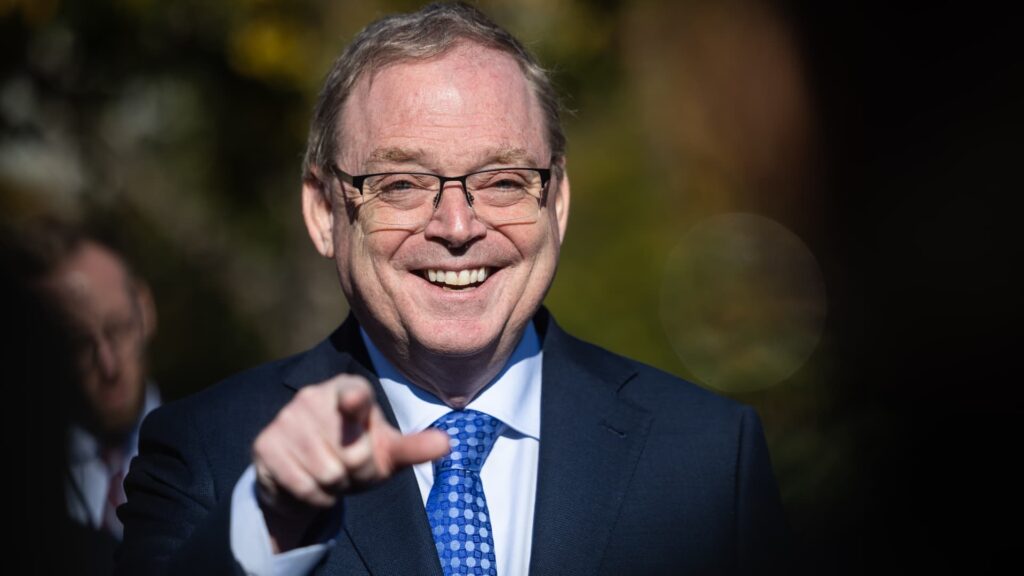
As the U.S. prepares for a pivotal moment in its monetary policy, speculation about the next chair of the Federal Reserve intensifies. National Economic Council Director Kevin Hassett emerges as a frontrunner, amid murmurs surrounding the current chair, Jerome Powell, whose tenure expires in May. With President Donald Trump hinting at a potential announcement soon, the new chair will be stepping into a complex economic landscape marked by conflicting perspectives on interest rates and inflation.
| Article Subheadings |
|---|
| 1) Anticipation around the New Federal Reserve Chair |
| 2) Divided Opinions Within the Federal Reserve |
| 3) Calls for Reform in the Federal Reserve |
| 4) Implications for the U.S. Economy |
| 5) The Path Forward for Monetary Policy |
Anticipation around the New Federal Reserve Chair
The upcoming selection of the Federal Reserve chair has grabbed significant attention from financial markets and political circles alike. President Donald Trump disclosed aboard Air Force One that he is aware of who he intends to select but has not yet revealed the name. Amid this uncertainty, Kevin Hassett, director of the National Economic Council, has risen in the ranks as a leading candidate to assume the role, according to a recent report by Bloomberg. The current chair, Jerome Powell, will conclude his term in May, setting the stage for a transition that could have substantial implications for U.S. economic policy.
Hassett joined discussions on various talk shows over the weekend, skillfully sidestepping direct inquiries about his chances. He expressed honor at being mentioned among reputable candidates, which include prominent figures like current Governors Christopher Waller and Michelle Bowman, former Governor Kevin Warsh, and Rick Rieder, head of fixed income at BlackRock. The uncertainty surrounding this appointment comes at a critical time as markets are reacting to the possibility of forthcoming rate cuts.
Divided Opinions Within the Federal Reserve
The next chair of the Federal Reserve will inherit a bank marked by divisions among its officials regarding the appropriate direction for monetary policy. These divisions are rooted in contrasting views about whether more interest rate cuts are needed to avert labor market issues or whether to maintain a cautious approach due to persistent inflation threats. As anticipation builds for the next rate decision on December 10, traders in the futures market currently assign an 87.6% probability to a potential cut, showcasing the volatility that has characterized trading in recent weeks.
President Trump and his administration have openly pushed for lower interest rates, suggesting this as a litmus test for whoever is chosen as the next chair. The 2026 landscape of the Federal Open Market Committee will lean hawkish, signifying a tendency to combat inflation rather than further easing monetary policy. Yet, the forthcoming leadership will deal with more than just interest rates and will contend with a complex set of economic challenges in navigating the Fed’s future role.
Calls for Reform in the Federal Reserve
Meanwhile, Treasury Secretary Scott Bessent, who is overseeing the chair selection process, has articulated a desire for a reevaluation of the Federal Reserve’s role. He emphasized the need for the institution to simplify its mission, arguing that monetary policy has become unduly complicated. “We’ve gotten to this point where monetary policy has gotten very complicated,” he stated in a recent CNBC interview. Bessent urged the committee to return to its roots of being less intrusive and more focused on serving the American public.
One specific area of focus is the influence of regional Federal Reserve presidents whose public remarks can sway market sentiment despite their limited decision-making powers. Bessent pointed to existing tensions on whether these individuals should continue to hold prominent roles in monetary discussions, suggesting that a reduction in such commentary could benefit public trust and clear up ambiguity in policy direction. As the next chair will have influence over these appointments, their perspective on this matter will be critical.
Implications for the U.S. Economy
With the impending selection of the next Federal Reserve chair, the implications for the U.S. economy are profound. Mohamed El-Erian, the chief economic advisor at Allianz, shared similar sentiments, praising Bessent’s vision while voicing the need for structural changes. “We need the Fed to cool it,” he remarked on CNBC. Such sentiments resonate beyond American borders, highlighting the tangible impact of U.S. monetary policy on global financial markets.
The discussions around potential leadership shift at the Federal Reserve underscore the critical intersection between economic policy, market stability, and public sentiment. As the American economy grapples with inflation and a labor market in transition, the appointment of a new chair could redefine the central bank’s mission and effectiveness in steering the economy through turbulent waters.
The Path Forward for Monetary Policy
Looking ahead, the path forward for monetary policy involves considerations that extend beyond mere interest rate adjustments. The new chair will face an array of challenges ranging from inflationary pressures to labor market dynamics. Financial markets will be closely tracking not just who is selected, but the broader implications of their policies and strategies. Hassett’s potential approach to serving Americans through lower borrowing costs could emphasize a greater focus on economic growth, a notion that resonates favorably with many voters and constituents.
As President Trump prepares to finalize his selection, scrutiny of the candidates’ positions on economic reforms looms large. The sentiment for essential reforms within the Federal Reserve reflects ongoing dissatisfaction with the status quo and the desire for a more coherent monetary policy approach. Moving forward, the direction set by the incoming chair will be crucial in maintaining economic stability and fostering growth in a rapidly changing financial landscape.
| No. | Key Points |
|---|---|
| 1 | President Trump hints at his impending choice for the next Federal Reserve chair. |
| 2 | Current National Economic Council Director Kevin Hassett is a leading candidate. |
| 3 | Divisions within the Federal Reserve highlight tension over interest rate policy. |
| 4 | Calls for reform within the Fed emphasize a simplified approach to monetary policy. |
| 5 | Key decisions to be made could significantly influence both domestic and global economies. |
Summary
In summation, the upcoming appointment of the Federal Reserve chair stands at a critical juncture for U.S. economic policy. As President Trump considers his options, the choice of Kevin Hassett or others among the candidates could shape monetary policy for years to come. With heightened discussions surrounding interest rates, inflation, and calls for institutional reform, the implications of this decision extend far beyond politics, resonating across financial markets and the economy as a whole.
Frequently Asked Questions
Question: Who is likely to be the next chair of the Federal Reserve?
Currently, National Economic Council Director Kevin Hassett is considered a frontrunner, along with other prominent candidates.
Question: What is the significance of the Federal Reserve chair’s appointment?
The chair will influence U.S. monetary policy, which can affect interest rates, inflation, and overall economic stability.
Question: What concerns are arising within the Federal Reserve?
There is a divide among officials regarding whether to cut interest rates to support the labor market or to prioritize fighting inflation.