
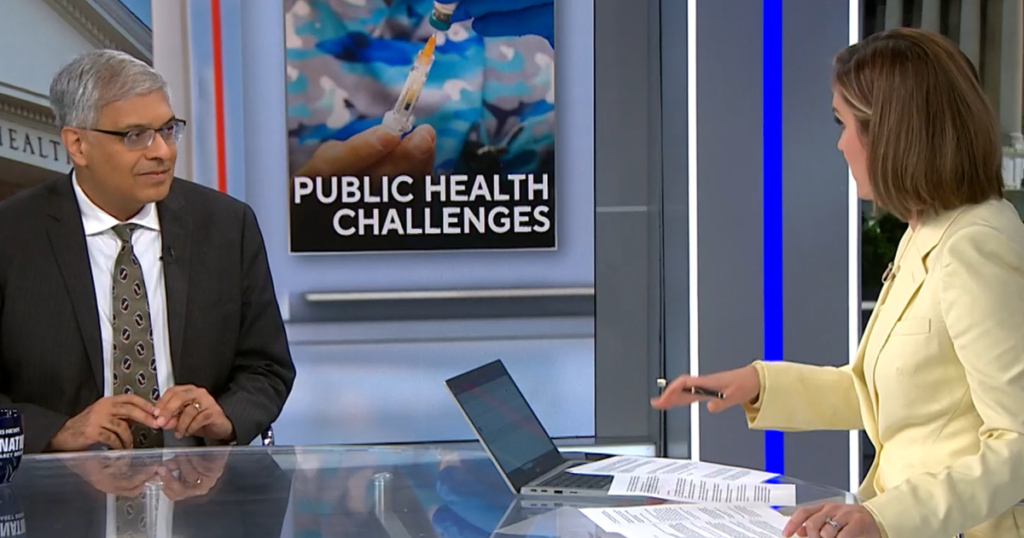
In a recent episode of “Face the Nation,” hosted by Margaret Brennan, a range of pressing issues concerning the current political landscape and public health were discussed. Key figures such as Senator Bill Cassidy, Senator Bernie Sanders, and Dr. Jay Bhattacharya, Director of the National Institutes of Health, analyzed the challenges faced by the fragmented Democratic Party ahead of the crucial midterm elections. They also touched upon growing health concerns, including rising cases of various infections and the need for vaccination awareness.
The discussion spanned the political dynamics in Congress, the potential implications of recent primary results, and the urgent calls for public health initiatives as infection rates rise. This multifaceted dialogue raises significant questions about party unity, health policy, and the impact of misinformation in today’s society.
| Article Subheadings |
|---|
| 1) Political Fragmentation in the Democratic Party |
| 2) The Role of Public Health in Midterm Elections |
| 3) Responses to Rising Infections and Vaccination Rates |
| 4) The Impact of Misinformation on Public Trust |
| 5) Looking Ahead: Political Strategies and Public Health Initiatives |
Political Fragmentation in the Democratic Party
The discussion began with a focus on the current situation within the Democratic Party as it gears up for the upcoming midterms. Senator Bill Cassidy and Senator Bernie Sanders both emphasized the impacts of recent primary elections, particularly the progressive victories that have shaken the Democratic establishment. Notable was the primary win by Abdul El-Sayed in Michigan, which highlighted a continued divide between the party’s progressive and moderate factions.
Margaret Brennan probed Senator Sanders regarding the implications of these primary results for party unity. “Can a fractured Democratic Party unite to flip the House and Senate in the fall?” she asked. The stakes are especially high with the imminent elections, where unity is essential to counter the Republican stance effectively. Sanders argued for the necessity of addressing the concerns of the working class, stating that Americans are increasingly frustrated with traditional party politics and need alternatives that resonate with their lived experiences.
The Role of Public Health in Midterm Elections
Public health also took center stage during the discussion, particularly concerning the rising infection rates of various diseases such as cyclospora, salmonella, measles, and COVID-19. Dr. Jay Bhattacharya detailed how these health issues could influence voter sentiment. “As we face growing health concerns, it’s crucial that public health initiatives are a part of the political discourse,” he asserted.
The collective anxiety surrounding health could lead to a mobilization of voters prioritizing candidates who support public health measures. Notably, both Cassidy and Sanders echoed the importance of reinforcing trust in health systems and fostering a sense of community responsibility in health education. The overarching message is that, as public health crises potentially abound, they are bound to influence the electoral process significantly.
Responses to Rising Infections and Vaccination Rates
The growing infection rates have prompted calls for vaccination drives and public outreach. Dr. Bhattacharya emphasized that the updates on public health strategies should not be ignored, with an explicit focus on vaccination initiatives. The challenges posed by misinformation surrounding vaccines and diseases have led to significant hesitance among parents, resulting in lower vaccination rates and public health risks.
“We need a comprehensive push for vaccination awareness, particularly as the school year approaches,” Bhattacharya noted. The health expert urged the need for clear communication from health authorities to combat fears and misinformation that can undermine public trust. To ensure a well-informed populace that prioritizes health, proactive measures such as advertisements and community outreach programs are necessary.
The Impact of Misinformation on Public Trust
Misinformation emerged as a potent topic during the episode, particularly concerning its effects on public perception of health measures. Brennan and Bhattacharya addressed a troubling rise in vaccine hesitancy tied directly to the spread of misleading information during the COVID-19 pandemic. “Public trust in health decisions has been eroded by persistent misinformation,” Bhattacharya remarked.
This conversation resonated within the political context as both lawmakers connected the critical need for transparency and accountability in government actions with public health guidance. As misinformation campaigns continue, the need for clear, factual communication becomes paramount in rebuilding trust with the public.
Looking Ahead: Political Strategies and Public Health Initiatives
As the conversation concluded, Margaret Brennan turned her focus to the future: What can we expect as midterms approach? Both Cassidy and Sanders recognized the necessity for bipartisan support in addressing both political fractures and public health concerns. Cassidy emphasized the importance of stable leadership in public health, asserting that only through cooperation can lawmakers effectively address the impending crises that threaten public well-being.
“It’s not a black-or-white decision,” Cassidy noted while discussing potential legislation. He underscored that all sides must engage constructively to create solutions beneficial for the American people as the midterms loom on the horizon. Meanwhile, Sanders reiterated the need for real change that resonates with the working class, stating that “people are tired of the status quo.”
| No. | Key Points |
|---|---|
| 1 | The Democratic Party is currently facing significant fragmentation as it prepares for the midterm elections. |
| 2 | Public health concerns are becoming more prominent in the electoral conversation, particularly as infection rates rise. |
| 3 | Vaccination awareness and addressing misinformation are critical issues highlighted by health experts. |
| 4 | There is a need to restore public trust in health institutions, affected by misinformation during the COVID-19 pandemic. |
| 5 | Political parties must collaborate to find effective solutions to pressing health and societal challenges ahead of the midterms. |
Summary
Overall, the dialogue on “Face the Nation” illustrated the intersections of politics and public health in an increasingly polarized landscape. The insights of Senators Cassidy and Sanders, alongside Dr. Bhattacharya, highlighted the urgent need for unity and clarity as both parties gear up for the midterms. Their combined emphasis on public health and community solidarity resonates as a clarion call for informed political action and the necessity of combating misinformation in shaping a healthier society.
Frequently Asked Questions
Question: What is the significance of the recent primary results in Michigan?
The primary results signify a shift towards progressive candidates within the Democratic Party, raising questions about party unity and strategy for the midterm elections.
Question: How are rising infection rates affecting public sentiment ahead of the midterms?
The increase in infections is prompting voters to prioritize public health initiatives, which could influence their electoral choices and candidates’ campaigns.
Question: What role does misinformation play in public health communication?
Misinformation undermines public trust in health measures and vaccination efforts, necessitating clear communication strategies from health officials to effectively counteract it.