
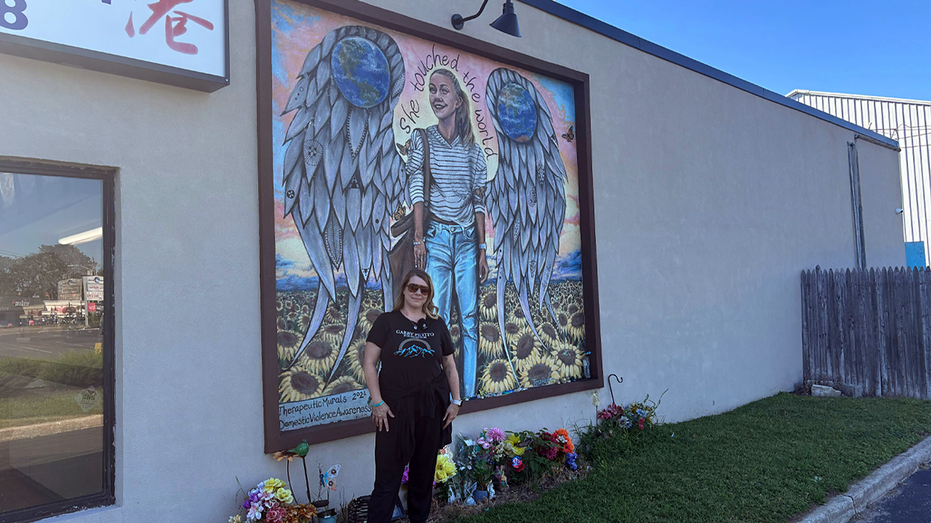
Nichole Schmidt is urging the public to pay closer attention to missing-person flyers appearing on social media, five years after the remains of her daughter, Gabby Petito, were found in Wyoming. She says carefully reviewing and sharing a legitimate flyer can create a ripple effect that helps investigators and families locate missing people. Schmidt has spent the years since her daughter’s death raising awareness about domestic violence and other missing-person cases. She also continues to support legal and public-awareness efforts through a foundation established by Petito’s family.
| 1) | Schmidt’s call for careful sharing |
| 2) | The timeline of Petito’s disappearance and death |
| 3) | A family response shaped by loss |
| 4) | Advocacy for families and legal changes |
| 5) | The continuing need for public attention |
Schmidt’s call for careful sharing
In an interview in Blue Point, New York, on Friday, Schmidt asked people not to dismiss missing-person flyers that appear in their social-media feeds. Her advice is to stop, read the details, check comments for possible developments and verify that the information comes from a legitimate source before sharing it.
“If you see missing flyers pass by your feed, stop and take a look. Don’t just share it quickly.”
Schmidt said even an ordinary social-media user may reach someone who has useful information. She described each careful share as part of a “ripple effect” that can help bring a missing person home, while emphasizing that people should first assess whether a post is credible.
The timeline of Petito’s disappearance and death
Gabby Petito’s remains were found on September 19, 2021, at a remote campground north of Jackson, Wyoming. She is believed to have been killed about three weeks earlier by Brian Laundrie, her former fiancé.
After Petito’s death, Laundrie drove her Ford Transit van to his parents’ home in Florida and later took his own life before heavy rains affected the area. His remains were found about a month later in Myakkahatchee Creek Environmental Park, after floodwater receded and his parents directed detectives toward one of his favorite clearings. The events prompted a nationwide search and sustained public attention.
A family response shaped by loss
In the five years since Petito’s remains were found, Schmidt and Petito’s parents and stepparents have focused their public work on domestic-violence prevention and awareness of missing-person cases. Their efforts have extended beyond remembering Petito to supporting families whose loved ones remain missing.
A mural inspired by Petito remains visible in Blue Point, her hometown. Although the building where it was painted was sold, the new owner framed the artwork and installed a light above it so that it can be seen at night. The mural has become one visible reminder of Petito’s life and the family’s continuing advocacy.
Advocacy for families and legal changes
Petito’s family has established a foundation in her name and has lobbied for new laws in Florida, Utah and New York, as well as at the federal level. The work reflects their effort to turn attention surrounding Petito’s case into broader action on domestic violence and missing-person issues.
The family has also sought greater visibility for cases that do not receive the same level of national coverage. Schmidt’s appeal for responsible sharing is part of that broader approach: public attention can help amplify information for families and authorities when a person is missing.
The continuing need for public attention
Schmidt’s message is directed at people who encounter missing-person information online, regardless of whether they know the family involved. She recommends reviewing the flyer, looking for updates and confirming its legitimacy rather than sharing it automatically or scrolling past it.
She also continues to speak about domestic violence. Anyone experiencing domestic abuse, or concerned about someone who may be a victim, can contact the National Domestic Violence Hotline at 800-799-7233. The hotline information was included with the appeal connected to Petito’s case.
| Number | Key Point |
|---|---|
| 1 | Review missing-person flyers carefully before sharing them. |
| 2 | Petito’s remains were found in Wyoming on September 19, 2021. |
| 3 | Her family now advocates for domestic-violence awareness and missing people. |
| 4 | The family has supported legislative efforts in several states and federally. |
| 5 | Public sharing may help bring attention to cases with limited coverage. |
Summary
Five years after Gabby Petito’s death, Nichole Schmidt is using her experience to encourage a more attentive public response to missing-person cases. Her message is simple but specific: read flyers carefully, verify information and share credible posts because even a single person’s action may extend the reach of a search. The family’s continuing advocacy also links missing-person awareness with efforts to combat domestic violence and support legislative change.
Frequently Asked Questions
What is Nichole Schmidt asking the public to do?
She is asking people to stop and read missing-person flyers on social media, review comments for updates, verify the source and share credible information.
When and where were Gabby Petito’s remains found?
Petito’s remains were found on September 19, 2021, at a remote campground north of Jackson, Wyoming.
What causes does Petito’s family support?
The family supports domestic-violence awareness, missing-person advocacy and legal changes in Florida, Utah, New York and at the federal level.
Where can victims of domestic abuse seek help?
The National Domestic Violence Hotline can be reached at 800-799-7233.