
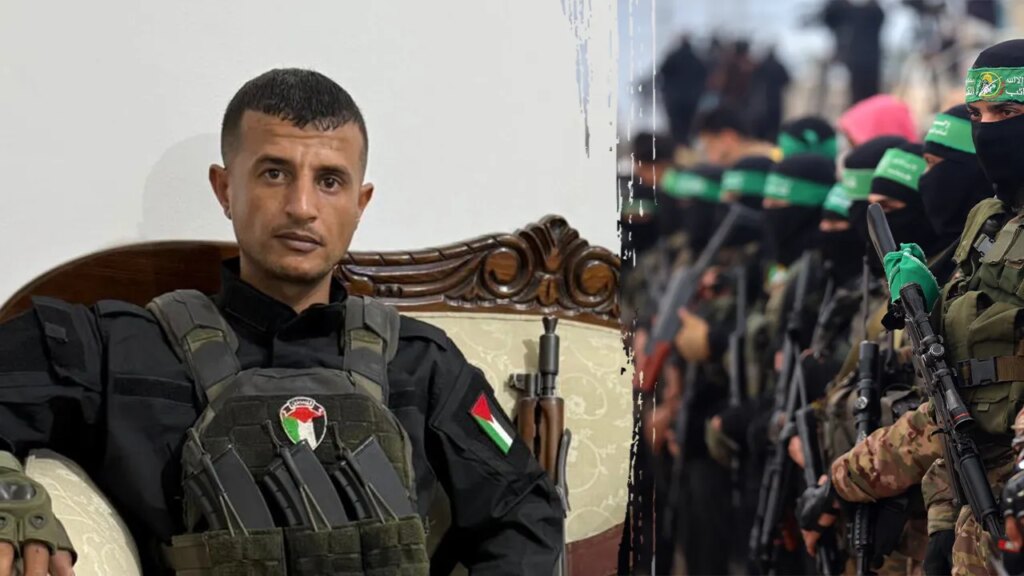
A prominent anti-Hamas militia leader, Yasser Abu Shabab, known for his collaboration with Israel, was killed recently in Rafah, Gaza. His death has sent shockwaves through the region and raised concerns about the already unstable dynamics involving Hamas and rival armed clans. Analysts note that Abu Shabab’s militia, referred to as the “Popular Forces,” played a key role in protecting local civilians and opposing Hamas influence in the area. This article delves into the circumstances surrounding his death, the state of power struggles in Gaza, and the implications for future governance and security in the region.
| Article Subheadings |
|---|
| 1) Background on Yasser Abu Shabab and the Popular Forces |
| 2) Details Surrounding His Assassination |
| 3) Reactions from Local and International Communities |
| 4) The Current Power Dynamics in Gaza |
| 5) Implications for Gaza’s Future |
Background on Yasser Abu Shabab and the Popular Forces
Yasser Abu Shabab emerged as a key figure in the Gaza Strip’s complex sociopolitical landscape, leading the Popular Forces, an anti-Hamas militia. His organization was known for its notable collaboration with Israeli forces, an alliance built primarily on opposing Hamas, which has dominated the region for years. Formed in early 2024, the Popular Forces began as a response to Hamas’s decreasing influence, particularly after Israeli Defense Forces (IDF) entered Rafah. Abu Shabab’s militia was involved not only in direct confrontations with Hamas but also engaged in humanitarian efforts, escorting aid and distributing supplies to locals in need.
The militia’s reputation for protecting civilians and its willingness to act against Hamas made it a controversial yet influential player in Gaza. Analysts, such as Professor Kobi Michael from the Institute for National Security Studies, emphasized how Abu Shabab’s group served as a protective buffer against the threats posed by Hamas. His approach to governance involved a mix of military action and community support, garnering him both supporters among local populations and enemies within the Hamas framework.
Details Surrounding His Assassination
Abu Shabab’s assassination marked a turning point in the ongoing struggle for power in Gaza. On a fateful Thursday, reports indicated that he sustained injuries during a confrontation between rival clans, particularly a group known as Hamula. After being injured, he was reportedly evacuated to a hospital in southern Israel for treatment. Unfortunately, despite medical attention, he succumbed to his injuries soon after.
As word of his death spread, the Popular Forces confirmed the loss of their leader, asserting that he was attempting to mediate a local dispute when he was attacked. This indicates not only the dangers that accompany the leadership role in Gaza but also the fragmented nature of alliances and hostilities among various factions competing for power. Leaders of rival factions, including Hamas, are likely feeling both relieved and apprehensive as they adapt to the potential power vacuum generated by Abu Shabab’s demise.
Reactions from Local and International Communities
Reactions to Abu Shabab’s death have been mixed, illustrating the divided sentiments among Gazans. While many mourn the loss of a leader who stood against Hamas, others view the event as a strategic opportunity. Local analysts have noted that Hamas may find momentary relief as tensions rise among rival armed groups, but the overall security situation remains precarious.
Internationally, officials and experts are closely monitoring the situation, expressing concern over the potential for increased violence and instability. “Hamas is troubled by these militias, but their disbandment won’t resolve the underlying issues,” emphasized Professor Kobi Michael. Comments from United Nations officials also indicated fears that without alternative governance to Hamas, chaos could engulf the region, further complicating humanitarian efforts.
The Current Power Dynamics in Gaza
The assassination of Yasser Abu Shabab underscores the fragile balance of power in Gaza, where the interplay between various armed factions continues to evolve. Since the ceasefire earlier this year, the power dynamics have shifted dramatically, with the emergence of militias and clan groups ready to fill the void left by Hamas’s waning control. During this period, the Popular Forces have been active, asserting themselves within the traditionally Hamas-dominated zones.
It’s critical to note that while these armed groups aim to eliminate Hamas, they are not viewed as sustainable replacements for a governing body. As reiterated by experts, “Israel has never believed these militias can take over effectively.” The collaboration between local militias and Israeli forces has been mutually beneficial but also fraught with complexities, as observed in the ongoing conflicts that have erupted across Gaza’s landscape.
Implications for Gaza’s Future
The implications of Yasser Abu Shabab’s assassination could be far-reaching. On one hand, there is concern that the void left by his death will further catalyze violence between rival factions within Gaza, leading to increased instability and humanitarian crises. On the other hand, there may arise opportunities for renewed dialogue among dissident groups, though this remains an optimistic outlook given the entrenched hostilities.
Security experts warn that without a coherent governance structure, the region may spiral into chaos. With militants now openly vying for control, the strategic interests of Hamas, the Israeli government, and international stakeholders will find themselves increasingly complicated. The Popular Forces recently pledged to continue their operations until “the last terrorist was eliminated in Gaza,” indicating a commitment to confront conflicts head-on, for better or worse.
| No. | Key Points |
|---|---|
| 1 | Yasser Abu Shabab was a prominent anti-Hamas militia leader in the Gaza Strip. |
| 2 | His death occurred during a clan confrontation but has broader implications for Gaza’s power dynamics. |
| 3 | The assassination reflects the ongoing instability and rivalry among different armed factions in the region. |
| 4 | Local and international reactions highlight fears of increased violence and humanitarian crises in Gaza. |
| 5 | The situation underscores the complexities surrounding militia roles in the absence of effective governance in Gaza. |
Summary
The assassination of Yasser Abu Shabab is a pivotal moment in Gaza’s tumultuous landscape. His leadership of the Popular Forces posed a significant challenge to Hamas, disrupting the group’s hold on the region. As local and international observers analyze the aftermath, it becomes evident that the ongoing power struggles will have far-reaching consequences for Gaza’s security and humanitarian landscape. Without effective governance, the fate of the region remains uncertain, emphasizing the need for strategic dialogue and conflict resolution.
Frequently Asked Questions
Question: Who was Yasser Abu Shabab?
Yasser Abu Shabab was the leader of the Popular Forces, an anti-Hamas militia in Gaza, known for his cooperation with Israeli forces in opposing Hamas’s control in the region.
Question: What led to his assassination?
His assassination occurred during a confrontation between rival clans, revealing the complex power dynamics and ongoing conflicts among various factions within Gaza.
Question: What are the implications of his death for Gaza?
His death may lead to increased violence among rival factions and further instability, highlighting the fragile state of governance and security in the region.