
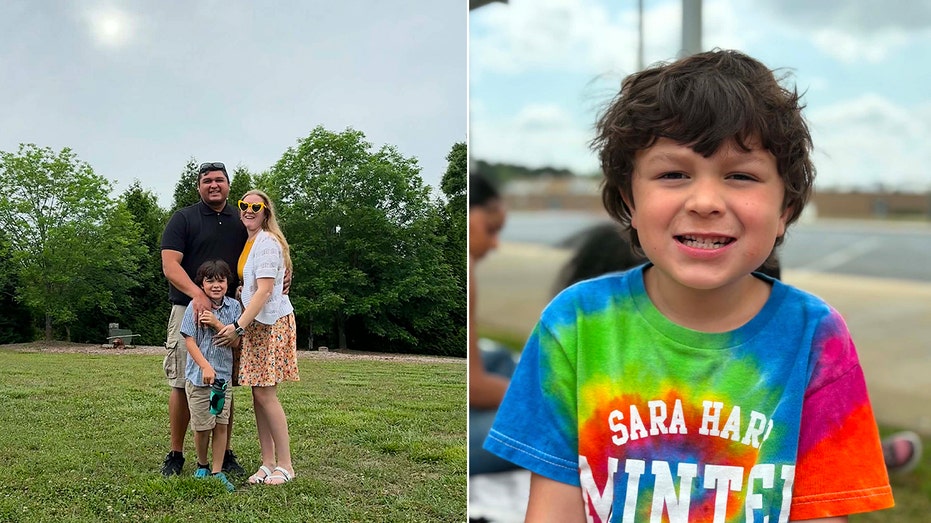
The parents of John Medina, a 6-year-old Georgia first-grader with autism, are challenging the severity of school discipline after he was suspended for biting a sandwich into the shape of a gun and pointing it at a classmate during lunch. John’s parents, Kristin Medina and Juan “Ricky” Medina, say his developmental conditions can make it difficult for him to understand social expectations and why some behavior is considered inappropriate. They argue that repeated suspensions have harmed his confidence and that schools should use more teaching and individualized support before imposing severe penalties. John now has an education plan, behavioral supports and additional assistance during less structured parts of the school day.
| 1) | Suspension follows sandwich incident |
| 2) | Disciplinary history raises accommodation concerns |
| 3) | Parents describe impact on self-esteem |
| 4) | School support measures expand |
| 5) | District urges full context |
Suspension follows sandwich incident
John Medina was suspended last March while attending first grade at Sarah Harp Elementary School in Fayette County, south of Atlanta. His parents said the incident occurred during lunch, when he bit a sandwich into the shape of a gun and pointed it at another student. John was diagnosed with level 1 autism at age 4 and later diagnosed with ADHD. His parents say those conditions affect how he interprets social norms, filters speech and understands the consequences of behavior. They believe the incident should have prompted an explanation and a teaching opportunity rather than suspension.
Disciplinary history raises accommodation concerns
Kristin Medina and Juan “Ricky” Medina said their son has received about 15 suspensions and more than two dozen disciplinary actions since 2023. They acknowledged that some incidents involved physical conduct, including pushing a student during physical education and hitting a classmate with a branch. However, they said other actions involved hand gestures, references to guns or imaginative drawings that they viewed as relatively harmless. The parents also said weapon-related topics are not discussed at home, while recognizing that they cannot control every influence John encounters outside the family.
Parents describe impact on self-esteem
The family says repeated discipline has affected John’s emotional wellbeing and willingness to attend school. His parents said he has called himself a “bad kid,” struggles to make friends and worries that other children will laugh at him for making wrong choices. They argue that traditional punishment may be ineffective for a child with autism and could unintentionally teach him that certain behavior is a way to leave school during a difficult day.
“Instead of singling him out, just make it a teachable moment for him. Teach, ‘Hey, we don’t do this in school because of this reason, it’s not appropriate,’” Kristin Medina said.
The parents said they want John to develop confidence, friendships and a more positive view of himself while still learning boundaries and safety expectations.
School support measures expand
According to his parents, John initially did not receive an Individualized Education Program because school officials considered him academically advanced and did not recognize the extent of his autism-related needs. The family said it took about a year and a half, 10 to 12 suspensions and a second evaluation that resulted in an ADHD diagnosis before the plan was approved.
The parents said disciplinary responses eased after they hired special education advocate Donna Reynolds to attend school meetings. John now has a behavioral plan that provides an aide during unstructured periods such as lunch, recess and physical education. He also spends time in a smaller, calmer classroom, where his parents say he performs particularly well. Academically, they said he finished the previous school year reading at a third-grade level and came four test points short of qualifying for a gifted and talented program.
District urges full context
The school district declined to discuss the student’s specific circumstances. In response to questions about the case, it encouraged consideration of John’s complete disciplinary history and the circumstances surrounding each event rather than focusing on a single incident. The family is seeking less reliance on suspension and more attention to the difference between serious safety concerns and behavior that can be addressed through instruction, supervision and individualized accommodations.
| No. | Key Point |
|---|---|
| 1 | John was suspended after shaping a sandwich like a gun and pointing it at a classmate. |
| 2 | His parents say autism and ADHD affect his understanding of social expectations. |
| 3 | The family reports roughly 15 suspensions and more than two dozen disciplinary actions since 2023. |
| 4 | John now receives an education plan, behavioral support and assistance during unstructured periods. |
Summary
The dispute highlights the challenge schools face in balancing safety rules with disability-related accommodations. John’s parents are not asking the school to ignore unsafe conduct, but want responses tailored to his developmental needs and focused on learning rather than repeated exclusion. The district has called for a review of the full record, while the family continues to seek support that protects both classroom safety and John’s confidence.
Frequently Asked Questions
Why was John suspended?
His parents said he was suspended after biting a sandwich into the shape of a gun and pointing it at a classmate during lunch.
What conditions does John have?
He was diagnosed with level 1 autism at age 4 and later received an ADHD diagnosis.
What support does John receive now?
His parents said he has an Individualized Education Program, a behavioral plan, an aide during lunch, recess and physical education, and access to a smaller classroom setting.
What do his parents want the school to change?
They want less reliance on suspension and more use of explanations, teaching, supervision and individualized support, while maintaining a focus on serious safety concerns.