
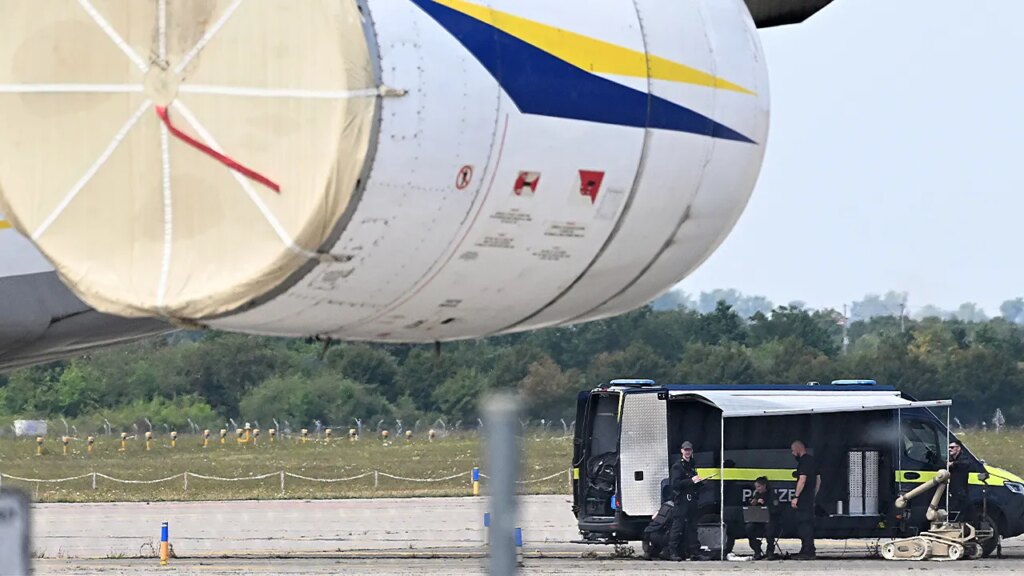
In a significant escalation of diplomatic tensions, Germany has accused Russia of attempting to sabotage Leipzig/Halle Airport using drones, an incident that occurred on August 4. Following a detailed investigation, German officials have officially attributed the failed attack to Moscow, prompting the closure of Russian diplomatic facilities in Germany. This retaliatory measure, alongside other sanctions, reflects Berlin’s increasing resolve in the face of hybrid threats from Russia, further complicating an already tense geopolitical landscape.
| Article Subheadings |
|---|
| 1) Investigation Reveals Details of the Drone Attack |
| 2) Germany’s Strong Response to Russian Allegations |
| 3) International Reactions to Germany’s Findings |
| 4) Rising Tensions in Eastern Europe |
| 5) Broader Implications for International Relations |
Investigation Reveals Details of the Drone Attack
On August 4, an explosive-laden drone was discovered next to a Ukrainian Antonov cargo aircraft at Leipzig/Halle Airport, one of Europe’s largest cargo aviation hubs. The drone’s explosive device failed to detonate due to a faulty detonator, averting a potentially catastrophic incident. Investigators, including forensic experts and intelligence officials from Germany, have confirmed that evidence links the Russian government to this incident. Interior Minister Alexander Dobrindt indicated that this finding aligns with a pattern of operations often attributed to Moscow’s hybrid warfare strategies in Europe.
The investigation has revealed a second drone that reportedly collided with another cargo aircraft nearby, exacerbating concerns about Russian intentions and capabilities. Authorities are treating this incident as part of a broader Russian strategy, as they have observed an uptick in what they call hybrid threats against various European targets, including military and infrastructure facilities.
Germany’s Strong Response to Russian Allegations
In response to the unveiled evidence, German Foreign Minister Johann Wadephul announced several measures aimed at holding Russia accountable. The decision to close the Russian consulate in Bonn, alongside terminating the contract for the Russian House cultural center in Berlin, marks a significant diplomatic shift for Germany, which has traditionally been more conciliatory towards Russia.
Furthermore, Wadephul stated that additional entry restrictions for Russian nationals will be implemented, along with stronger measures directed at Russia’s shadow fleet, which has previously been tied to dubious activities in the region. Following the announcement of these measures, Wadephul summoned Sergei Nechayev, the Russian ambassador to Germany, to convey Germany’s serious concerns over the incident and the implications it bears for bilateral relations.
International Reactions to Germany’s Findings
The international community has quickly responded to the incident and Germany’s resultant actions. NATO Secretary-General Mark Rutte expressed solidarity with Germany, underscoring the clarity of evidence presented regarding Russia’s involvement. He stated, “The evidence is clear. And I welcome the measures announced by Germany in response,” reinforcing NATO’s commitment to collective defense amidst these accusations.
In addition, European Commission President Ursula von der Leyen announced that the European Union is preparing for further sanctions against Russia, signaling a united front among European leaders against Moscow’s provocations. Such measures are anticipated to enhance pressures on Russia while reinforcing alliances within the European community.
Rising Tensions in Eastern Europe
The unfolding events at Leipzig/Halle Airport are set against a backdrop of escalating tensions in Eastern Europe, where Russia’s military maneuvers and increasing aggression have become points of contention among NATO allies. German Chancellor Friedrich Merz has warned of ongoing campaigns of hybrid threats against Germany, reiterating that those behind hostile acts would face consequences. This rhetoric reflects a growing determination within Germany to confront these challenges head-on, recognizing that national security is increasingly at risk.
Additionally, German authorities have noted a rise in improvised explosive and incendiary devices discovered at various critical infrastructure sites, including a power substation in eastern Brandenburg. These discoveries have further complicated the scenario, leading to calls for enhanced security measures across the region.
Broader Implications for International Relations
The incident and Germany’s subsequent actions could have profound implications for international relations, particularly between Europe and Russia. With the EU and NATO allies standing firm against Russian aggression, the possibility of a fractured relationship looms. The recent developments provide insight into how nations may respond to perceived security threats, especially concerning state-sponsored hybrid warfare tactics.
Germany’s decisive actions serve to reinforce the notion that diplomatic actions must be matched by robust countermeasures and international cooperation. As Berlin makes these strategic decisions, it sets the tone for how European nations may collaborate in the face of similar threats in the future.
| No. | Key Points |
|---|---|
| 1 | Germany has accused Russia of carrying out a drone sabotage operation at Leipzig/Halle Airport. |
| 2 | The German government announced the closure of Russian diplomatic facilities in response. |
| 3 | Investigators found evidence linking Russia to the drone attack incident. |
| 4 | NATO and EU officials expressed solidarity and indicated further sanctions could be forthcoming. |
| 5 | The incident highlights rising tensions and hybrid threats faced by European nations. |
Summary
The alleged drone attack at Leipzig/Halle Airport and the response from Germany represent a critical turning point in European-Russian relations. As Germany takes a firm stance against aggression, it reflects a growing consensus among European nations of the need for collective action against threats posed by Russia. The future actions taken by both Germany and the international community could redefine security strategies in the region, emphasizing the importance of vigilance and cooperation in confronting hybrid warfare tactics.
Frequently Asked Questions
Question: What led to Germany accusing Russia of a drone attack?
Germany’s accusations stemmed from an investigation that linked evidence found at the scene of a drone incident at Leipzig/Halle Airport to Russian intelligence operations.
Question: What measures is Germany taking in response to the drone incident?
Germany is closing its Russian consulate in Bonn, terminating a cultural center contract, and imposing tighter restrictions on Russian nationals as part of its response.
Question: How have international organizations reacted to Germany’s findings?
NATO Secretary-General and EU officials expressed solidarity with Germany, citing clear evidence of Russian involvement and suggesting potential additional sanctions against Moscow.