
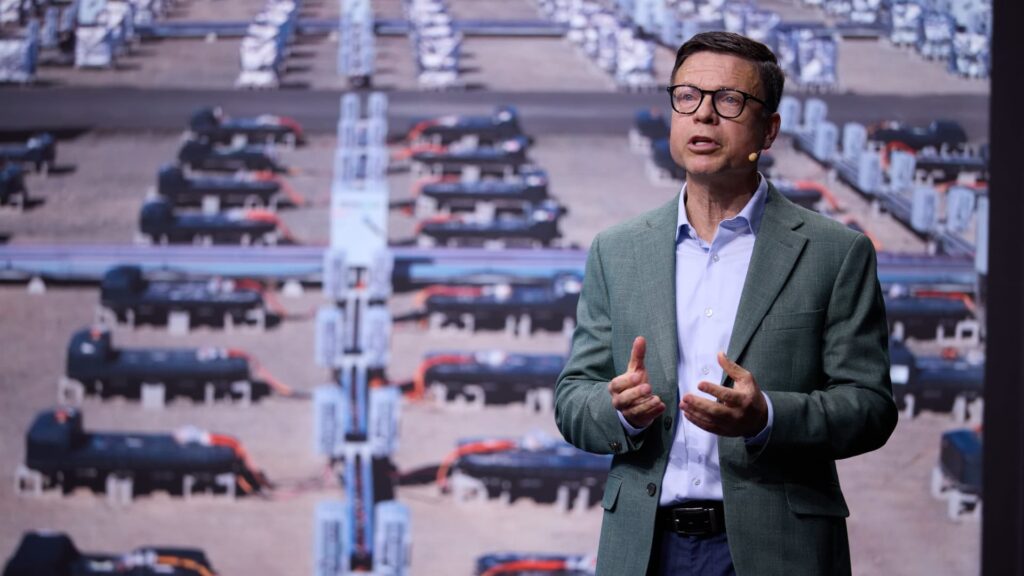
General Motors (GM) is making strides in battery technology development aimed at reducing dependency on Chinese supply chains while enhancing the use of domestically sourced materials. Kurt Kelty, GM’s vice president of battery and sustainability, announced plans for next-generation sodium-ion battery cells during a recent event, emphasizing the company’s commitment to a domestically sourced battery supply chain within the next few years. This move is part of a larger strategy to support both energy storage applications and electric vehicle (EV) production while underlining the significance of U.S. resource utilization.
| Article Subheadings |
|---|
| 1) GM’s Vision for Battery Development |
| 2) The Role of Sodium-Ion Batteries |
| 3) U.S. Dependency on Chinese Materials |
| 4) Future Prospects for Domestic Production |
| 5) Potential Industry Impact |
GM’s Vision for Battery Development
General Motors is strategically positioned at the forefront of battery development, with aspirations to evolve its energy storage systems and electric vehicle offerings. Spearheading this initiative is Kurt Kelty, who has articulated a clear vision for the future of battery sourcing in the U.S. During an official announcement, he laid out plans for the development of next-generation battery cells, stating that GM aims to establish a fully domestic supply chain within two to three years. This timeline suggests a critical shift not only in GM’s production methodology but also in the broader industry’s approach to resource sourcing. The focus on sodium-ion technology reflects GM’s recognition of the importance of independence from existing foreign supply chains, primarily dominated by Chinese manufacturers.
The Role of Sodium-Ion Batteries
Sodium-ion batteries are gaining attention as a viable alternative to traditional lithium-ion batteries. GM’s partnership with Denver-based Peak Energy to develop this technology emphasizes the potential benefits of a domestic battery cell production strategy. Sodium, sourced from plentiful materials such as soda ash, is viewed as a more abundant and sustainable alternative compared to lithium, which is heavily mined and monopolized by a few countries. Kelty highlighted the advantages of sodium-ion batteries, indicating that they could perform better over a wider temperature range and sustain more charging cycles compared to their lithium counterparts. This innovation is expected to play a significant role in GM’s offerings for both energy storage systems and future electric vehicles.
U.S. Dependency on Chinese Materials
The global battery market has long been influenced by China’s significant control over the supply chain. According to data from the International Energy Agency, China produces about 85% of the world’s EV battery cathode active material, placing the U.S. at a disadvantage. GM, currently producing lithium iron phosphate (LFP) battery cells in partnership with LG Energy Solution, recognizes the need for diversification and localized sourcing. Kelty asserted that while LFP technology has its applications, the ability to shift to sodium-ion chemistry could potentially alleviate dependency on Chinese materials and technology, creating a more resilient U.S. battery manufacturing base.
Future Prospects for Domestic Production
The push for domestic battery production is a key focus for GM and aligns with federal initiatives to bolster local manufacturing capabilities. Recent government policies have sought to establish a robust U.S. supply chain for battery technologies in response to strategic national security concerns regarding over-reliance on foreign resources. With a projected timeline for sodium-ion battery production to begin by 2029, GM is currently experimenting with various battery chemistries to optimize performance for diverse applications. This ongoing research is vital as the company moves towards a more sustainable and less geographically reliant production model.
Potential Industry Impact
The implications of GM’s domestic strategy could reverberate throughout the automotive and energy industries. By advancing sodium-ion technology, GM hopes not only to solidify its position in the EV market but also to lead the charge toward innovation in energy storage. This pivot could encourage other automakers to explore similar avenues, potentially transforming the competitive landscape. As companies look to meet consumer demand for sustainable practices and locally sourced materials, the prioritization of domestic production may become a defining trend across the industry.
| No. | Key Points |
|---|---|
| 1 | GM is developing next-generation sodium-ion batteries aimed at reducing reliance on China. |
| 2 | The automaker plans domestic production within two to three years. |
| 3 | Sodium-ion technology offers advantages such as broader temperature range and longer cycle life. |
| 4 | The current market is heavily reliant on Chinese supply chains for battery materials. |
| 5 | GM’s strategy could reshape the automotive industry’s approach to battery production and sustainability. |
Summary
In conclusion, General Motors is taking significant steps to innovate battery technology while reducing U.S. dependence on Chinese materials. By developing sodium-ion batteries and creating a domestic supply chain, GM aims not only to diversify its production capabilities but also to lead the charge in sustainable energy solutions. This strategic shift could have a profound impact on the automotive and energy sectors, emphasizing the importance of local sourcing and technological advancement.
Frequently Asked Questions
Question: What are sodium-ion batteries?
Sodium-ion batteries are energy storage devices that utilize sodium ions to perform the same function as lithium ions in traditional batteries, but they offer several potential advantages, including lower costs and the ability to source materials more abundantly.
Question: Why is there concern over U.S. reliance on China for battery materials?
The concern stems from China’s dominant position in the supply chain for battery materials, which affects national security and economic stability. A reliance on a single country for critical materials poses risks in times of geopolitical tension and can hinder domestic technological advancements.
Question: How might GM’s new battery technology affect electric vehicle production?
GM’s development of sodium-ion batteries and a domestic supply chain could enhance the efficiency and cost-effectiveness of electric vehicle production, making EVs more accessible to consumers while supporting a sustainable energy future.