
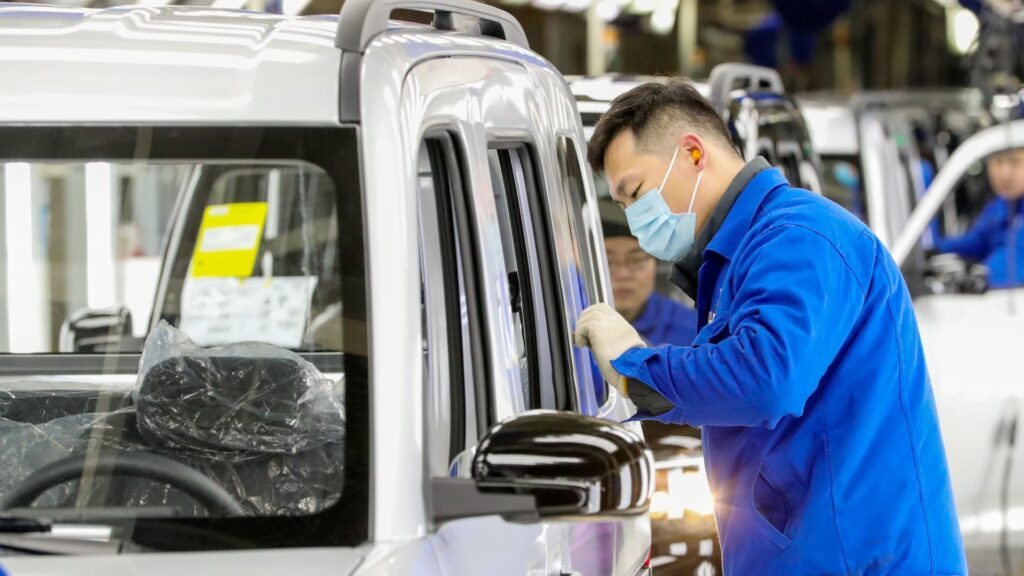
General Motors (GM) and China’s SAIC Motor have announced the extension of their longstanding joint venture, originally set to expire next year, as the landscape of the automotive industry undergoes significant transformation in China. The new deal, which extends the partnership by 20 years to 2047, marks a strategic pivot amidst a rise in domestic automakers and geopolitical tensions between the United States and China. This extension is particularly crucial for GM as it navigates through declining revenue from the Chinese market and looks to revitalize its international offerings.
| Article Subheadings |
|---|
| 1) Overview of the Joint Venture Extension |
| 2) Implications for GM in the Global Market |
| 3) Challenges Faced by GM in China |
| 4) Future Prospects for the Automotive Industry in China |
| 5) Summary of Key Outcomes |
Overview of the Joint Venture Extension
General Motors and SAIC Motor have officially extended their joint venture, a collaboration that began in 1997 and was initially set for a 30-year term. The new agreement will operationally sustain the joint venture until 2047, illustrating both companies’ commitment to maintaining a foothold in the evolving automotive landscape. The decision to prolong this partnership comes at a time when global automotive dynamics have dramatically shifted; regarding competition with domestic Chinese manufacturers that are rapidly gaining market share.
The extension of the joint venture focuses on restructuring product lines, particularly emphasizing the domestic sales of Buick and Cadillac vehicles. Furthermore, the venture aims to enhance the export capabilities of Chevrolet models made in China, targeting various international markets. This collaborative approach is vital for both GM and SAIC Motor, allowing them to leverage one another’s strengths while adapting to the evolving consumer demands both locally and abroad.
Implications for GM in the Global Market
The collaboration between GM and SAIC Motor is not merely a local endeavor; it has significant global implications. GM China’s President, John Roth, expressed optimism, stating, “We are committed to strong performance in the China market, and we see meaningful opportunities to compete in select international markets: the Middle East, Africa, South America, Mexico, and Asia-Pacific.” This statement underscores GM’s strategy to re-establish its dominance in various international markets while also maintaining a robust presence in China.
Importantly, the renewed focus on export markets aligns with a growing trend in Chinese exports. China’s landscape has transitioned from being an insular market to becoming the leading global exporter of vehicles. The extended partnership aims to tap into these markets as GM looks to mitigate declining profits, which have been affected by ongoing geopolitical tensions between the U.S. and China.
Challenges Faced by GM in China
Despite the optimistic outlook, GM faces significant challenges in the Chinese market. The company has experienced a notable decline in earnings, decreasing from approximately $2 billion in annual profits in 2018 to consecutive losses in 2024 and 2025. These downturns have arisen alongside a series of restructuring actions, which have cost the automaker upwards of $1.1 billion in special charges last year.
In addition to the financial struggles, GM is contending with a rapidly changing consumer landscape where domestic brands are increasingly preferred by local consumers. With a culture of innovation and rapid production cycles, Chinese manufacturers are becoming formidable competitors. The combination of these factors has necessitated a reevaluation of GM’s operations, focusing on enhancing productivity in existing plants and seeking opportunities abroad.
Future Prospects for the Automotive Industry in China
Looking forward, the Chinese automotive industry is at a crucial crossroads. With government incentives fostering growth amongst domestic manufacturers, as well as shifts in consumer preferences, the market is becoming increasingly competitive. Analysts suggest that the industry’s pivot towards exports could create new opportunities for established brands like GM.
This transition is also coupled with a broader expectation that production technology and innovative practices in China will continue to enhance vehicle quality, potentially benefiting joint ventures like the one between GM and SAIC. As these changes ripple through the industry, vehicles manufactured in China can serve as a benchmark for quality and technology in international markets — a move that could redefine GM’s global branding strategy.
Summary of Key Outcomes
With the extension of the joint venture between General Motors and SAIC Motor, significant changes are on the horizon for both companies. The partners aim to not only maintain but revitalize their cooperation to counteract the declining fortunes faced in recent years. By focusing on domestic sales and international exports, GM hopes to reclaim a competitive edge while navigating the complexities posed by local preferences and geopolitical factors.
Given the current challenges, the partnership’s future will likely depend on how effectively both GM and SAIC can adapt to the changing landscape, focusing on innovation, consumer engagement, and robust marketing strategies to captivate both local and international markets.
| No. | Key Points |
|---|---|
| 1 | GM and SAIC Motor have extended their joint venture to 2047. |
| 2 | The partnership focuses on boosting sales for Buick and Cadillac and increasing Chevrolet exports. |
| 3 | GM has experienced a significant downturn in profits from the Chinese market in recent years. |
| 4 | Chinese automotive exports are on the rise due to innovation and government support. |
| 5 | The joint venture aims to adapt to both local market conditions and global competition. |
Summary
The extended partnership between General Motors and SAIC Motor represents a strategic adjustment to an ever-evolving automotive market in China. As GM confronts financial losses and intensified competition from domestic brands, this joint venture aims to refocus on bolstering sales and expanding export opportunities. The success of this initiative will depend heavily on effective operational strategies and adaptability to shifting consumer preferences in both domestic and international markets, marking a crucial chapter in the ongoing narrative of the automotive industry.
Frequently Asked Questions
Question: Why was the joint venture between GM and SAIC Motor extended?
The extension was aimed at revitalizing GM’s presence in China amid increasing competition from local automakers and declining market share.
Question: What are the potential benefits of this joint venture for GM?
The partnership allows GM to refocus on its vehicle offerings in China and increase exports to international markets, potentially contributing to financial recovery and market competitiveness.
Question: How has the automotive industry in China changed in recent years?
The industry has shifted from being insular to becoming the largest global exporter of vehicles, with domestic brands growing rapidly due to government support and innovation cultures.