
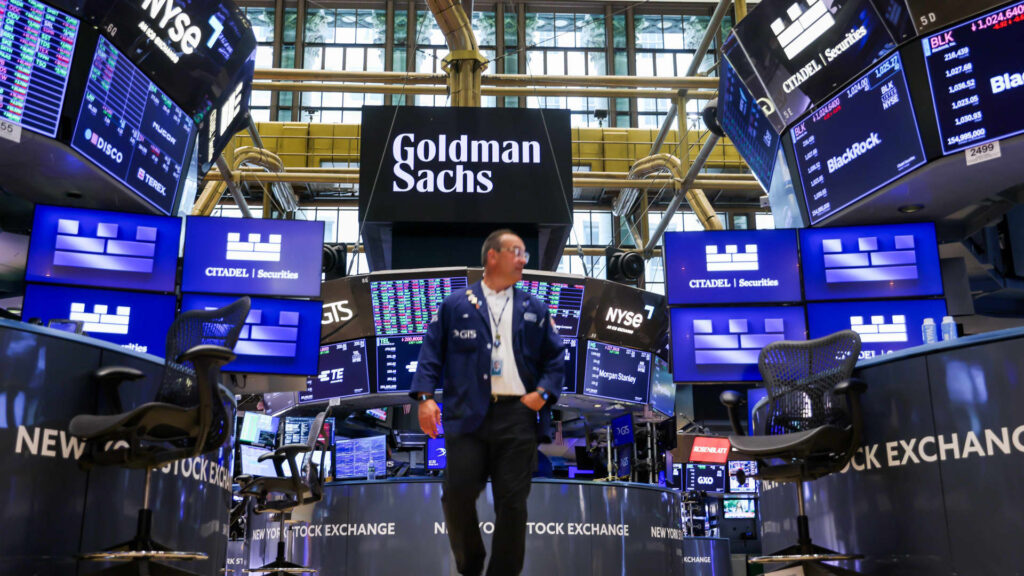
Wall Street’s largest investment banks, particularly Goldman Sachs, have witnessed a remarkable surge in their fortunes through strategic involvement in the rapidly evolving artificial intelligence (AI) sector. Recent announcements of substantial funding efforts, notably from tech giants like Nvidia and Intel, have underscored the pivotal role financial institutions are playing in facilitating AI advancements. As these companies seek to bolster their resources for AI development, Goldman Sachs is poised to benefit significantly from lucrative financial arrangements and elevated market positioning.
| Article Subheadings |
|---|
| 1) The Rise of AI Funding in Finance |
| 2) Goldman Sachs’ Involvement with Nvidia and Intel |
| 3) How Goldman Sachs Profits from AI Dealings |
| 4) Risks and Market Sentiment Surrounding AI Investments |
| 5) Outlook for Goldman Sachs in the AI Landscape |
The Rise of AI Funding in Finance
The contemporary landscape of finance is undergoing a significant transformation, particularly with the advent of artificial intelligence (AI). Major financial institutions are increasingly recognizing AI’s potential, not only as a technological advancement but as a lucrative investment opportunity. Over the past few years, AI has emerged as a critical driver of innovation across various sectors, propelling investment banks into the forefront of this trend. Banks are now focused on providing the required capital to tech companies engaging in AI research and development, thus positioning themselves within this lucrative market. As evidenced by the recent announcements from Nvidia and Intel, the financial industry is prepared to back the substantial investments necessary for AI growth, highlighting a shift in how banks approach technology financing.
Goldman Sachs’ Involvement with Nvidia and Intel
Goldman Sachs’ recent collaboration with Nvidia and Intel exemplifies the bank’s strategic engagement in the AI funding wave. On Monday, Nvidia disclosed that it would partner with Goldman and several other financial institutions to assemble a staggering $500 billion financing package aimed at nurturing the infrastructure required for AI development. This arrangement underscores how traditional banks are stepping into roles typically reserved for venture capitalists and private equity, generating new channels for revenue as they support tech companies with funding. Hours before Nvidia’s announcement, Intel revealed its own $15 billion common stock offering, which was subsequently increased to $20 billion, with Goldman acting as a joint book-running manager. The proceeds from this initiative are earmarked for expanding Intel’s foundry capabilities to meet the growing demand for chip manufacturing services.
How Goldman Sachs Profits from AI Dealings
Goldman Sachs stands to gain significantly from its advisory and financing roles in these major transactions. As a joint book-running manager, Goldman earns fees at various stages of the funding process. The bank purchases shares from the issuing companies, such as Intel or Nvidia, at a discounted rate and sells them to institutional investors at the public offering price, capturing the spread as profit. This system allows Goldman to not only generate immediate revenue through underwriting and management fees but also enables it to profit from the secondary trading of these stocks as clients adjust their holdings. These activities funnel substantial revenue into Goldman’s Global Banking & Markets division, solidifying its position as the leading investment banking institution on Wall Street. The involvement in AI-related transactions also enhances Goldman’s reputation as a pivotal player in financing technology innovation.
Risks and Market Sentiment Surrounding AI Investments
Despite the promising outlook, the integration of AI into investment strategies is not without its risks. Analysts have expressed caution regarding the volatility associated with the AI sector, which can significantly impact stock performance. As market sentiment fluctuates around tech performance and AI trends, Goldman Sachs’ stock could experience rapid changes in valuation. The ongoing reliance on AI-centric investments also brings with it a level of speculative risk, reminiscent of past market bubbles. Analysts caution that while these innovations can generate impressive returns, they also require careful navigation of inherent market risks. Goldman’s historical expertise in risk management places it in a strong position to eventually identify and mitigate these challenges, although the sector remains under scrutiny, especially in light of potential overinvestments and the possibility of a market downturn.
Outlook for Goldman Sachs in the AI Landscape
The future appears bright for Goldman Sachs within the AI landscape, particularly given its strategic partnerships and its leading role in financing major industry players. Goldman’s deep involvement with companies like Nvidia positions it as a prominent advisor and financier, which could yield substantial long-term rewards as AI technology proliferates across global markets. While there are concerns regarding market volatility associated with AI investments, analysts maintain positive outlooks on Goldman Sachs’ ability to manage and capitalize on the growing demand for AI financing. Stakeholders are optimistic about the bank’s potential to outperform in the evolving technological landscape, given its established reputation and adaptability. As the market continues to expand, Goldman Sachs will likely remain at the center of financial transactions shaping the future of AI.
| No. | Key Points |
|---|---|
| 1 | Goldman Sachs is significantly involved in financing AI developments through partnerships with major tech firms like Nvidia and Intel. |
| 2 | Recent funding initiatives aim to support vast expansions in AI infrastructure and chip production capability. |
| 3 | Goldman Sachs profits by serving as an intermediary, capturing fees across various transaction stages. |
| 4 | Despite positive prospects, risks related to market volatility and speculative investments pose challenges. |
| 5 | Overall, Goldman Sachs’ standing in the financial industry is fortified by its proactive engagement in the AI sector. |
Summary
In conclusion, Goldman Sachs is strategically positioning itself at the forefront of the burgeoning AI-centric financial landscape. Through significant involvement in financing initiatives for tech giants like Nvidia and Intel, the bank is not only bolstering its revenue streams but also enhancing its market relevance amid a transformative technological era. While challenges related to market volatility and the speculative nature of AI investments remain a concern, Goldman Sachs’ historical risk management strategies and strong market presence appear to place it in a beneficial position. The bank’s current trajectory suggests that it will continue to thrive as a leading financial institution in an increasingly AI-driven economy.
Frequently Asked Questions
Question: What role does Goldman Sachs play in AI funding?
Goldman Sachs acts as a financial intermediary, underwriting stock offerings and facilitating financing for tech companies engaged in AI development. This includes raising capital through partnerships and stock sales.
Question: How can AI funding impact the stock market?
AI funding can lead to increased volatility in the stock market as investor sentiment shifts based on technological advancements and the performance of associated companies. Positive developments may drive stock prices up, while concerns may trigger declines.
Question: What are the potential risks involved in AI investments?
Investing in AI carries risks, such as market volatility and speculative investment behaviors. Concerns about overinvestment and potential market corrections can impact stock valuations, necessitating a careful approach to these types of investments.