
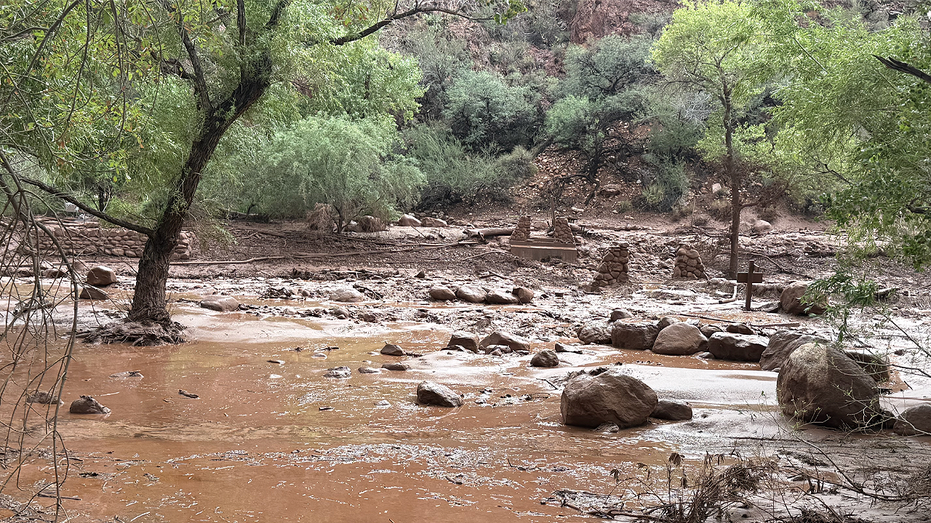
Flash flooding damaged about 40% of the Grand Canyon’s Transcanyon Waterline, the system that supplies water to millions of visitors, residents and park operations. The damage has forced officials to restrict showers, limit toilet flushing and suspend overnight accommodations on the South Rim. Repairs will be difficult because the pipeline crosses steep, rugged terrain where helicopters are often required for maintenance. The flooding also disrupted a more than $200 million project to replace and upgrade the aging system.
| 1) | Flooding damages a critical water lifeline |
| 2) | South Rim operations face immediate restrictions |
| 3) | A difficult repair in extreme terrain |
| 4) | A long-term replacement project is underway |
| 5) | Flooding continues to affect visitor access |
Flooding damages a critical water lifeline
The Transcanyon Waterline sustained extensive damage during flash floods over the weekend of Aug. 29, 2026, according to preliminary flyover assessments by park officials. The 12.5-mile system carries water across the canyon, down to its base, over a bridge and back up the opposite side to serve the South Rim and other essential facilities.
Officials said a complete survey of the damage would not be finished until at least Tuesday. Brian Drapeaux, the park’s deputy superintendent, said miles of the pipeline were expected to have been destroyed. The system, completed in the 1970s, has experienced more than 85 breaks since 2010, highlighting its vulnerability to rockfalls, flash floods and difficult access.
“We anticipate miles of the pipeline being destroyed,” Brian Drapeaux said.
South Rim operations face immediate restrictions
The South Rim, where most visitors stay, is relying on limited stored water while officials assess the system and determine how to maintain critical services. Overnight accommodations were stopped, and visitors were asked to reduce water use by limiting shower time, turning off taps while brushing their teeth and flushing toilets selectively.
Officials said water must be preserved for law enforcement, rescue operations, backcountry activities, park administration, the clinic and the campground. Tom Martin, a longtime river runner and Grand Canyon hiker, said the park has used tanker trucks to transport water during previous pipeline emergencies. The immediate effect on year-round residents and other park infrastructure remained unclear.
A difficult repair in extreme terrain
Repair crews face a complex task because the pipeline runs through steep inner-canyon terrain exposed to falling rock, flooding and debris. Even locating a break can require aerial inspections, while moving equipment and materials may depend on helicopters and newly constructed access points.
The system’s history shows why repairs can take time. A repair in 1995 lasted nearly a month and required water to be trucked into the park. About a decade ago, a hotel on the canyon rim reduced dishwashing and used disposable plates and utensils during another period of restrictions.
A long-term replacement project is underway
A more than $200 million repair and replacement effort began in 2023 after taking over a decade to design and fund. The project includes helicopter pads, water treatment facilities and replacement of several miles of pipeline. It also proposes moving the water intake farther down the canyon to Bright Angel Creek, closer to Phantom Ranch.
Engineers have had to balance durability with the logistical limits of canyon construction. The original aluminum pipe was lighter and easier to move but more prone to breaking. The replacement design uses flex-steel material to provide greater durability while remaining workable in the rugged setting. Officials previously said the completed project should meet the park’s water needs for at least 50 years.
Flooding continues to affect visitor access
The floods also forced closures in parts of the park, and officials warned that additional flooding remained possible on Monday, Aug. 31. Visitors were urged to reconsider hikes, boating or paddleboarding trips to slot canyons and normally dry washes, and those who continued were advised to check in at a visitor center or ranger station.
The flooding occurred as rescue and recovery operations continued after at least two people died and one remained missing Monday night. Officials said roughly 80 people had been rescued over the weekend. The disaster underscores the challenge of maintaining vital infrastructure while managing visitor safety in a canyon exposed to sudden and severe weather.
| Number | Key Point |
|---|---|
| 1 | About 40% of the 12.5-mile Transcanyon Waterline was damaged. |
| 2 | South Rim officials limited water use and stopped overnight accommodations. |
| 3 | The pipeline has broken more than 85 times since 2010. |
| 4 | A replacement project costing more than $200 million began in 2023. |
| 5 | Flood-related closures and safety warnings remained in effect as rescue operations continued. |
Summary
Flash flooding has created a major water and infrastructure emergency at Grand Canyon National Park. While officials work to determine the full extent of the damage, conservation measures and operational restrictions are necessary to protect limited supplies for essential services. The incident also adds urgency and complexity to the park’s ongoing effort to replace a pipeline that has repeatedly failed in one of the country’s most difficult construction environments.
Frequently Asked Questions
How much of the Grand Canyon pipeline was damaged?
Park officials estimated from aerial inspections that about 40% of the 12.5-mile Transcanyon Waterline sustained damage. A full assessment was expected to take until at least Tuesday.
What restrictions were imposed on visitors?
Officials limited showers, asked people to turn off taps while brushing their teeth and restricted toilet flushing. Overnight accommodations were also stopped on the South Rim.
Why are repairs expected to be difficult?
The pipeline crosses steep, rugged terrain exposed to flash floods and rockfalls. Crews may need helicopters to inspect the damage, transport equipment and reach sections of the system.
Is the pipeline already being replaced?
Yes. A more than $200 million upgrade and replacement project began in 2023 and includes new pipeline sections, helicopter pads, water treatment facilities and a proposed intake near Bright Angel Creek.