
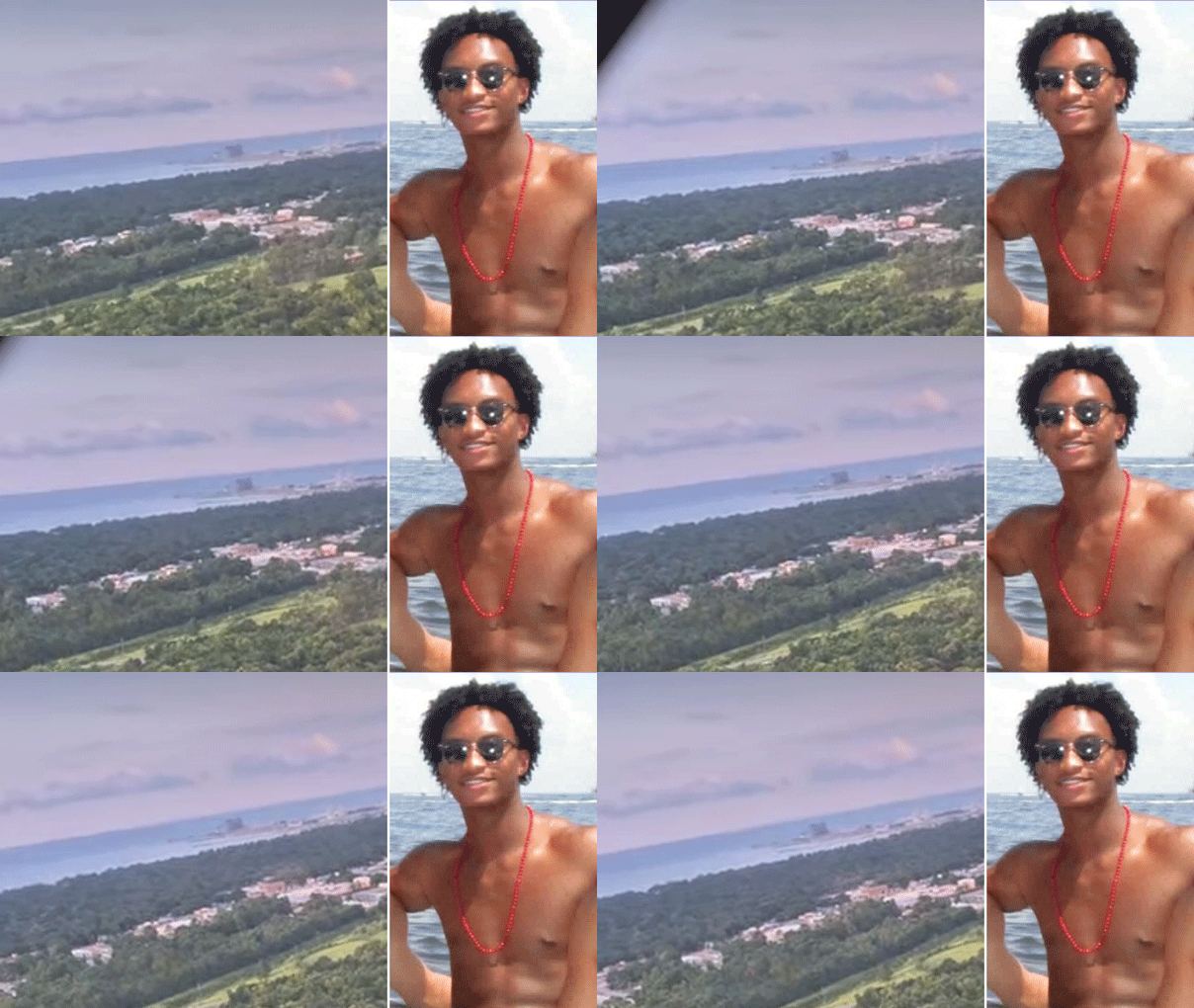
Nolan Wells’ friends will not face criminal charges after a Mississippi grand jury found no evidence of a crime or racial motive in the teenager’s death. Wells, 19, disappeared July 4 after a boat trip to Horn Island, a barrier island off the Mississippi Gulf Coast, and his remains were found two days later. The grand jury concluded that the position, condition, timing and location of the remains were consistent with drowning. Attorneys for several friends now say they intend to pursue accountability over months of online accusations.
| Article Subheadings | |
|---|---|
| 1) | Grand jury finds no basis for charges |
| 2) | Search and recovery after the July disappearance |
| 3) | Lawyers respond to online allegations |
| 4) | Dispute over the medical evidence |
| 5) | Officials reject racial motive claims |
Grand jury finds no basis for charges
A Jackson County grand jury returned a “no true bill,” meaning no indictment or criminal charges will be filed in the death investigation. The panel found no credible evidence that people who traveled to or from Horn Island aboard the Triton, Palm Beach or Tideline engaged in criminal conduct connected to Wells’ death.
The report said the allegations involving the boats were driven by public pressure and private hostility rather than established facts. The 23-member panel included jurors from several racial and ethnic backgrounds. Its findings cleared the friends who had been publicly accused of responsibility for Wells’ death.
Search and recovery after the July disappearance
Wells disappeared on July 4 after traveling by boat with friends to Horn Island along the Gulf Coast. Search crews examined the area for two days before a National Park Service ranger located his remains at the island’s northwestern tip on July 6.
The grand jury said the circumstances surrounding the discovery were consistent with drowning. It also reviewed testimony from a witness who said Wells slipped awkwardly from a boat at about 3:30 p.m. The witness could not determine whether Wells struck his head, but testified that Wells continued socializing afterward and did not appear injured.
Lawyers respond to online allegations
Several of Wells’ friends faced months of online speculation suggesting they had played a criminal role in his death. Russell Latino, who represents Bart Edmiston and his family, said the accusations had harmed the friends, their families and the wider community.
“The death of Nolan Wells is a tragedy. So too is the way his friends, his community and his state were maligned by unscrupulous charlatans and grifters who spread false and malicious lies,” Latino said.
Edward Andrew Paltzik, who represents Warren Hudson, Jax Pitalo and Morgan Seymour, publicly called on Ben Crump to apologize. Paltzik also said he had sent legal notices to social media influencers and media figures on behalf of the three men. The attorneys said they intend to seek accountability from people who promoted allegations they characterize as false.
Dispute over the medical evidence
The grand jury’s conclusion did not resolve every medical question. The Mississippi chief medical examiner and the Wells family’s pathologist, Dr. Roger Mitchell, agreed that the cause of death was undetermined and that drowning is a diagnosis of exclusion. That means drowning was reached after other causes were ruled out, rather than through direct proof of the process.
Crump disputed the state’s decision to close the case, pointing to bruising on the back of Wells’ head and an independent autopsy that he said documented blunt-force injuries to the head and back. He argued that the family still does not know how Wells died and urged a federal investigation if Mississippi declines to pursue further action.
Officials reject racial motive claims
Jackson County District Attorney Angel Myers McIlrath said there was “absolutely no evidence” that Wells’ death was racially motivated. She rejected a widely circulated claim that three White friends returned from the island while a Black friend did not, saying the narrative was false.
McIlrath also said Wells’ family and its legal team had advised her office on August 13, after an independent autopsy and the collection of hundreds of tips, that they had found no evidence a crime had occurred. Crump’s team disputed the state’s position and maintained that the investigation had been closed before the truth was established.
| Number | Key Point |
|---|---|
| 1 | The grand jury returned a no true bill and found no evidence of a crime. |
| 2 | Wells disappeared July 4 and was found at Horn Island on July 6. |
| 3 | Attorneys for three friends said they were pursuing legal accountability over online claims. |
| 4 | Medical experts described the cause of death as undetermined, with drowning diagnosed by exclusion. |
Summary
The grand jury’s decision removes the possibility of state criminal charges against Wells’ friends based on the evidence presented. It also rejects the racial and criminal theories that spread online, while leaving a continuing disagreement between Mississippi officials and Wells’ family attorneys over the medical interpretation of his injuries and death. The friends’ lawyers are now shifting attention toward potential legal action over public accusations.
Frequently Asked Questions
What did the grand jury decide?
The grand jury returned a no true bill and found no evidence supporting criminal charges or a racial motive in Wells’ death.
When and where was Wells found?
Wells disappeared on July 4 after a boat trip to Horn Island. A National Park Service ranger found his remains at the island’s northwestern tip on July 6.
Why are the attorneys seeking accountability?
Attorneys for several friends say their clients were wrongly targeted by online allegations that portrayed them as responsible for Wells’ death. They have issued legal notices and indicated that further action may follow.
Did officials and the family agree on the cause of death?
No. Officials and the family’s pathologist agreed that the cause was undetermined and that drowning was a diagnosis of exclusion, but the family’s attorney argued that injuries required additional investigation.