
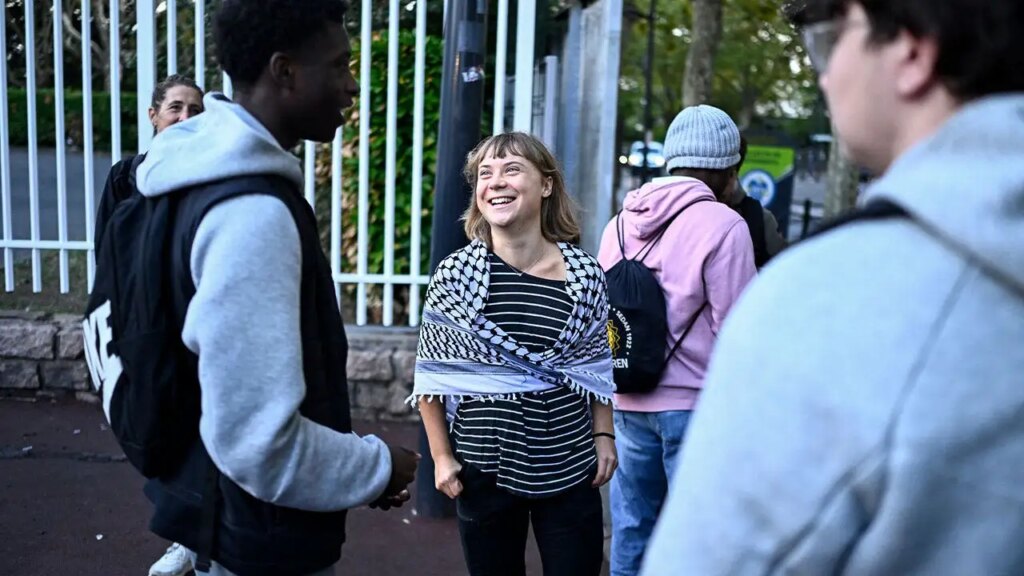
Climate activist Greta Thunberg voiced solidarity with students protesting in France this week, as ongoing demonstrations over education reform continue to escalate. The protests, which have seen violent clashes with police and widespread school closures, have resulted in over 6,800 arrests since they began in September. Thunberg’s appearance at a high school in Saint-Denis, where students are demanding better educational resources and conditions, highlights the growing unrest regarding France’s education system and its political implications.
| Article Subheadings |
|---|
| 1) Background of the Protests |
| 2) Thunberg’s Involvement and Statements |
| 3) Political Reactions and Implications |
| 4) The Government’s Response and Future Measures |
| 5) Summary of Key Concerns Raised by Students |
Background of the Protests
The protests in France escalated beginning in mid-September, driven largely by students advocating for significant changes to their educational conditions. Concerning issues include inadequate classroom facilities, a shortage of qualified teachers, and excessively long school days that stretch from 8 a.m. to 6 p.m. Aside from educational reform, the broader context of these demonstrations is intertwined with larger political and social issues in France, including economic disparity and dissatisfaction with government policies.
Initial protests began as student-led movements aimed at drawing attention to how the education system affects their learning outcomes and future opportunities. The situation quickly became a flashpoint for discontent among younger generations feeling marginalized within a system they deem as fundamentally broken. As school days filled with challenges and challenges faced by the students mount, many young people feel their voices are neglected by authorities, further fueling the protesters’ resolve.
Thunberg’s Involvement and Statements
On Tuesday, Greta Thunberg, a notable climate activist known for her fight against climate change, made her presence felt by joining students in Saint-Denis. Thunberg expressed strong support for the young protesters, emphasizing the importance of their demands. She stated,
“We are inspired by the young people who are demanding their basic rights.”
Her critique extended to the French government’s approach to handling the protests, in which she characterized their response as “extremely violent.” Her involvement not only elevated the protests’ visibility but also connected the students’ educational battle to a broader fight for rights and recognition.
Reports suggested that approximately 161,500 individuals participated in demonstrations nationwide, with 41,500 marching in Paris specifically. The significant turnout indicates the depth of frustration regarding educational issues, as well as solidarity that students from various regions are showing each other. Additionally, Thunberg’s spotlight on the issue may push the government to reconsider its tactics in negotiations with the students, particularly as public sentiment begins to solidify around the protesters’ cause.
Political Reactions and Implications
The recent demonstrations have drawn a variety of political reactions, highlighting the contentious atmosphere leading to France’s next presidential election scheduled for May. Figures from across the political spectrum have weighed in, including leftist candidate Jean-Luc Mélenchon, who has condemned the government’s use of force against demonstrators. Mélenchon characterized the protests as an urgent call to address deeper systemic issues, rather than dismissing them as isolated instances of unrest.
On the right, Marine Le Pen, leader of the National Rally, criticized the violence associated with protests, indicating a willingness to hold demonstrators accountable for destructive actions against schools. In contrast, President Donald Trump has attributed the protests to issues of mass migration, suggesting that the unrest runs deeper than education alone, linking it to broader social and demographic concerns. His comments reflect an American perspective on the unrest that diverges from the localized grievances students are articulating.
The Government’s Response and Future Measures
In the wake of escalating protests, French authorities have faced intense scrutiny concerning their response. Following incidents of violence during clashes with police, which included a serious injury to a 15-year-old boy, authorities decided to suspend the use of a specific type of stun grenade involved in that incident. Such measures indicate a willingness to address some concerns surrounding police brutality while emphasizing the need for dialogue moving forward.
French President Emmanuel Macron has publicly urged for restraint, asserting the importance of dialog and negotiation with students. Prime Minister Sebastien Lecornu has been tasked with addressing the complaints articulated by the protesters. These discussions will likely focus on hiring more educators, upgrading infrastructure, and adjusting school schedules to better accommodate students’ needs, particularly as student protests remain well-organized and far-reaching.
Summary of Key Concerns Raised by Students
The student protests have brought to the forefront various significant concerns regarding educational disparity and systemic issues within the French educational framework. Key complaints include deteriorating school buildings that pose safety risks, teacher shortages affecting student-teacher ratios, and the prescriptive school hours considered detrimental to students’ well-being. The fact that several schools remain closed, with the Education Ministry reporting closures of over 214 institutions, only exacerbates the frustration surrounding the issues at hand.
Students are advocating not merely for immediate administrative changes but also for a fundamental overhaul of the educational system. Their demands reveal a collective necessity for greater investment in education, more relevant resources for effective learning, and recognition of students’ rights to a supportive educational environment. The protests, therefore, extend beyond simple calls for additional teachers or better spaces; they reflect a deep yearning for respect as primary stakeholders in their own education.
| No. | Key Points |
|---|---|
| 1 | Ongoing protests in France are driven by students demanding educational reform. |
| 2 | Climate activist Greta Thunberg has joined the protests to support students’ demands. |
| 3 | Political figures are divided on the protests, with varying interpretations of their significance. |
| 4 | French authorities are facing scrutiny over their response, including recent violence during protests. |
| 5 | Students are vocalizing widespread concerns about the current educational framework and systemic inequalities. |
Summary
The demonstrations across France represent a critical juncture in the ongoing struggle for educational reform. As students gather to demand their rights, the involvement of influential figures like Greta Thunberg has not only highlighted their plight but has also drawn national attention to France’s educational challenges. With the election looming, the need for a comprehensive examination of the educational system alongside a constructive dialogue may shape the future of policy and governance in France.
Frequently Asked Questions
Question: What sparked the protests among students in France?
The protests were sparked by students demanding reforms in education, including better facilities, more teachers, and reduction in long school hours.
Question: How has Greta Thunberg responded to the protests?
Greta Thunberg joined the protests to show solidarity with the students and criticized the government’s violent response towards demonstrators.
Question: What role do political figures play in these protests?
Political figures have reacted variously, with some supporting the students’ demands while others blame the protests on broader societal issues, highlighting the complexity of the situation.