
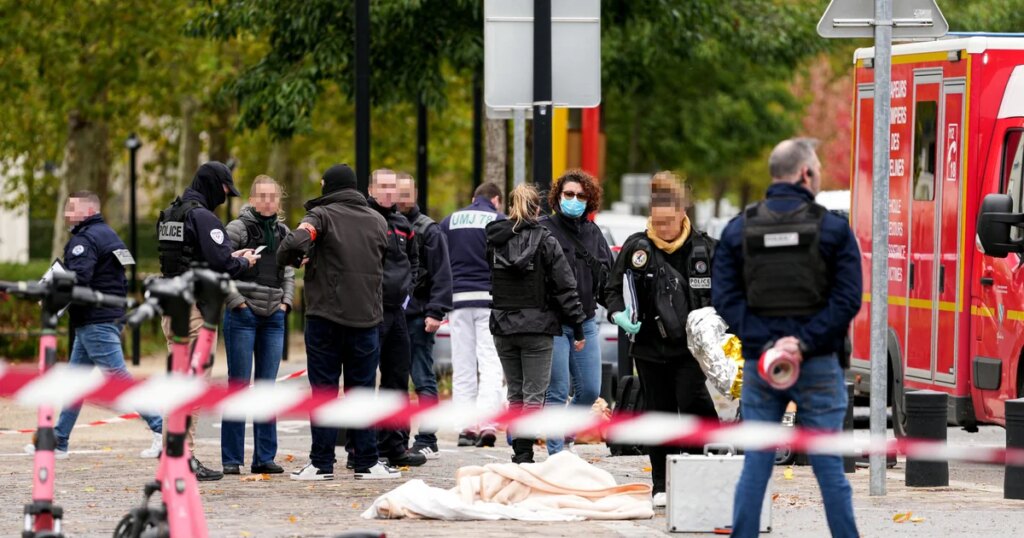
In a shocking incident on Friday in the suburb of Trappes, west of Paris, a gunman opened fire from his vehicle, resulting in one fatality and injuring at least five others, among them a 12-year-old girl. Authorities have labeled this attack a racially motivated act of terrorism, with President Emmanuel Macron condemning the violence as a “racist terror attack.” The alleged assailant, who reportedly targeted individuals based on their skin color and perceived religion, has been arrested, and officials are currently investigating the full context and implications of the attack.
| Article Subheadings |
|---|
| 1) Overview of the Shooting Incident |
| 2) Government Response and Statements |
| 3) Community Impact and Reactions |
| 4) Historical Context and Recent Violence in France |
| 5) Security Measures and Future Implications |
Overview of the Shooting Incident
On Friday morning, a gunman carried out a shooting spree in Trappes, a suburb located approximately 13 miles west of Paris. The attack began around 10:30 a.m. local time when the suspect, reportedly using a military-grade or automatic weapon, targeted passersby at three distinct locations, including a playground. Witnesses described hearing bursts of gunfire and loud bangs, with one resident noting they saw a body from their window. The brutal incident left one individual deceased and at least five others, including a young girl, injured. The gravity of the situation called for an immediate response from local law enforcement.
Government Response and Statements
Following the incident, President Emmanuel Macron addressed the nation, categorizing the attack as a “racist terror attack” and emphasizing that the victims were targeted based on their skin color or perceived religion. Macron underscored the premeditated nature of the attack, stating, “There is no place for this in France.” The Interior Minister Laurent Nuñez confirmed that the gunman was apprehended quickly by five officers from the anti-crime brigade, and he stated that the attack lasted approximately 15 minutes. The authorities are now conducting a thorough investigation into the motivations behind the act, specifically addressing whether it was racially motivated.
Community Impact and Reactions
The attack has sent shockwaves through Trappes and surrounding communities, prompting local leaders to express their outrage and sadness. Mayor Ali Rabeh described the situation as a potential mass killing motivated by Islamophobia and racism, marking a troubling trend in domestic violence. The community’s response has varied from fear to anger, as many residents have begun questioning their safety in public spaces. Even though law enforcement has deemed it a miracle that more casualties were avoided, the emotional scars on the community are expected to linger long-term.
Historical Context and Recent Violence in France
This incident occurs against a backdrop of mounting tensions in France, where debates around race and policing have intensified in recent years. The suburb of Trappes was previously in the news for social unrest, following threats against teachers and a tragic incident in 2020 when a local educator was murdered by a radical Islamist. With riots recently breaking out across various French cities amid frustrations over the cost of living, the attack has only added to the atmosphere of fear and strain within the community. As protests continue, authorities face increasing pressure to ensure public safety while addressing the underlying issues of crime and racial discrimination.
Security Measures and Future Implications
In response to the shooting and the broader context of unrest, the French government has announced a significant increase in security measures. Approximately 70,000 law enforcement officers and gendarmes will be deployed to maintain order in the wake of various protests planned across the country. Interior Minister Nuñez assured the public that police will adopt a zero-tolerance approach towards violence and vandalism, with elite police units dispatched to secure vulnerable public institutions. As protests loom, major venues like the Louvre and Art Basel Paris have canceled events due to security concerns, reflecting the heightened state of alert across the nation.
| No. | Key Points |
|---|---|
| 1 | One person was killed, and at least five others were injured in the shooting attack in Trappes. |
| 2 | President Emmanuel Macron condemned the attack as a premeditated act of racism and terrorism. |
| 3 | The gunman used a military-grade weapon and randomly targeted individuals based on their ethnicity. |
| 4 | Authorities are investigating whether the shooting was racially motivated as part of a larger pattern of violence in France. |
| 5 | In response to heightened violence, the government has mobilized significant security resources throughout the country. |
Summary
The tragic shooting in Trappes underscores the concerning trend of racially motivated violence in France amid a backdrop of social and economic unrest. As the nation grapples with the aftermath and seeks answers, the government’s commitment to public safety and the fight against hate crimes will be put to the test. The reactions from community leaders and the broader populace reflect the urgent need for dialogue about race, security, and the future of social cohesion in a country facing significant challenges.
Frequently Asked Questions
Question: What motivated the attack in Trappes?
The attack is being treated as a racially motivated act of terrorism, with officials stating that victims were targeted based on their skin color and perceived religion.
Question: How did authorities respond to the attack?
Authorities responded swiftly, as the gunman was apprehended shortly after the shooting by members of the anti-crime brigade within 15 minutes of the attack.
Question: What security measures is the French government implementing following the incident?
The government is deploying approximately 70,000 law enforcement officers across the country to maintain order and ensure public safety in response to the shooting and ongoing protests.