
The recent comments made by left-wing streamer Hasan Piker regarding Jewish Americans and Israel have ignited significant controversy within the Democratic Party. House Minority Leader Rep. Hakeem Jeffries was among the foremost Democrats to publicly condemn Piker’s assertions, labeling them as dangerous and antisemitic. This incident has echoed concerns about the rising levels of antisemitism and the impact of extremist rhetoric within political discourse.
| Article Subheadings |
|---|
| 1) Piker’s Controversial Comments |
| 2) Political Reactions and Backlash |
| 3) Response from Democrats and Allies |
| 4) Implications for Candidate Abdul El-Sayed |
| 5) Broader Context of Antisemitism and Political Rhetoric |
Piker’s Controversial Comments
On a recent livestream, Hasan Piker suggested that Jewish Americans, due to their support for Israel, might be inviting violence upon themselves. His remarks included a graphic warning that if Jewish Americans continue to promote the notion that their primary concern is Israel, they could face backlash, not aimed at the state itself, but towards American Jews. These statements were met with immediate criticism, as many perceived them as a dangerous escalation of anti-Jewish sentiment, particularly in light of rising antisemitic incidents across the country.
Political Reactions and Backlash
In response to Piker’s comments, Rep. Hakeem Jeffries, the highest-ranking Democrat in Congress, condemned the claims on social media, calling them “malicious” and “dangerous.” He articulated that such narratives had no place in public discourse, especially at a time when antisemitism is surging. The repudiation from Jeffries, a notable figure who has often refrained from criticizing the far-left, marked a significant shift in the party’s stance towards extremism within its ranks. He urged fellow Democrats to confront this form of hatred with urgency, emphasizing, “There is zero justification for threats against the safety of our Jewish brothers and sisters.”
Response from Democrats and Allies
Following Jeffries, several other Democratic representatives echoed his sentiments, asserting that Piker’s comments perpetuated harmful stereotypes and could incite violence. Rep. Hillary Scholten labeled Piker as “a hack who thrives on hate,” while Rep. Susie Lee articulated that claims implicating American Jews in violence against their communities are unacceptable. This collective denunciation underscores the Democrats’ awakening to a growing need for a united stand against antisemitism within their party. Meanwhile, several Republican leaders, including former Rep. Mike Rogers, also condemned the rhetoric, positioning the discourse as essential in the current political landscape.
Implications for Candidate Abdul El-Sayed
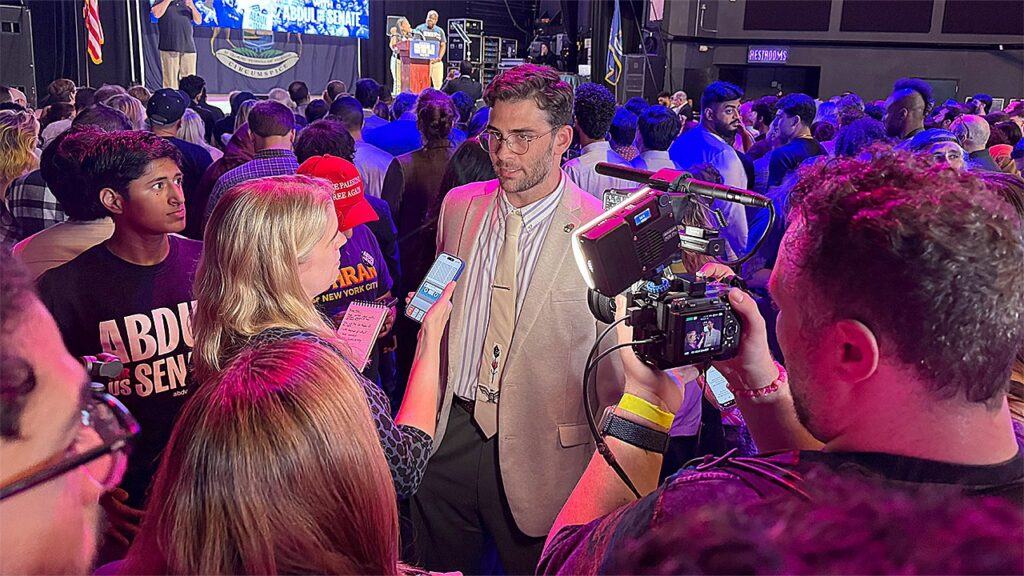
The controversy surrounding Piker is not only impacting his standing but also has implications for Democratic Senate candidate Abdul El-Sayed. Piker has been a vocal supporter of El-Sayed’s campaign and attended events to rally support for the nominee. However, the fallout from Piker’s remarks prompted El-Sayed to attempt to distance himself from the streamer, asserting that he alone speaks for his campaign. In a show of clarity, El-Sayed stressed that he condemns any rhetoric that threatens the safety of Jewish communities, stating, “My commitment to Jewish safety is the same as my commitment to the safety of my own daughters.”
Broader Context of Antisemitism and Political Rhetoric
This incident occurs within a larger context of rising antisemitism and the increasing normalization of aggressive political rhetoric. With antisemitic incidents reportedly on the rise in recent years, the Democratic Party grapples with balancing its progressive faction while addressing concerns aligned with traditional support for Jewish communities. This tension highlights a growing divide as some party members advocate for hard stances against Israel, while others stress the importance of maintaining Jewish safety. Instances like Piker’s comments serve as a potent reminder of the challenges facing Democrats in this evolving political environment, where rhetoric can easily transform into real-world consequences.
| No. | Key Points |
|---|---|
| 1 | Hasan Piker’s comments regarding Jewish Americans and Israel have divided Democrats. |
| 2 | House Minority Leader Hakeem Jeffries publicly condemned Piker’s remarks. |
| 3 | Several Democrats expressed outrage over Piker’s rhetoric, calling it antisemitic. |
| 4 | Abdul El-Sayed attempts to distance his campaign from Piker amidst the backlash. |
| 5 | The incident raises broader concerns about the rise of antisemitism and political dialogue. |
Summary
The backlash against Hasan Piker’s recent remarks highlights a growing concern within the Democratic Party regarding antisemitism and extremist rhetoric. As key party figures like Rep. Hakeem Jeffries firmly denounce such statements, the pressure mounts on candidates like Abdul El-Sayed to navigate their affiliations carefully. This situation not only reflects the complex dynamics within the Democratic Party but also emphasizes the urgent societal imperative to combat antisemitism in all its forms.
Frequently Asked Questions
Question: Who is Hasan Piker?
Hasan Piker is a popular left-wing streamer and political commentator known for his often controversial views and statements about social and political issues, including U.S. foreign policy and domestic politics.
Question: What were the implications of Piker’s comments?
Piker’s comments have been interpreted as promoting dangerous stereotypes and could incite violence, prompting widespread condemnation from various politicians, including key members of the Democratic Party.
Question: How has Abdul El-Sayed responded to the controversy?
Abdul El-Sayed attempted to distance himself from Hasan Piker’s comments, asserting that he alone speaks for his campaign and expressing his commitment to Jewish safety amidst the backlash.