
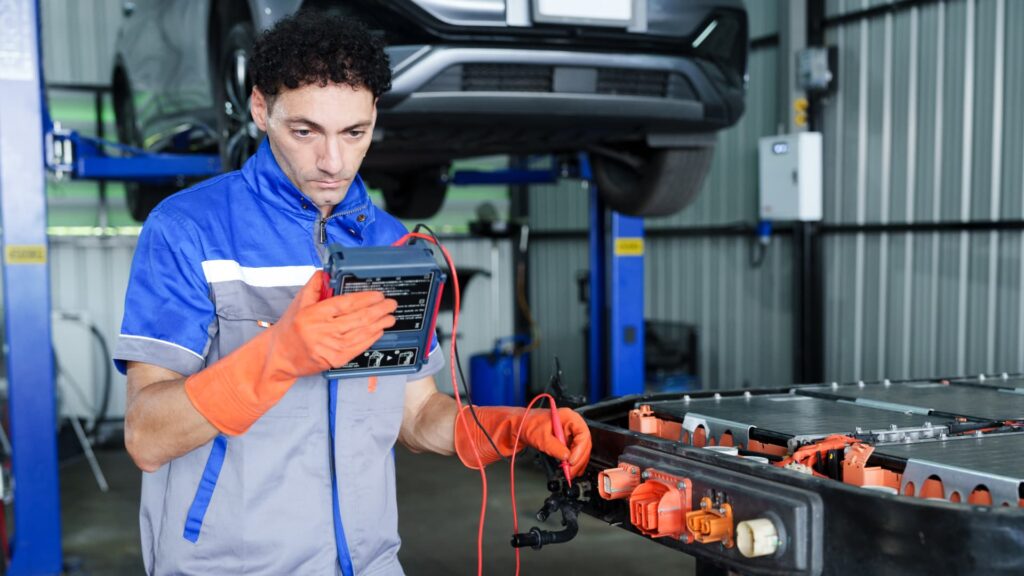
The automotive repair industry is confronting significant challenges due to the increasing sophistication of vehicles, which require new technologies and equipment for repairs. This trend is resulting in soaring costs for independent mechanics, who are compelled to invest in advanced computer systems and specialized training. Consequently, many mechanics are transferring these expenses to consumers, leading to a notable increase in repair costs across the United States.
| Article Subheadings |
|---|
| 1) The Financial Burden on Repair Shops |
| 2) Emergence of Rising Repair Costs |
| 3) The Right to Repair Movement |
| 4) Impact of Advanced Technologies on Consumer Costs |
| 5) Future Implications for the Automotive Industry |
The Financial Burden on Repair Shops
As the automotive landscape evolves, mechanics are facing escalating costs associated with the maintenance and repair of increasingly complex vehicles. Shops like Emil’s All-Tire in Brooklyn, owned by Ralph Czeisler, exemplify the tightrope that independent shops must walk in balancing operational expenses with consumer affordability. Czeisler notes that the rapid technological advancements in vehicles have forced him to regularly upgrade his shop’s computers and software to keep pace with the requirements of modern automobiles.
“Every year, I update all my computers,” Czeisler commented, pointing out that maintaining separate systems for different brands—domestic, Asian, and European—has significantly added to his overhead costs. The financial strain is palpable, with repair costs for consumers rising as shop owners are left with little choice but to pass these expenses down the line.
The director of automotive engineering at AAA, Greg Brannon, further confirms that independent shops are increasingly challenged. “It has become increasingly financially difficult for independent shops to be able to service all makes and models,” he stated. This dilemma poses a significant threat not just to the shops but also to consumers who may find themselves with limited options for affordable repairs.
Emergence of Rising Repair Costs
Recent statistics reveal that repair costs have ballooned by approximately 60% from January 2019 to August 2026. During the same timeframe, overall inflation has only risen by 32%, indicating that the cost flow from technological advancements in vehicles is impacting consumers more severely. This information is backed by data from the St. Louis Federal Reserve, which highlights the financial squeeze consumers face at service centers.
Research from AAA reinforces these rising costs, particularly concerning advanced driver-assistance systems (ADAS). These systems, designed to enhance vehicle safety and performance, often require calibration that can increase repair bills substantially—by around 37.6%—for even minor collision repairs. This creates a dichotomy where modern vehicles, equipped with advanced technologies, are becoming more costly to maintain, leading to straining consumer budgets.
Additionally, the necessity of specialized tools and technologies for repairs—in particular, calibration machines for various sensors—adds another layer of expense. Such tools can cost upwards of $90,000 when accounting for calibration machines, computers, and target boards, as described by Czeisler’s daughter, Ariella Czeisler. The reliance on such specialized equipment exemplifies the ongoing dilemma of adapting to fast-evolving automotive technology and wrestles with affordability.
The Right to Repair Movement
Amid rising repair costs and technological complexities, the “right to repair” movement has gained traction in recent years. This proactive initiative advocates for consumer and shop access to the necessary tools, parts, and information required for repairs, facilitating easier maintenance across various sectors, including automobiles.
Efforts are underway at both state and federal levels to enact legislation aimed at supporting this movement. Initiatives designed to ensure that independent shops have equal access to the data and tools available to larger dealerships have been gaining momentum, often through alliances between trade groups representing automakers and auto mechanics. However, the effectiveness and scope of these agreements can vary, as noted by Brannon.
Despite some access to crucial data being available, Czeisler explains that the realities of cost and complexity frequently hinder independent repair shops. In fact, tasks that were once straightforward—such as resetting an oil change indicator light—now necessitate costly subscriptions to software that some mechanics simply cannot afford. Czeisler adds, “It’s not fair. But this is how the industry practice has gone.”
Impact of Advanced Technologies on Consumer Costs
The consequences of advanced automotive technology extend beyond repair facilities, directly affecting consumers who are increasingly at the mercy of rising repair fees. As the tools and systems necessary for repairs become more intricate and expensive, the financial burden inevitably falls onto the shoulders of vehicle owners.
For example, the rising costs associated with calibration services for ADAS mean that a simple windshield replacement has become significantly more complex. What was once a straightforward task has evolved to include the calibration of cameras and sensors that play a role in overall vehicle functionality and safety. Neglecting these calibrations can lead to serious safety issues, as pointed out by Ariella Czeisler. “We don’t want to be liable for that,” she remarked, highlighting the difficult position repair shops find themselves in.
Ultimately, these advancements present a paradox; while they are intended to enhance safety and convenience, they simultaneously make repairs increasingly difficult and financially burdensome. Consumers may initially welcome new safety features, but they may not fully grasp the long-term implications regarding maintenance costs, highlighting a gap in consumer awareness in terms of total ownership expenses.
Future Implications for the Automotive Industry
The evolving landscape of the automotive repair industry points toward an urgent need for systemic changes to accommodate both technological progress and consumer needs. The financial burdens faced by independent repair shops, coupled with rising consumer repair costs, indicate a potential crisis point for the industry.
As more vehicles become equipped with advanced technologies, the demand for specialized skills and equipment will continue to rise. This trend requires immediate attention from policymakers, industry leaders, and repair professionals to create standards that ensure fair access to information and tools for all service providers.
Without such reforms, we may witness a thinning of independent repair services, leaving consumers with fewer choices and potentially higher prices down the line. The right to repair movement embodies a critical opportunity for industry stakeholders to collaborate and devise solutions that will benefit consumers and small businesses alike.
| No. | Key Points |
|---|---|
| 1 | Independent mechanics are increasingly burdened by the financial demands of advanced automotive technologies. |
| 2 | Repair costs in the automotive industry have risen by 60% since January 2019. |
| 3 | The right to repair movement aims to secure fair access for consumers and independent shops to tools and information. |
| 4 | Advanced driver-assistance systems (ADAS) have significantly impacted the pricing of automotive repairs. |
| 5 | Future reforms are necessary to address consumer and shop needs in light of the growing technological landscape. |
Summary
As vehicles continue to integrate advanced technologies, the automotive repair industry faces mounting challenges that directly affect both service providers and consumers. With repair costs soaring and the right to repair movement gaining momentum, stakeholders must work collaboratively to address these concerns. The future of the automotive repair landscape necessitates a balance between innovation and accessibility, ensuring that quality repair services remain available and affordable for all.
Frequently Asked Questions
Question: Why are repair costs rising for consumers?
Repair costs are rising due to the increasing complexity of vehicles, which necessitates new tools, software, and training for mechanics. Independent shops are forced to invest in advanced technologies, and these costs are ultimately passed on to consumers.
Question: What is the right to repair movement?
The right to repair movement advocates for consumers’ and independent repair shops’ access to the necessary tools, parts, and information required for repairs. This initiative aims to ensure that repair services remain accessible and affordable in light of rapidly evolving technology.
Question: How does ADAS impact repair services?
Advanced driver-assistance systems (ADAS) significantly increase the complexity of repairs. Tasks such as system calibration can drive up the cost of simple repairs, creating challenges for independent mechanics and consumers alike.