
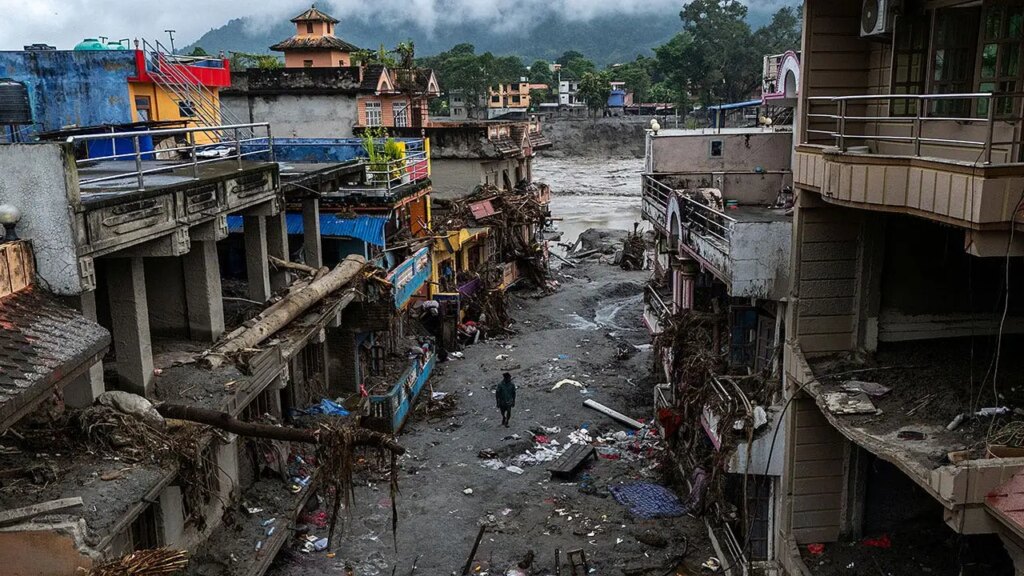
A catastrophic flood in north-central Nepal has led to a rising death toll and the ongoing search for hundreds of missing persons, including approximately 80 American citizens. The disaster was triggered by a slope failure related to glacial activity, sending a torrent of debris and water through populated areas. Rescue efforts are underway, with local and international agencies coordinating relief efforts as the country grapples with the aftermath of this devastating event.
| Article Subheadings |
|---|
| 1) Overview of the Disaster and Immediate Impact |
| 2) Updated Casualty Numbers and Missing Persons |
| 3) International Response and Aid Efforts |
| 4) Scientific Insights into the Flood’s Cause |
| 5) Future Implications for Disaster Preparedness |
Overview of the Disaster and Immediate Impact
The flood disaster struck northern-central Nepal, specifically near the Nepal-China border, on August 26, 2026. Witnesses described a terrifying scene when a glacier-induced slope failure unleashed a torrent of water and debris that flowed nearly 62 miles downstream. Areas such as Nuwakot district were left engulfed in a massive surge of mud, which inundated residential neighborhoods and infrastructure, resulting in significant damage and loss of life. The Nepalese government has stated that the calamity has had a overwhelming impact on local communities, requiring extensive rescue and relief operations.
Officials have reported that the disaster’s rapid onset left little time for preparations. Eyewitness accounts indicated that the event occurred without forewarning, creating challenges for evacuations and emergency procedures. Rescuers have been working tirelessly amid difficult conditions, often in perilous circumstances, to locate survivors and provide immediate assistance to those in affected areas.
Updated Casualty Numbers and Missing Persons
As rescue operations continue, the casualty figures have reached alarming levels. As of the latest reports, the death toll in Nepal has tragically soared to 903 people, with about 4,200 individuals still unaccounted for. The State Department has communicated that approximately 80 American citizens are among those missing, a decrease from earlier estimates of 90. Of the American nationals, 13 have successfully reached safety in Nepal, while the fate of others remains uncertain.
Notably, it has been confirmed that 22 missing Americans were part of a pilgrimage organized by a nonprofit group, the Isha Foundation. They were reportedly inside an immigration building when the floodwaters struck, complicating the ongoing search efforts. Nepal’s Ministry of Foreign Affairs released a statement detailing the recovery of bodies and rescue operations, emphasizing the dire need for continued support and the challenges posed by the sheer number of missing persons.
International Response and Aid Efforts
In light of the extensive devastation, Nepal has appealed for international assistance, prompting responses from a wide array of countries and organizations. Aid has already begun to arrive from neighboring nations such as India and China, with plans for further shipments expected from the United States, the United Kingdom, Japan, and other countries. These contributions include essential supplies for relief operations, such as food, water, and medical supplies.
The U.S. State Department has announced it would deploy a disaster response advisor to aid in coordination and has allocated $500,000 in initial aid through its partnership with Catholic Relief Services. This funding is aimed specifically at providing emergency shelter, sanitation, and hygiene resources to affected communities. The global response showcases the international community’s commitment to supporting Nepal during these challenging times.
Scientific Insights into the Flood’s Cause
Geologists and hydrologists are actively investigating the origins of the flood, which was triggered by a slope failure possibly involving glacial activity. According to the U.S. Geological Survey (USGS), there remains uncertainty about whether the initial failure resulted from a glacier collapse or a landslide. The situation was further complicated by subsequent seismic activity recorded in the region, which was set off by the initial glacier-related event.
The USGS reported that the glacial debris contained a significant amount of water, which accelerated into the valleys, carrying additional debris and intensifying the flooding. This phenomenon underscores the dangers posed by glacial movements in mountainous regions, particularly concerning climate change and the increasing frequency of such catastrophic events.
Future Implications for Disaster Preparedness
The current disaster emphasizes the necessity for improved disaster preparedness and response strategies in Nepal and similarly vulnerable regions. Experts argue that nations with areas prone to natural disasters should enhance their infrastructure and early warning systems to minimize the risks associated with future events. The need for robust emergency protocols, community education, and international collaboration is pivotal in managing disaster risks effectively.
Moving forward, collaboration between Nepal and international agencies will be critical in rebuilding and strengthening both local resilience to future crises and community trust in disaster response mechanisms. Enhanced understanding and mitigation strategies concerning glacial effects and other environmental factors must be prioritized to prevent similar tragedies in the future.
| No. | Key Points |
|---|---|
| 1 | The flood in North-central Nepal has resulted in over 900 fatalities, with thousands reported missing. |
| 2 | Approximately 80 Americans are unaccounted for following the floods, prompting a coordinated international response for rescue efforts. |
| 3 | Aid and supplies are arriving from various international partners, with substantial contributions expected from the U.S. and neighboring countries. |
| 4 | Investigations are ongoing to determine the specific cause of the disaster, mainly relating to glacial activity. |
| 5 | The event highlights the urgent need for improved disaster preparedness and response strategies in vulnerable regions. |
Summary
The catastrophic flooding in Nepal has highlighted the devastating impact of natural disasters and the urgent need for effective response mechanisms. With hundreds of lives lost and thousands missing, the situation remains critical as international aid and rescue efforts are mobilized. This tragedy serves as a sobering reminder of the vulnerabilities faced by communities in disaster-prone regions and emphasizes the significance of preparedness and global cooperation in tackling such challenges.
Frequently Asked Questions
Question: How many people are reported missing after the flood in Nepal?
Around 4,200 individuals are still unaccounted for, including approximately 80 Americans.
Question: What triggered the catastrophic flood in Nepal?
The flood was triggered by a failure of a glacier that caused a debris flow impacting populated areas.
Question: How is the international community responding to the disaster?
Countries around the world, including the U.S., have offered aid and supplies, while Nepal coordinates with international agencies for relief efforts.