
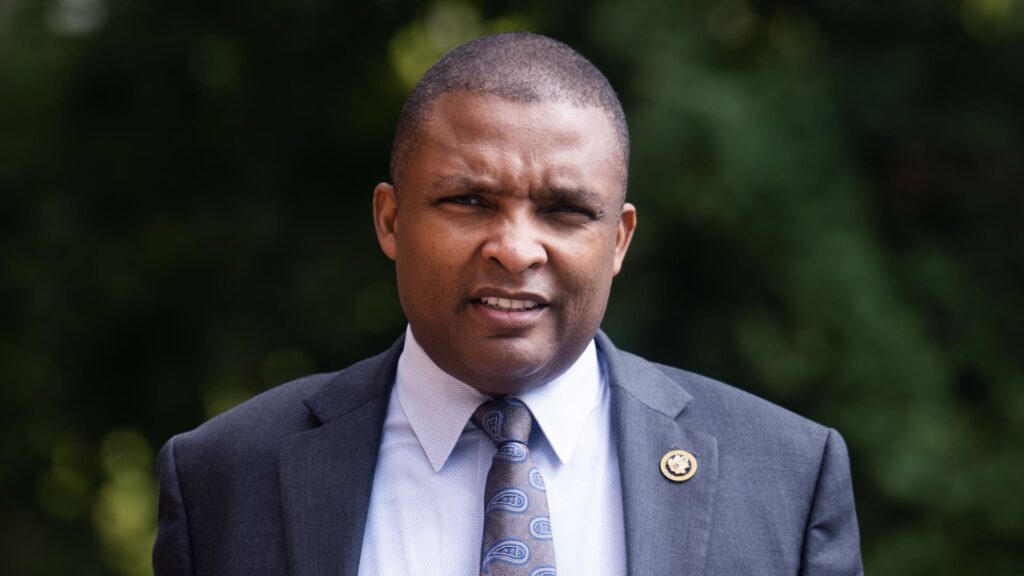
As midterm elections approach, a new proposal from Representative Don Davis (D-N.C.) aims to address concerns surrounding candidates trading on prediction market contracts related to their own elections. The bill, titled the “No Betting on Your Own Race Act,” seeks to impose restrictions on candidates to prevent insider trading. This initiative emerges in the wake of a controversy involving a Republican opponent, raising questions about the ethics of such practices in politics.
| Article Subheadings |
|---|
| 1) Overview of the Prediction Market Bill |
| 2) Context of the Proposed Legislation |
| 3) Implications of the Bill in the Current Political Climate |
| 4) Reactions from Political Rivals and Stakeholders |
| 5) Future Prospects of the Legislation |
Overview of the Prediction Market Bill
The “No Betting on Your Own Race Act,” introduced by Rep. Don Davis on September 19, 2024, seeks to prohibit candidates for federal office from trading on prediction market contracts that pertain to their own elections. This legislation comes amid growing scrutiny of the ethics surrounding such transactions, as candidates who trade on their own behalf could potentially manipulate outcomes. According to Davis, the introduction of this bill formalizes existing practices that have already been enforced by prediction market platforms aiming to eliminate insider trading risks.
Context of the Proposed Legislation
The motivation behind this legislative move is further compounded by a recent controversy involving a candidate competing against Davis in the North Carolina First Congressional District race. Laurie Buckhout, the Republican contender, was penalized for trading on contracts related to her own candidacy on Kalshi, a prediction market. Buckhout’s confession of this act—a “dumb mistake” that resulted in a financial penalty and a suspension—has prompted Davis to call for clearer guidelines to prevent similar occurrences in the future. He has argued that just as athletes are barred from betting on their games, politicians should also be restrained from gambling on their electoral chances.
Implications of the Bill in the Current Political Climate
The proposal comes at a critical juncture, with the midterm elections looming just weeks away. Although the bill was introduced during a pro forma session of the House of Representatives, its implementation prior to the elections appears improbable. As the House and Senate do not anticipate convening until after the elections, questions remain about the future relevance of this bill. Given the potential for insider trading to erode public trust in the electoral process, the proposed legislation could serve as a proactive measure to restore credibility among federal candidates.
Reactions from Political Rivals and Stakeholders
The announcement by Davis has elicited a range of reactions from political peers and entities involved in prediction markets. While some support the notion of maintaining integrity in elections through legislation, others may view the bill as a politically motivated maneuver aimed specifically at hindering opponents. Following Buckhout’s admission and subsequent penalty, Davis publicly stated that such actions represented a “disqualifying breach of public trust.” This sentiment resonates with many inside the Democratic Party who assert that ethical standards must remain paramount as electoral environments become increasingly competitive.
Future Prospects of the Legislation
Looking ahead, the future of the “No Betting on Your Own Race Act” remains uncertain. Though the Senate has previously approved a resolution prohibiting senators and staff from trading in prediction markets, this measure has yet to encapsulate all electoral candidates, particularly non-incumbents. Discussions continue regarding the necessity of similar restrictions in the House, yet no concrete actions have been taken thus far. Enhanced scrutiny from both the business and political community could pave the way for more robust legislation, as lawmakers aim to address the ethical implications of prediction markets in future electoral cycles.
| No. | Key Points |
|---|---|
| 1 | Rep. Don Davis introduced a bill to restrict candidates from trading on prediction market contracts related to their own elections. |
| 2 | The legislation follows a controversy involving Republican opponent Laurie Buckhout, who was penalized for similar trading. |
| 3 | Davis argues that candidates should be treated like athletes and not allowed to bet on their own electoral success. |
| 4 | The implementation of the bill before the upcoming midterms is unlikely, as Congress is not scheduled to meet until after elections. |
| 5 | The Senate has previously acted on banning trading in prediction markets yet has not extended this to all electoral candidates. |
Summary
The introduction of the “No Betting on Your Own Race Act” by Rep. Don Davis reflects growing concern over ethics in politics, particularly pertaining to prediction markets. While questions remain about the immediate future of the bill amid the upcoming midterm elections, its essence captures a significant discussion on the integrity of electoral processes. As the political landscape evolves, measures like these could shape candidate conduct and public perceptions in crucial ways.
Frequently Asked Questions
Question: What is the purpose of the “No Betting on Your Own Race Act”?
The act aims to prevent federal candidates from trading on prediction market contracts directly related to their own elections, thus limiting the potential for insider trading and manipulation.
Question: What prompted Rep. Don Davis to introduce this bill?
The introduction of the bill follows a controversy where a Republican opponent traded on her own candidacy, raising questions about the ethicality of such actions in political races.
Question: What are the potential penalties for candidates found in violation of this law?
Individuals caught violating this proposed law could face fines of $10,000 or three times the net financial gain from the trade, whichever is greater.