
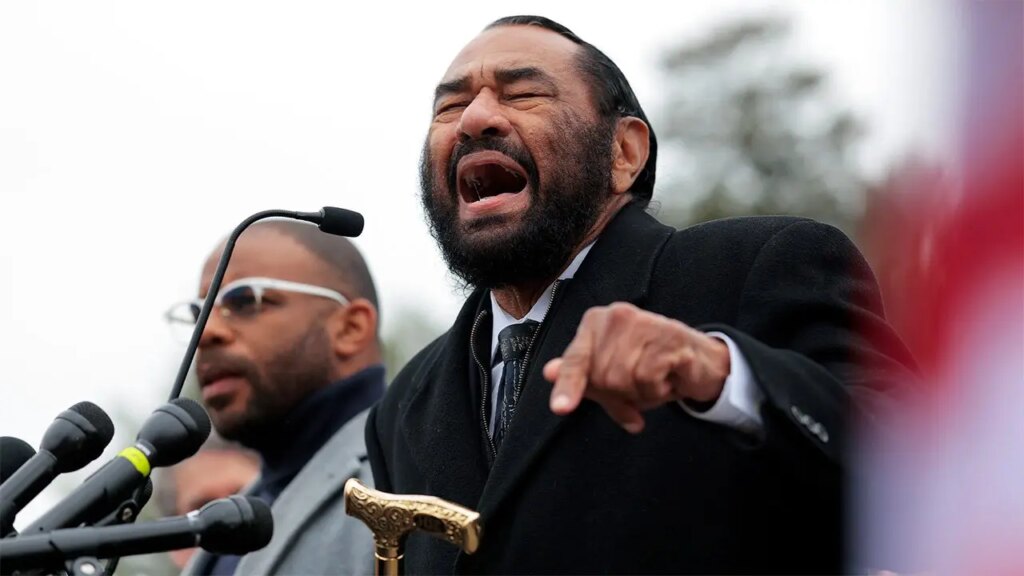
In an unprecedented political maneuver, Rep. Al Green, a Democratic representative from Texas, has announced his intention to push for a vote on impeaching President Donald Trump. This decision comes on the heels of a controversial federal immigration operation that resulted in the deaths of two U.S. citizens earlier this year. By utilizing a privileged resolution, Green is aiming to bring the impeachment vote to the House floor before the upcoming midterm elections, which have significant implications for both parties. Observers anticipate that this could spark a contentious debate within the Democratic Party and influence their strategy leading into the critical elections.
| Article Subheadings |
|---|
| 1) Overview of the Impeachment Resolution |
| 2) Historical Context of Impeachment Attempts |
| 3) Political Implications Ahead of the Midterms |
| 4) Reactions from Democratic Leadership |
| 5) The Path Forward for Green’s Resolution |
Overview of the Impeachment Resolution
On Monday, Rep. Al Green took a decisive step by formally announcing his plan to introduce an impeachment resolution against President Donald Trump. This action is rooted in the recent events concerning the actions of federal immigration officers that led to the tragic deaths of two American citizens. Green, known for his vocal opposition to Trump, has leveraged a privileged resolution—a legislative tool that mandates the House to consider the resolution within two days. This means that House Republicans will be under pressure to schedule a vote by the end of the week, effectively putting the impeachment discussion back into the national spotlight.
The resolution explicitly describes Trump as a “great threat to democracy and the Constitution” due to what Green characterizes as “high crimes and misdemeanors.” This framing aligns with Green’s previous campaigns against the President and underscores his long-standing belief that immediate action is necessary. In a letter to his colleagues in the House, Green urged for swift consideration of the resolution, arguing that the lives lost and the experiences of those impacted by the immigration crackdown demand immediate attention from Congress.
Historical Context of Impeachment Attempts
The quest for impeachment is not new; it has been a recurring theme during Trump’s administration, with Green previously initiating similar attempts. The most notable instances occurred in December 2019 and January 2021. During these times, the impeachment process was heavily scrutinized and became a focal point of partisan division. In June 2025, Green sought to introduce another impeachment resolution, but it failed to garner sufficient support, overshadowed by a Democratic consensus to focus on pressing issues impacting American families, such as rising living costs.
Green’s ongoing frustrations with Trump’s presidency have fueled his resolve, and his latest attempt marks a third initiative aimed at holding the President accountable. This repeated focus on impeachment not only highlights the depth of the political divide but also reflects the challenges faced by the Democratic Party in a polarized political environment. Historically, impeachment is a contentious process requiring broad bipartisan support, which may complicate Green’s aspirations moving forward, given the present dynamics within the House.
Political Implications Ahead of the Midterms
As the midterm elections loom on the horizon, this impeachment resolution could have far-reaching implications for both the Democratic and Republican parties. Democrats are trying to reclaim control of the House and Senate, and introducing this impeachment vote may serve as a double-edged sword. On one hand, it could galvanize the party’s base, showcasing a commitment to holding the administration accountable. On the other hand, it risks alienating moderate voters who might be more concerned with economic issues and stability rather than ongoing political battles.
House Minority Leader Hakeem Jeffries has expressed caution regarding the subject of impeachment, stating that the party should prioritize issues like inflation and affordable living for Americans. This reflects a broader strategy within the Democratic ranks to shift focus from impeachment discussions toward policy-based discourse as the election approaches. The pressure mounts for Democrats to balance their criticisms of Trump while simultaneously addressing the concerns of their constituents, complicating leadership decisions on the matter.
Reactions from Democratic Leadership
The reaction from key Democratic leaders to Green’s impending vote has been mixed. While many in the party understand the implications of the ongoing debate over impeachment, there appears to be a growing sentiment to take a measured approach. Jeffries previously voted against Green’s earlier resolution, indicating a hesitance among Democratic members to pursue impeachment as a primary agenda. The party leadership is keenly aware of the possible repercussions of pushing forward with the impeachment agenda instead of uniting on core issues anticipated to resonate with voters in the upcoming elections.
As discussions unfold, some Democratic leaders, while publicly restrained, are perhaps privately contemplating the potential fallout that could result from another impeachment attempt. The idea of focusing on investigative measures post-election has garnered support among various factions within the party, suggesting that while there is a clear desire to hold Trump accountable, timing remains a critical concern.
The Path Forward for Green’s Resolution
Green’s resolution is poised to arrive at a crucial juncture in Congress. If passed, it could lead to a protracted debate that reopens the contentious issue of impeachment during a pivotal campaign season. Green has articulated a sense of urgency, claiming that delaying any actions against Trump risks further harm to the nation. His stance refocuses attention on the need for direct accountability from elected officials. “How many more lives must we lose, and how many more loved ones of victims have to plead for help before the self-evident evidence from videos and President Trump’s own words compel us to act?”
The implications of this resolution extend beyond immediate political outcomes; they assess the moral responsibility of lawmakers to address grievances raised by their constituents. Should the House move forward with impeachment proceedings, it will inevitably become a central theme in campaign rhetoric as both parties seek to leverage public sentiment in their favor leading into the elections.
| No. | Key Points |
|---|---|
| 1 | Rep. Al Green has launched an impeachment resolution against President Donald Trump related to immigration issues. |
| 2 | Green uses a privileged resolution to force a vote within two legislative days. |
| 3 | The resolution underscores concerns over Trump’s alleged threats to democracy. |
| 4 | Democratic leadership shows caution over impeachment ahead of the midterm elections. |
| 5 | The outcome may reshape both parties’ strategies as the elections approach. |
Summary
The decision by Rep. Al Green to initiate impeachment proceedings against President Donald Trump highlights a crucial intersection of policy, politics, and public sentiment as the midterm elections approach. The motions within Congress reflect broader ideological divides and underscore the Democratic Party’s struggle to balance offense against Trump with the need to address fundamental issues affecting their constituents. As lawmakers grapple with the resolution’s implications, the anticipated vote will likely resonate throughout the electoral landscape, influencing strategies and voter engagement in critical upcoming races.
Frequently Asked Questions
Question: What prompted Rep. Al Green to push for impeachment?
Rep. Green’s resolution was prompted by the deaths of two U.S. citizens during a federal immigration operation, which he claims illustrates the dangers posed by President Trump’s policies.
Question: How does a privileged resolution work in Congress?
A privileged resolution allows any member of Congress to bring a matter to the floor for a vote within two legislative days, bypassing some of the usual committee processes.
Question: What might be the impact of this impeachment vote on the upcoming elections?
The impeachment vote could energize the Democratic base while potentially alienating moderate voters, impacting both party strategies as they prepare for the midterm elections.