
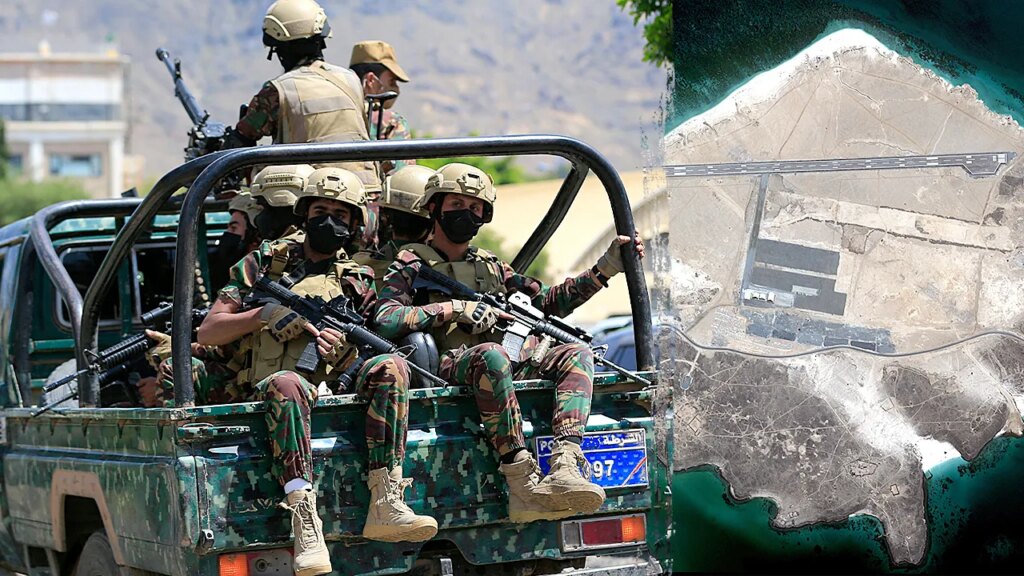
The Iran-backed Houthi rebels seized control of Perim Island in the Bab el-Mandeb Strait on September 11, marking a significant development in the ongoing conflict in Yemen. This strategic location, which has served as a vital maritime chokepoint for centuries, could potentially alter global shipping routes and amplify geopolitical tensions. As military analysts assess the implications of this capture, former Pentagon officials highlight the vulnerabilities the Houthis face in the region, suggesting that their newfound control may be short-lived given the overwhelming military power of the United States.
| Article Subheadings |
|---|
| 1) The Capture of Perim Island: What It Means |
| 2) Strategic Importance of Perim Island |
| 3) Military Implications for the Region |
| 4) Diplomatic Maneuvers and Global Reactions |
| 5) Future Scenarios: What Lies Ahead |
The Capture of Perim Island: What It Means
On September 11, 2026, the Houthi rebels, a militant group backed by Iran, successfully captured Perim Island. This operation was part of an extended offensive that lasted over a month along Yemen’s western coastline, leading to significant military losses for Yemeni government forces. Reports indicate that over 1,500 soldiers perished during this campaign, forcing the Yemeni government to label the defeat as “painful.” The capture of Perim Island symbolizes not only a military victory for the Houthis but also a tactical maneuver to control a crucial segment of maritime traffic in the Bab el-Mandeb Strait. This strait serves as a critical junction for vessels making their way to and from the Red Sea, which highlights the strategic ramifications of this development.
Strategic Importance of Perim Island
Perim Island, known historically for its strategic military value, has served as a control point for various empires throughout history, including the British and the French. Located approximately 20 miles off the Horn of Africa, Perim’s position within the Bab el-Mandeb Strait allows it to effectively cut maritime routes in half, as the strait narrows to only 18 miles at this point. Former Pentagon official Morgan Murphy emphasized that by controlling Perim, the Houthis have positioned themselves in a location that commands significant oversight over shipping lanes; however, this position also makes them vulnerable to concentrated military action, particularly from the United States, which boasts formidable force capabilities in the region.
Military Implications for the Region
The implications of the Houthi capture of Perim Island are manifold, especially concerning military strategies in the region. Despite the Houthis establishing a presence on the island, analysts believe that they have placed themselves into a “kill box.” This expression refers to a scenario where forces are concentrated in a location that becomes easily targetable for enemy fire. Morgan Murphy noted that the U.S. military maintains significant firepower in close proximity to the island, capable of neutralizing threats to international shipping swiftly. He remarked, “We could wipe that rock into glass, just blast it into a smooth glass surface.” This commentary underscores the precariousness of the Houthis’ hold on Perim, which could be short-lived if military intervention occurs.
Diplomatic Maneuvers and Global Reactions
In response to the evolving situation, diplomatic conversations have intensified. Sources confirmed that Saudi Crown Prince Mohammed bin Salman reached out to U.S. President Donald Trump days following the island’s capture, advocating for military action against the Houthis. However, President Trump declined immediate intervention, citing the U.S. administration’s preference for a strategy that involves intelligence support without direct combat engagement. This decision mirrors a broader approach aimed at mitigating threats while avoiding escalation into a more extensive military confrontation. The restraint shown by the Trump administration can be interpreted as a tactical decision to avoid heightening tension in an already volatile region while maintaining options for future responses.
Future Scenarios: What Lies Ahead
Looking ahead, the future of Perim Island and the surrounding waters remains uncertain. Former military analysts believe that the Houthis, while having achieved a temporary tactical victory, face insurmountable odds against superior U.S. military capabilities. The region’s geopolitical dynamics suggest that any continued Houthi aggression could provoke a substantial military response. Additionally, exploratory operations by the Iranian Revolutionary Guard Corps (IRGC) within Yemen indicate sustained Iranian influence, with reports citing hundreds of IRGC officers active in the area. This connection raises the stakes further, as Tehran appears to be employing its Houthi proxies to drive up global fuel prices by disrupting major shipping lanes.
| No. | Key Points |
|---|---|
| 1 | Houthi rebels captured Perim Island on September 11, 2026, amid a military offensive. |
| 2 | The island has immense strategic importance, controlling access to the Bab el-Mandeb Strait. |
| 3 | Experts warn that Houthis may be vulnerable to a military response from the U.S. |
| 4 | Diplomatic channels remain active, with Saudi leadership urging U.S. military action. |
| 5 | The ongoing presence of Iranian military advisors in Yemen exacerbates the situation. |
Summary
The recent capture of Perim Island by Houthi rebels represents a pivotal moment in the conflict in Yemen, opening a new front in the region’s power dynamics. While the Houthis may perceive this victory as a step toward consolidating control over critical maritime traffic, the vulnerabilities they face could quickly unravel their gains. As diplomatic discussions take place and military options are evaluated, the significance of U.S. capabilities in the area becomes increasingly evident, positioning the stage for possible future confrontations.
Frequently Asked Questions
Question: Why is Perim Island strategically important?
Perim Island is strategically important because it is located in the Bab el-Mandeb Strait, a critical shipping route that connects the Red Sea to the Gulf of Aden, facilitating vital maritime trade. Control over this island allows forces to monitor and potentially disrupt traffic through this narrow corridor.
Question: What is the military situation for the Houthis following the capture of Perim Island?
After capturing Perim Island, the Houthis find themselves in a vulnerable position due to their concentration of forces in a geographically limited area, making them susceptible to military strikes from stronger global powers, particularly the United States.
Question: How is Iran involved in the Houthi advance in Yemen?
Iran is believed to support the Houthis in Yemen through the provision of weapons and military training, primarily orchestrated by the Islamic Revolutionary Guard Corps (IRGC), which maintains an active presence in the region and influences Houthi strategies.