
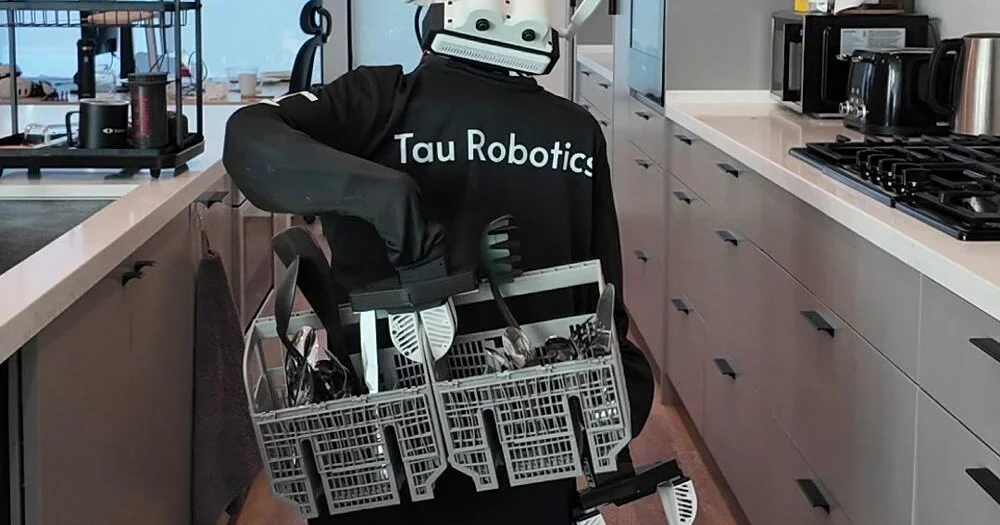
In a groundbreaking development, Tau Robotics, an engineering firm specializing in artificial intelligence, has launched a pilot program that offers San Francisco residents the opportunity to hire humanoid robots for household cleaning tasks. The company is inviting 1,000 households to participate in this innovative service for a fee of $30 per hour. Supporting a range of chores such as vacuuming and taking out the trash, these robots, named Chelsea and Elon, signify a significant step toward integrating robotics into daily life.
| Article Subheadings |
|---|
| 1) Introduction to Tau Robotics and Its Services |
| 2) The Technology Behind the Robots |
| 3) Safety and Security Considerations |
| 4) Market Potential and Future Predictions |
| 5) Challenges Ahead in Humanoid Robotics |
Introduction to Tau Robotics and Its Services
Founded with the intent of revolutionizing household chores, Tau Robotics aims to alleviate the burden of cleaning through its humanoid robots. Announced last month, the pilot program allows select San Francisco residents to engage these robots for $30 per hour. The initiative stands out not just for its novelty but also for its ambition to introduce a technological solution that resonates with the demands of modern living.
Currently, the service is invite-only, targeting a specific demographic within the city. By 2027, the company plans to scale operations significantly, aiming for 1,000 cleanings a week and eyeing an expansion to other U.S. cities by 2028. This aggressive growth strategy is indicative of the expectations surrounding robotics in everyday life.
The Technology Behind the Robots
Each humanoid robot, costing approximately $50,000 to produce, is trained using advanced artificial intelligence. Initially designed to replicate human behavior, the training will evolve to enhance autonomy and efficiency, allowing robots to outperform their human counterparts in the long run. Co-founder and CEO Alexander Koch stated the robots are being developed to eventually exhibit not only competence but also a level of expertise that surpasses typical human capabilities.
Although the robots are equipped to perform a variety of tasks like cleaning kitchen counters and vacuuming, they still require a considerable amount of human oversight. The robots are remotely monitored by technicians who use Virtual Reality (VR) goggles, allowing them to see through the robots’ perspectives. This technical supervision ensures that the automated devices function smoothly, particularly in instances where they encounter unforeseen obstacles.
Safety and Security Considerations
While the concept of using humanoid robots for household cleaning is intriguing, safety concerns have been raised as these robots are still in the early stages of development. Engineering professor Ken Goldberg from the University of California, Berkeley, has expressed caution regarding the robots’ physical capabilities. He explained that the machines, while appearing agile, can be quite heavy and may pose risks if they were to fall or become unbalanced. Such incidents could potentially be dangerous, especially in homes with small children.
Another concern involves privacy implications. The robots come outfitted with cameras intended for training the AI models; however, these cameras could inadvertently capture sensitive household information. Responding to these risks, Koch asserted that Tau Robotics maintains strict data control protocols to safeguard user information and minimize privacy violations.
Market Potential and Future Predictions
The humanoid robotics market is poised for substantial growth, with Barclays Investment Bank forecasting it to expand from its current valuation of $2-$3 billion to an impressive $200 billion by 2035. This projection hinges on technological advancements that will make robots more efficient, affordable, and socially acceptable. As current industrial applications dominate the sector, with the majority utilized in manufacturing and warehousing, the emergence of household robots is anticipated to occur gradually.
Investment activities have already shown significant promise, as new applications in service-oriented tasks are being explored. Analysts believe that the technology’s eventual maturity will catalyze increased interest from consumers for at-home robotics applications.
Challenges Ahead in Humanoid Robotics
Despite the optimism surrounding the future of humanoid robots, experts like Goldberg maintain a cautious outlook, suggesting that widespread adoption of such technology for home use may still be a decade away. He emphasized the need for scientific advancements to achieve the requisite levels of reliability and effectiveness before robots can genuinely take on household responsibilities.
While the economic opportunities are compelling, societal acceptance is equally critical. As humanoid robots gradually integrate into various sectors, overcoming skepticism and fostering comfort with these technologies will be essential for their success.
| No. | Key Points |
|---|---|
| 1 | Tau Robotics offers a humanoid robot cleaning service for San Francisco residents. |
| 2 | The robots are monitored remotely using VR technology to ensure safety and efficiency. |
| 3 | Safety and privacy concerns surrounding the use of humanoid robots have been raised by experts. |
| 4 | The humanoid robotics market is expected to see significant growth, possibly reaching $200 billion by 2035. |
| 5 | Experts predict that although the technology holds promise, widespread home use may take another decade. |
Summary
The introduction of humanoid robots for household cleaning represents a significant milestone in merging artificial intelligence with daily life. As Tau Robotics embarks on this journey, the intersection of technology, safety, and societal acceptance will play a critical role in determining its success. With projections for substantial market growth, only time will reveal if these robots can become a common sight in households across the globe.
Frequently Asked Questions
Question: What tasks can the humanoid robots perform?
The humanoid robots are designed to perform a variety of household chores, including vacuuming, cleaning counters, and taking out the trash.
Question: How does Tau Robotics ensure safety during operations?
The robots are monitored remotely by human technicians who can intervene if necessary. Additionally, the technicians can place the robots into a safety mode if situations arise that may pose risks to people nearby.
Question: What are the main concerns surrounding the use of humanoid robots at home?
Main concerns include safety risks related to the robots’ weight and mobility, as well as privacy issues stemming from the cameras they utilize for training.