
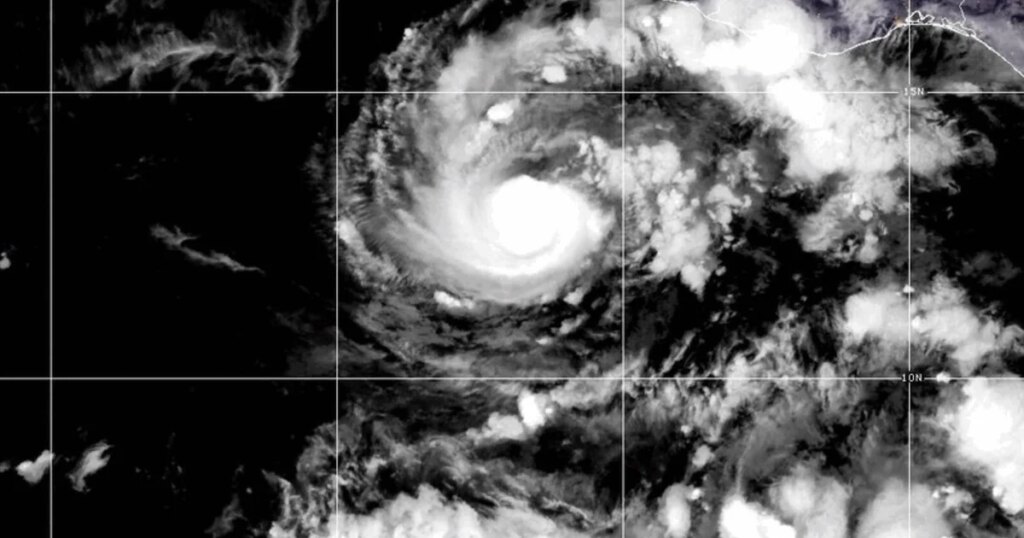
Hurricane Trudy made landfall on Mexico’s Pacific coast over the weekend, bringing with it heavy rains and strong winds that created hazardous conditions in areas still recovering from last week’s Hurricane Simon. Officials had warned residents in affected states, including Michoacán, Colima, and Jalisco, of the potential for severe flooding and mudslides as the storm’s remnants moved away from the coast. As of late Sunday, hurricane warnings had expired, but residents were notified of the lingering risks associated with heavy rainfall.
| Article Subheadings |
|---|
| 1) Overview of Hurricane Trudy’s Impact |
| 2) The Scale and Characteristics of Trudy |
| 3) Evacuations and Public Safety Measures |
| 4) Regional Recovery Efforts |
| 5) The Situation in Guam and Other Areas |
Overview of Hurricane Trudy’s Impact
Hurricane Trudy struck Mexico’s Pacific coast, delivering heavy rainfall and potential threats to vulnerable areas already suffering due to previous severe weather. As the storm approached, the National Hurricane Center issued warnings advising residents to prepare for life-threatening conditions, including flooding and mudslides. By Sunday evening, those warnings had been lifted, but anxiety lingered among the populace as state and local officials urged continued vigilance against residual hazards.
While the hurricane initially brought towering waves and torrential rains, its center appeared to be retracting from Mexico’s coast, indicating some relief for those affected by the relentless storms in recent weeks. Remaining rainfall from Trudy could still prompt concerns of flooding, particularly in low-lying areas and places already saturated by previous rainfall.
The Scale and Characteristics of Trudy
Hurricane Trudy was classified as a Category 1 hurricane, with maximum sustained winds of 80 mph at the time of its observation. The storm had initially escalated to a powerful Category 3 before losing some strength. As the storm continued its trajectory, meteorologists anticipated that it would further weaken and potentially downgrade to a post-tropical depression within a short timeframe. The dynamics of such storms underscore the challenges that weather experts face in providing accurate forecasts that inform the public about safety.
On Sunday evening, Trudy was located approximately 130 miles west-southwest of Cabo Corrientes, Mexico, moving steadily northwest at a speed of about 7 mph. This movement was expected to shift further away from the Mexican coastline into less populated marine areas, reducing the immediate threat of destructive winds and flooding.
Evacuations and Public Safety Measures
In light of Trudy’s impending landfall, emergency preparedness became a priority for state and local officials. The Mexican Navy, in particular, issued alerts urging mariners and coastal residents to exercise caution amid high waves and the forecast of heavy rains. With the risk of rising rivers, flooding, and landslides identified, residents were advised to stay informed and take necessary precautions to minimize risks.
Colima authorities reported that while risks remained relatively low at that juncture, the effects of prior storms created a precarious situation. Public safety authorities enacted safety protocols, including community announcements and possible evacuation plans, intending to protect the residents and reduce the risks associated with the storm’s impacts.
Regional Recovery Efforts
As communities assessed the damage from hurricanes earlier in the month, including Hurricane Simon, recovery efforts continued alongside the latest storm. Emergency response teams were on alert, prepared to manage the aftermath of Hurricane Trudy should damage occur. Weather forecasters had predicted that potentially 4 to 8 inches of rain might fall through the weekend, with isolated regions even receiving upwards of 12 inches. This forecast heightened concerns about mudslides and significant flooding in areas with steep terrain.
These lingering threats highlighted the difficulties that authorities faced, not only in managing responses during the hurricanes but also in coordinating effective recovery efforts. The cumulative impact of the recent storms has posed challenges for the region’s infrastructure and emergency services, as they continue to balance immediate response needs with long-term recovery strategies.
The Situation in Guam and Other Areas
In conjunction with Hurricane Trudy, Typhoon Champi presented additional challenges, significantly affecting nearby regions, including Guam and the Northern Mariana Islands. Champi had passed near Guam’s southern tip and was moving west-northwest into the Philippine Sea, with maximum sustained winds reaching 140 mph. As the storm approached, local officials acted proactively to protect residents, declaring emergencies and requesting federal assistance.
On Saturday, the President approved an emergency declaration for Guam, enabling federal agencies like FEMA to mobilize resources and provide disaster relief. As the territory’s critical infrastructure, including airports and health facilities, faced closure, officials estimated that relief supplies would take three to five days to reach those in need. The region grapples with a long recovery process following the devastation caused by previous super typhoons, which exacerbated the challenges presented by Typhoon Champi.
| No. | Key Points |
|---|---|
| 1 | Hurricane Trudy impacted Mexico’s Pacific coast with heavy rains and winds, subsequently downgraded to a Category 1 storm. |
| 2 | Warnings were issued for flooding and mudslides as vast rainfall was predicted in already affected states. |
| 3 | The Mexican Navy urged caution among coastal residents and mariners due to hazardous weather conditions. |
| 4 | Recovery efforts are ongoing in the region, particularly in Colima, Michoacán, and Jalisco, following multiple storms this season. |
| 5 | Typhoon Champi posed additional challenges for nearby areas, prompting emergency disaster declarations in Guam. |
Summary
The effects of Hurricane Trudy underscore the vulnerability of Mexico’s Pacific coastal regions as they contend with repeated severe weather events. As officials work to support recovery efforts, the dangers of flooding and mudslides loom large. Coupled with the situation in Guam concerning Typhoon Champi, regional leadership and emergency management face the dual challenge of providing immediate aid while planning for long-term restoration. The importance of preparedness and effective response strategies resonates through these ongoing challenges as communities seek to recover and protect their residents from future storms.
Frequently Asked Questions
Question: What is the current status of Hurricane Trudy?
Hurricane Trudy was downgraded to a Category 1 hurricane and has moved away from Mexico’s coast, although heavy rainfall continues to pose risks in affected regions.
Question: What precautions should residents take during a hurricane?
Residents in hurricane-prone areas should prepare emergency kits, have an evacuation plan in place, and stay informed through official weather channels.
Question: How is Guam responding to Typhoon Champi?
Guam has declared an emergency and is coordinating with FEMA for federal disaster relief following the damaging effects of Typhoon Champi.